

HEAD & NECK CANCERS
Latest News
Advertisement
Latest Videos














































Advertisement
More News

The FDA has placed a clinical hold on a phase I/II study of axalimogene filolisbac and durvalumab, according to an announcement by Advaxis, the manufacturer of axalimogene filolisbac, in a quarterly earnings report.The study is evaluating the combination in patients with advanced, recurrent or refractory HPV-associated cervical cancer and HPV-associated head and neck squamous cell carcinoma.


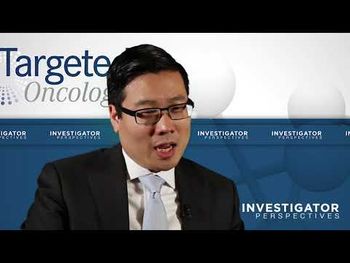

The American Physical Therapy Association has selected Jean Kozempel, PT, DPT, MS, as the recipient of the 2017 Oncology Section President’s Award. This award honors physical therapists who are proving themselves to be pioneers in the oncology field.
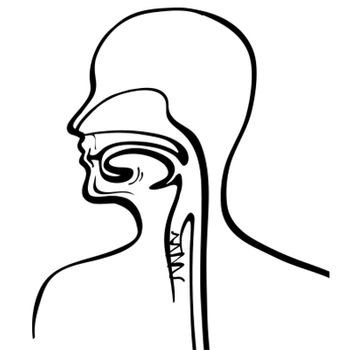
Tipifarnib demonstrated encouraging antitumor activity among patients with <em>HRAS</em>-mutant head and neck squamous cell carcinoma (HNSCC), according to preliminary results of an ongoing phase II proof-of-concept trial (NCT02383927).
Chimeric antigen receptor T-cell therapy with bb2121 demonstrated an objective response rate of 94% in patients with relapsed/refractory multiple myeloma, according to findings from a dose-escalation study. The senior study author, James N. Kochenderfer, MD, presented updated findings from the study during the 2017 ASH Annual Meeting, and commented that 89% of patients had a very good partial response or better, and 56% of patients had a complete remission. <br />
Head and neck squamous cell cancer is relatively uncommon in the United States compared to other malignancies like non-small–cell lung cancer and breast cancer. There are about 500,000 cases worldwide every year.
D Neil Hayes, MD, MPH, has been appointed scientific director of the University of Tennessee Health Science Center Institute for Cancer Research and the Van Vleet Endowed Professor in Medical Oncology in the Department of Medicine.
Theodoros N. Teknos, MD, has been chosen as the new president and scientific officer of the University Hospitals Seidman Cancer Center. He will be taking over for the current president Nathan Levitan, MD, who will be retiring this year after 9 years in this position.
Lori J. Wirth, MD, discusses the era of precision genotype targeted therapy in advanced thyroid cancer, with a focus on individual targets in subtypes of thyroid cancer.
Supplemental Biologics License Applications (sBLAs) were sent to and accepted by the FDA for a new dosing schedule for nivolumab (Opdivo) across all of the agent's indications as a montherapy, according to Bristol-Myers Squibb (BMS), the manufacturer of the PD-1 inhibitor.
Robert L. Ferris, MD, PhD, a renowned expert in immunotherapy and a specialist in head and neck cancer, has been named director of the University of Pittsburgh Medical Center (UPMC) Hillman Cancer Center. His new position will start July 1.
Combining the IDO inhibitor epacadostat with nivolumab demonstrated promising signs of activity for patients with squamous cell carcinoma of the head and neck and those with melanoma.
A strong association was found between high PD-L1 expression and local failure following radiotherapy in HPV-negative head and neck squamous cell carcinomas.
Aarti Bhatia, MD, discusses newer single agents and combination treatments being investigated for patients with head and neck cancer.
Benjamin L. Judson, MD, highlights the importance of a multidisciplinary team and shares insight on some of the advancements related to surgery for patients with head and neck cancer.
Lynn Acton, MS, CCC (SLP) discusses the significance of swallowing modalities for patients with head and neck cancer during and after radiation therapy.
The use of low-dose radiotherapy may offer transient benefits; nonetheless the potential for palliative care exists.
Beyond hematologic malignancies, adoptive therapy could potentially be effective in solid tumors, such as head and neck cancer, according to early results of a clinical trial.
Immunotherapy agents have shown great promise for the treatment of patients with head and neck cancer; however, only a small subset of patients reap these benefits. Thus, the question becomes: which patients are more likely to benefit from these therapies, and why?
Dhanya Nambiar, PhD, discusses he role of galectin-1 in the tumor microenvironment, and the potential for targeting this protein in patients with head and neck cancer.
The IDO1 inhibitor BMS-986205 had "best-in-class" activity as demonstrated by kynurenine reductions and IDO1 inhibition for patients with advanced tumors in a phase I/IIa study.
Advertisement
Advertisement
Trending on Targeted Oncology - Immunotherapy, Biomarkers, and Cancer Pathways
1
FDA Oncology Recap: Approvals, Designations, and Decisions in September 2026
2
Plinabulin Receives FDA Fast Track Designation in Post-ICI NSCLC
3
New Drug Application Filed for Savolitinib/Osimertinib in MET+ NSCLC
4
Denosumab Biosimilar Approved For Existing Oncology Indications
5