

HEMATOLOGY
Latest News
Advertisement
Latest Videos







CME Content






































Advertisement
More News

Optimizing Targeted Therapy in IgVH-Unmutated CLL

Steven E. Coutre, MD, professor at the Stanford University Medical Center, discusses the importance of molecular profiling in hematologic diseases, including acute lymphoblastic leukemia.

Based on data from the ongoing phase III ADMIRAL study, a new drug application for gilteritinib has been granted a priority review by the FDA for the treatment of adult patients with <em>FLT3</em> mutation–positive relapsed or refractory acute myeloid leukemia, according to Astellas Pharma, the manufacturer of the FLT3 inhibitor.

The use of triplet regimens for the treatment of patients with relapsed multiple myeloma has become one of the most favorable treatments recently. OPTIMISMM, a phase III trial, investigated bortezomib and dexamethasone with or without pomalidomide as another triplet regimen option for use in earlier lines of therapy, said Peter Voorhees, MD.<br />
According to topline results from the phase III ILLUMINATE trial, the combination of ibrutinib and obinutuzumab improved progression-free survival compared with chlorambucil plus obinutuzumab in patients with chronic lymphocytic leukemia or small lymphocytic lymphoma.

Andrew L. Pecora, MD, president of the Physician Services Division and chief innovation officer at Hackensack Meridian Health, discusses the significance of his findings when combining an anti-CTLA-4 and anti-PD-1 in patients with multiple myeloma. He sought out to find whether these 2 drugs could be combined safely after an autologous stem cell transplant.
In an interview with <em>Targeted Oncology, </em>Andrew M. Evens, DO, MSc, discusses the clinical trials that are ongoing at Rutgers for patients with mantle cell lymphoma. He shares some details of the current treatment landscape and how that will evolve as more data becomes available from trials like those at his institution.
Expression of genes from the B-cell receptor pathway predicted shorter progression-free survival and overall survival in patients with mantle cell lymphoma, according to results from an examination of a subsection of patients in the ongoing Fondazione Italiana Linfomi MCL-0208 clinical trial.
Palbociclib, a CDK4/6 inhibitor, has demonstrated success against ibrutinib resistance in primary human samples and mantle cell lymphoma cell lines with the mutated BTKC481S protein. Its use has sparked an investigation of combination therapies targeting CDK4 in MCL, said Selina Chen-Kiang, PhD.
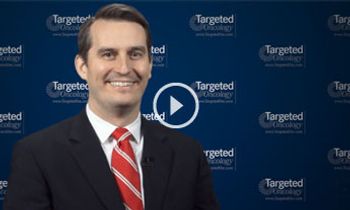
Brian T. Hill, MD, PhD, director of Lymphoid Malignancies at the Cleveland Clinic, discusses current combinations being investigated for the treatment of patients with mantle cell lymphoma.
The combination of prexigebersen, a Liposomal Grb2 Antisense oligodeoxynucleotide, and low-dose cytarabine was associated with an overall response rate of 47% in elderly patients with acute myeloid leukemia, according to findings from an ongoing phase II trial.
Roswell Park Comprehensive Cancer Center has selected Jens Hillengass, MD, as its new Chief of Myeloma. Hillengass will continue his research on hematologic malignancies in his new position.

In a cohort of pediatric and young adult patients with newly diagnosed T-cell acute lymphoblastic leukemia or T-cell lymphoblastic lymphoma, adding nelarabine to escalating-dose methotrexate (C-MTX) induced a 4-year disease-free survival rate of 91%, according to findings released ahead of the 2018 ASCO Annual Meeting.
Daniel J. DeAngelo, MD, PhD, associate professor at the Harvard School of Medicine and a member of the Adult Leukemia Program at Dana-Farber Cancer Institute, highlighted the 4 FDA approvals in the last year for the treatment of patients with acute myeloid leukemia.
Ivan Borrello, MD, recently shared the treatment considerations and decisions he makes when treating patients with multiple myeloma. Borrello, an associate professor of oncology, Johns Hopkins University School of Medicine, and director of cell therapy, Sydney Kimmel Comprehensive Cancer Center, in Baltimore, Maryland, explained his treatment decisions based on a case scenario during a <em>Targeted Oncology</em> live case-based peer perspective presentation.
In results published in April in the New England Journal of Medicine, corresponding author Peter J. M. Valk, PhD, of the Department of Hematology, Erasmus University Medical Center, and colleagues found that MRD positivity was associated with a higher rate of relapse and a lower rate of relapse-free survival and overall survival for patients with newly diagnosed AML.




Therapeutic Management of Immune Thrombocytopenia

Advertisement
Advertisement
Trending on Targeted Oncology - Immunotherapy, Biomarkers, and Cancer Pathways
1
FDA Grants Final Approval to Cabozantinib Capsule Formulation
2
Subcostal Robotic Surgery Cuts Thoracic Pain
3
David DiBardino, MD, on the Rationale for Intratumoral Therapy in Lung Cancer
4
Four Approvals Reflect Growth in Hormone-Sensitive Prostate Cancer Treatment
5