




IMMUNOTHERAPY
Latest News
Advertisement
Latest Videos


































Advertisement
More News

The FDA now requires use of an approved companion diagnostic test to determine PD-L1 levels in the tumor tissue of cisplatin-ineligible patients with locally advanced or metastatic urothelial cancer prescribed treatment with pembrolizumab (Keytruda) or atezolizumab (Tecentriq).

In an interview with <em>Targeted Oncology</em><em>,</em> Levy discusses the agents currently being investigated for patients with <em>ROS1</em>- or <em>TRK</em>-rearranged lung cancer. He also highlights the challenges physicians will need to overcome to best treat their patients based on these new findings.
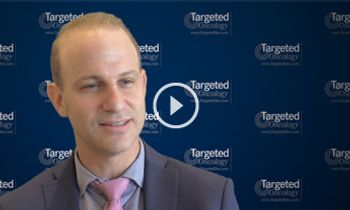
Benjamin P. Levy, MD, clinical director of Medical Oncology at John Hopkins Sidney Kimmel Cancer Center at Sibley Memorial Hospital, discusses the unique adverse events with immunotherapy agents and how physicians can work together to overcome these challenges.
Checkpoint inhibitors are revolutionizing the treatment of patients with both squamous and nonsquamous non-small cell lung cancer, and are quickly assuming a predominant role, especially in the frontline setting, due to recent exciting results from large trials.<br />
The use of checkpoint inhibition in patients with locally advanced non–small cell lung cancer in combination with chemoradiation, and specifically durvalumab from the PACIFIC trial, has shown the first significant survival benefits in almost 25 years, according to Corey J. Langer, MD.
Combinations with immunotherapy agents have surged ahead with new regimens showing great potential for the treatment of patients with lung cancer, Corey Langer, MD, said during a presentation at the <em>19th Annual </em>International Lung Cancer Congress (ILCC). Knowledge about a growing number of biomarkers are helping to guide treatment decisions with these combination options, he said, but the one standard of care has not yet been determined.
Several biomarkers are beginning to emerge for immunotherapy in non–small cell lung cancer, and the collection of these markers, when used together, could further help to predict which patients are likely to respond to these therapies alone or in combination, according to a presentation by Giorgio Scagliotti, MD, PhD, at the <em>19th Annual</em> International Lung Cancer Congress.

David G. Maloney, MD, PhD, medical director of immunotherapy at the Seattle Cancer Care Alliance and member of Fred Hutchinson Research Center, discusses the clinical trials that are currently investigating chimeric antigen receptor T cells at the Bezos Family Immunotherapy Clinic at Fred Hutchinson.

A novel immunotherapy agent has demonstrated significant survival rates for patients with metastatic uveal melanoma, according to updated results released at the 2018 ASCO Annual Meeting.
Immune checkpoint inhibitors, alone or in combination, are associated with increased incidence of some cardiovascular toxicities in patients with cancer, according to results from a cross-trial pooled analysis presented in a poster at the 2018 ASCO Annual Meeting.
In patients with metastatic or unresectable locally advanced triple-negative breast cancer, frontline treatment with atezolizumab (Tecentriq) plus nab-paclitaxel (Abraxane) significantly reduced the risk of disease progression or death compared with nab-paclitaxel, according to topline results from the phase III IMpassion130 study.
Immunotherapy may provide an opportunity to change the treatment paradigm of small cell lung cancer as new clinical trials report out in the next year, says Anne Chiang, MD, PhD. Recent results with immunotherapy agents in the second-line setting have already influenced guidelines.

A supplemental biologics license application has been accepted by the FDA seeking approval for the combination of nivolumab plus ipilimumab for the frontline treatment of patients with advanced non–small cell lung cancer with tumor mutational burden ≥10 mutations per megabase, according to Bristol-Myers Squibb, the manufacturer of both immune checkpoint inhibitors.

Charles G. Drake, MD, PhD, director of Genitourinary Oncology at New York Presbyterian/Columbia University Medical Center, discusses his thoughts on whether sunitinib would be more successful as a treatment for patients with renal cell carcinoma if used in the neoadjuvant setting.


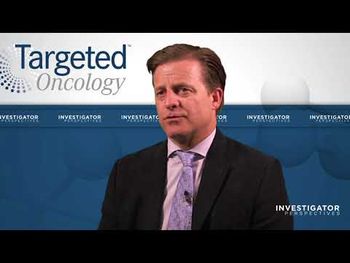




Maria Svensson, MD, Lund University, discusses the growing interest in checkpoint inhibitor blockade treatments for gastrointestinal cancers. In the past, there have been promising results with this treatment in metastatic disease.

Alexander M. Eggermont, MD, PhD, director general of Gustave Roussy Cancer Campus Grand Paris in Villejuif, France, discusses the history of immune checkpoint inhibitors in the treatment landscape of melanoma.
Researchers’ understanding of why patients with cancer do or do not respond to treatment with immune checkpoint inhibition is constantly evolving, with new developments in innate and adaptive immunity, the tumor microenvironment, and more changing the way that immunotherapy is viewed and used. Many researchers are now pointing to the effect that gut microbiota have on patients’ response to checkpoint inhibitors and its implications for the treatment of patients receiving immunotherapy.
Advertisement
Advertisement
Trending on Targeted Oncology - Immunotherapy, Biomarkers, and Cancer Pathways
1
FDA Accepts NDA for Daraxonrasib in Metastatic Pancreatic Cancer
2
Advanced Renal Cell Carcinoma: Tailoring Second-Line Therapy After Prior Immunotherapy
3
Teclistamab/Talquetamab Reduces Risk of Progression by 89% in R/R Multiple Myeloma
4
Updated HARMONi Analysis Shows Consistent OS Benefit With Ivonescimab in EGFRm Lung Cancer
5