




IMMUNOTHERAPY
Latest News
Advertisement
Latest Videos




































Advertisement
More News

The combination of nivolumab and ipilimumab has received accelerated FDA approval as a treatment for patients with BRAF V600 wild-type unresectable or metastatic melanoma.

Treatment with nivolumab demonstrated clinical efficacy and safety in patients with platinum-resistant, recurrent, or advanced ovarian cancer.

Talimogene laherparepvec (T-VEC), an attenuated oncolytic virus, combined with pembrolizumab, an immune checkpoint inhibitor, passed an early safety evaluation for unresectable melanoma.

Two strategies of successive immunotherapy for the treatment of advanced melanoma recently showed similar safety and tolerability, yet substantially different efficacy.

Provectus Biopharmaceuticals, Inc recently announced it has completed development of its protocol for phase Ib/II testing in patients with stage IV melanoma.

Over a fifth of patients with previously treated advanced nasopharyngeal carcinoma showed a measureable response, when treated with pembrolizumab, an immune checkpoint inhibitor.

Clinical evaluation suggests a role for immune checkpoint inhibition in the treatment of patients with lymphomas, but early success has also raised many questions.

A sarcoma study arm of the phase II portion of the multiarm PembroPlus clinical trial that combines immunotherapy with chemotherapy has commenced at Cancer Treatment Centers of America (CTCA), Western Regional Medical Center, Goodyear, Arizona

The Inaugural International Cancer Immunotherapy Conference commenced September 16, 2015, in New York City, and one presentation detailed Biothera's new biomarker strategy in patient selection for the company's investigational cancer immunotherapy, Imprime PGG.

Frequency of the cell death-regulating protein Bim (BCL-2-interacting mediator of cell death) may predict patient response to PD-1 inhibitor immunotherapy.

Srdan Verstovsek, MD, PhD, the University of Texas MD Anderson Cancer Center, discusses immunotherapy in myelofibrosis.

Activation of T-cell function has become a main focus of immunotherapeutic approaches aimed at enhancing an anticancer immune response and suppressing mechanisms used by tumor cells for immune evasion.

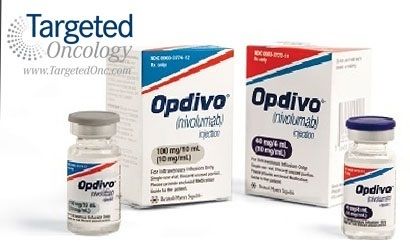
Nivolumab (Opdivo) and ipilimumab (Yervoy), a chemotherapy-free regimen, showed activity as a first-line therapy for patients who have advanced non-small cell lung cancer (NSCLC).

A novel immunotherapy, EGEN-001, combined with pegylated liposomal doxorubicin (PLD) has demonstrated clinical benefit in recurrent or persistent epithelial ovarian, fallopian tube, or primary peritoneal cancer patients.

Nivolumab (Opdivo) was given a priority review designation by the FDA for patients with previously treated nonsquamous non-small cell lung cancer (NSCLC).

Judd W. Moul, MD, urologic oncologist, Duke Medicine, discusses the impact of immunotherapy in prostate cancer.

A priority review designation was recently assigned by the FDA to the intravesical immunotherapy MCNA as a treatment for patients who have high-risk non-muscle invasive bladder cancer, following first-line bacillus Calmette-Guérin (BCG) therapy.

Bishoy M. Faltas, MD, Fellow, Hematology/Oncology, Weill Cornell Medical College, discusses immunotherapy in platinum-resistant bladder cancer.

Sonidegib (Odomzo) was approved by the EC for the treatment of patients who have locally advanced basal cell carcinoma (laBCC) and are not amenable to curative surgery or radiation therapy.

Roy S. Herbst, MD, PhD, chief of Medical Oncology, Yale Cancer Center and Smilow Cancer Hospital at Yale-New Haven, discusses immunotherapy in squamous and nonsquamous non-small cell lung cancer (NSCLC).

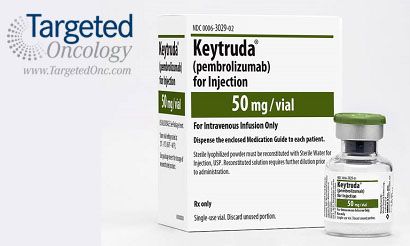
Pembrolizumab (Keytruda) has received priority review from the US Food and Drug Administration (FDA) as frontline treatment for patients with advanced melanoma.

Jason J. Luke, MD, FACP, assistant professor of medicine, The University of Chicago, discusses the efficacy of PD-1/PD-L1 inhibitors in melanoma.

AstraZeneca’s MedImmune has entered into a licensing agreement and collaboration with Inovio Pharmaceuticals, whereby MedImmune was given exclusive rights to Inovio’s INO-3112 immunotherapy.

The review period for frontline nivolumab (Opdivo), in patients who have advanced melanoma, recently received an extension of three months by the FDA, in order to allow ample time for review of the additional data submitted by Bristol-Myers Squibb (BMS)

Catherine Alix-Panabières, PhD, and her colleagues, demonstrate the expression of PD-L1 on CTCs in patients with HR+, HER2- metastatic breast cancer.
Advertisement
Advertisement
Trending on Targeted Oncology - Immunotherapy, Biomarkers, and Cancer Pathways
1
FDA Accepts NDA for Daraxonrasib in Metastatic Pancreatic Cancer
2
Teclistamab/Talquetamab Reduces Risk of Progression by 89% in R/R Multiple Myeloma
3
Advanced Renal Cell Carcinoma: Tailoring Second-Line Therapy After Prior Immunotherapy
4
Updated HARMONi Analysis Shows Consistent OS Benefit With Ivonescimab in EGFRm Lung Cancer
5