


Ovarian Cancer
Latest News
Advertisement
Latest Videos







































Advertisement
More News




Lung Cancer
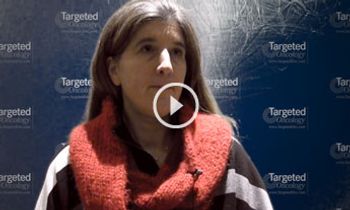
Kathleen Moore, MD, associate director for clinical research at the Stephenson Oklahoma Cancer Center, discusses the development of combination therapy strategies for patients with ovarian cancer.

Rebecca C. Arend, MD, discusses novel combinations being investigated for the treatment of patients with ovarian cancer.
Kathleen Moore, MD, discusses combination strategies with immunotherapy for patients with ovarian cancer during the 2018 Society of Gynecologic Oncology Annual Winter Meeting.<br />
During the 2018 Society of Gynecologic Oncology Annual Winter Meeting, Camille Gunderson, MD, detailed some of the active trials currently exploring PARP inhibitors in combination with either anti-VEGF therapy or immunotherapy in ovarian cancer.
Women with newly diagnosed stage III epithelial ovarian cancer experienced an improvement in relapse-free survival and overall survival with the addition of hyperthermic intraperitoneal chemotherapy to interval cytoreductive surgery, according to results from a multicenter, open-label, phase III trial.
According to results of an open-label, single-center, 2-stage, proof-of-concept phase II study, prexasertib (LY2606368), a cell cycle checkpoint kinase 1 and 2 inhibitor, demonstrated clinical activity and was tolerable in women with measurable, recurrent high-grade serous or high-grade endometrioid ovarian carcinoma.
Cristiana Sessa, MD, head of Phase I-II Unit and Pharmacology, vice head of Medical Oncology and Head of Clinical Research, Oncology Institute of Southern Switzerland, discusses targeted therapies for <em>BRCA</em>1/2-mutated tumors.
Hackensack Meridian Health has announced that Verda J. Hicks, MD, FACS, FACOG, will serve as its chief of Gynecologic Oncology at Jersey Shore University Medical Center. She will be joined by associates James R. Bosscher, MD, and Karim ElSahwi, MD, to facilitate promising experience and care to the Monmouth, Ocean, and Middlesex counties.

Jalid Sehouli, MD, professor, director of the Clinic Campus Virchow and Campus Benjamin Franklin Charité Center Gynecology, Charité – Universitatsmedizin Berlin, discusses a randomized controlled phase II study to evaluate secondary cytoreductive surgery in patients with platinum-sensitive recurrent ovarian cancer.
According to a small, single-site prospective observation, women with ER-positive advanced high-grade serous ovarian cancer who received maintenance therapy with letrozole were more likely to be recurrence-free at 24 months, suggesting that letrozole may have a role to play in this setting, especially for patients with chemotherapy resistance or residual disease.<br />
Bradley J. Monk, MD, discusses 5 phase III clinical trials evaluating checkpoint blockade in combination regimens, as well as the potential for immunotherapy in ovarian cancer.
Robert L. Coleman, MD, discusses targeting tumor vasculature and angiogenesis in ovarian cancer.

Jalid Sehouli, MD, professor, director of the Clinic Campus Virchow and Campus Benjamin Franklin Charité Center Gynecology, Charité – Universitatsmedizin Berlin, discusses a randomized controlled phase III study to evaluate secondary cytoreductive surgery in platinum-sensitive recurrent ovarian cancer.

Jonathan Ledermann, MD, professor of medical oncology, UCL Cancer Institute, London, United Kingdom, discusses phase III results of a study of rucaparib versus placebo following response to platinum-based chemotherapy for recurrent ovarian cancer.
According to research recently reported at the European Society of Gynaecological Oncology 2017 Congress, deleterious mutations in the PALB2 gene may account for development of breast cancer in women with an elevated risk due to a family history of breast or ovarian cancer, but who test negative for the BRCA1 or BRCA2 genes.
Advertisement
Advertisement
Trending on Targeted Oncology - Immunotherapy, Biomarkers, and Cancer Pathways
1
IMS Day 1 Recap: Bispecific and CAR T Data Shape Myeloma Treatment
2
Rusfertide Receives NCCN Category 1 Designation in Polycythemia Vera
3
Life-Years Saved Captures Gains—and Gaps—in Blood Cancer Treatment
4
Global Experts Define Consensus Criteria for Cure in Multiple Myeloma
5