



Ovarian Cancer
Latest News
Advertisement
Latest Videos


































Advertisement
More News
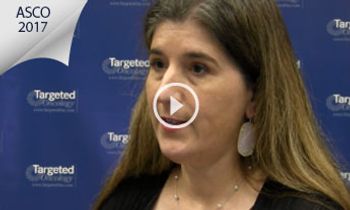
Kathleen N. Moore, MD, assistant professor, The Stephenson Cancer Center, The University of Oklahoma, discusses results of an ongoing clinical trial exploring mirvetuximab soravtansine (IMGN853), a folate receptor alpha-targeting antibody-drug conjugate, in platinum-resistant epithelial ovarian cancer patients, during the 2017 ASCO Annual Meeting.

The PARP inhibitor niraparib (Zejula) provided significant benefits in patients with recurrent ovarian cancer who had a partial response, with similar treatment effects in patients with or without germline <em>BRCA</em> mutations, according to a post-hoc analysis of data from the ENGOT-OV16/NOVA trial presented at the 2017 ASCO Annual Meeting.
Progression-free survival (PFS) continues to be superior with the combination of cediranib maleate and olaparib (Lynparza) compared with olaparib alone in patients with recurrent platinum-sensitive ovarian cancer in a randomized open-label study with follow-up to December 2016.
Napabucasin, a first-in-class cancer stemness inhibitor, can be safely combined with full-dose weekly paclitaxel to treat patients with advanced, platinum-resistant ovarian cancer.
Patients with recurrent, platinum-sensitive ovarian cancer and germline <em>BRCA</em> mutations had significant improvement in progression-free survival (PFS) with no decrement in health-related quality of life (hr-QoL) during maintenance therapy with olaparib (Lynparza), according to a review of patient-reported outcomes in a randomized trial.
Mirvetuximab soravtansine (IMGN853), a folate receptor alpha-targeting antibody-drug conjugate, showed promising activity in patients with platinum-resistant ovarian cancer who had received 1 to 3 prior lines of therapy.
The PARP inhibitor olaparib (Lynparza) provides clinically significant, long-term treatment benefits in patients with platinum-sensitive relapsed serous ovarian cancer, according to the protocol-specified final overall survival (OS) analysis of the phase II Study 19 trial presented during the 2017 ASCO Annual Meeting.
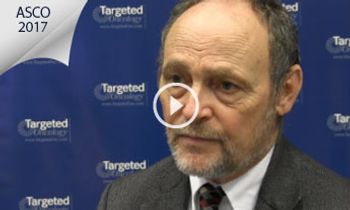
Michael Birrer, MD, PhD, Director, University of Alabama Comprehensive Cancer Center, discusses adverse event results of the phase III SOLO2 trial, which explored maintenance olaparib (Lynparza) tablets in patients with <em>BRCA</em>-mutated platinum-sensitive relapsed serous ovarian cancer.
Second Surgery Extends Progression-Free Survival in Recurrent Ovarian Cancer With Positive AGO Score
A second cytoreductive surgery followed by platinum-based chemotherapy extended progression-free survival (PFS) compared with platinum-based chemotherapy alone in patients with relapsed ovarian cancer and a positive Arbeitsgemeinschaft Gynäkologische Onkologie (AGO) score.
Emma Barber, MD, UNC Department of Obstetrics and Gynecology, UNC School of Medicine, UNC Lineberger Comprehensive Cancer Center, discusses which patients with ovarian cancer are better candidates for neoadjuvant chemotherapy versus surgery.

Bevacizumab demonstrated superior progression-free survival and a trend toward improved overall survival (OS) in patients with proliferative or mesenchymal ovarian tumors compared with patients with immunoreactive or differentiated tumors.
Dennis Scribner, MD, discusses the treatment landscape for patients with recurrent ovarian cancer and how PARP inhibitors have enhanced the treatment options for this population.

Elizabeth Swisher, MD, professor, Department of Medicine, Division of Medical Genetics, University of Washington School of Medicine, discusses a study that explored methylation as a predictor for response in ovarian cancer.
Adding bevacizumab to standard platinum-based chemotherapy demonstrated a clinically significant improvement in median overall survival in women with recurrent ovarian cancer.
The combination of the investigational agent birinapant and carboplatin could eliminate platinum-resistant, high-grade serous carcinoma (HGSC) ovarian tumor cells, according to preclinical findings published in <em>Precision Oncology.</em>
Bradley J. Monk, MD, discusses his insight on the potential of immunotherapy in ovarian cancer, as well as what promise it might hold in other gynecologic malignancies.

Elizabeth Swisher, MD, discusses the results of the ARIEL2 trial in patients in patients with relapsed, platinum-sensitive, high-grade ovarian carcinoma with a germline or somatic BRCA mutation.
Mike Janicek, MD, sheds light on why physicians are slow to educate patients on genetic testing, the detection of genes aside from <em>BRCA1/2</em>, and the lesser-known benefits of getting genetic testing early on in a diagnosis.
Lyndsay J. Willmott, MD, discusses how PARP inhibitor approvals have impacted clinical practice and patient outcomes and quality of life in ovarian cancer.
Heather Dalton, MD, discusses first-line treatment options currently available for patients, pivotal data that have solidified standard approaches, and why chemotherapy will likely always remain critical in the ovarian cancer sphere.
BGB-283, a novel agent that targets <em>RAS/RAF</em>-mutated tumors, demonstrated activity across a variety of tumor types, according to the results of a preliminary clinical evaluation presented at the 2017 AACR Annual Meeting.
A recent study found 12 new genetic variants were found that increase the risk of developing the disease and confirmed the association of 18 previously discovered variants.
A new drug application (NDA) for olaparib (Lynparza) as a maintenance therapy in relapsed patients with platinum-sensitive ovarian cancer has been granted a priority review by the FDA.
The PARP inhibitor niraparib (Zejula) has been approved by the FDA for the maintenance treatment of adult patients with recurrent epithelial ovarian, fallopian tube, or primary peritoneal cancer who are in complete or partial response to platinum-based chemotherapy.
Steven J. Skates, PhD, discusses a study on early detection of ovarian cancer using the Risk of Ovarian Cancer Algorithm (ROCA), in which CA125 was tested in women with high risk who chose to postpone surgery.
Advertisement
Advertisement
Trending on Targeted Oncology - Immunotherapy, Biomarkers, and Cancer Pathways
1
IMS Day 1 Recap: Bispecific and CAR T Data Shape Myeloma Treatment
2
Rusfertide Receives NCCN Category 1 Designation in Polycythemia Vera
3
Life-Years Saved Captures Gains—and Gaps—in Blood Cancer Treatment
4
Global Experts Define Consensus Criteria for Cure in Multiple Myeloma
5