

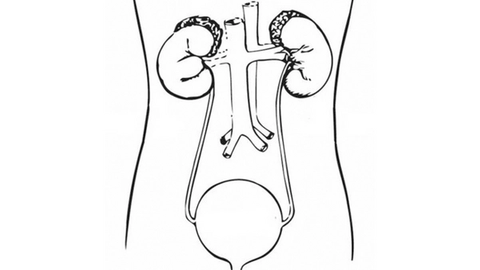



Prostate Cancer
Latest News
Advertisement
Latest Videos













































Advertisement
More News

Disparities in prostate cancer care have been highlighted through a study examining genomic profiling.
The risk of fractures in men with asymptomatic or mildly symptomatic metastatic castration-resistant prostate cancer was controlled by the use of bone-protecting agents during treatment with radium-223 plus enzalutamide.

In patients with metastatic castration-resistant prostate cancer treated in a phase 1/2a study, the HPN424, a tri-specific half-life extended prostate-specific membrane antigen-targeting T cell engager was well tolerated and demonstrated antitumor activity.
Men with nonmetastatic castration-resistant prostate cancer tolerated treatment with darolutamide well, according to findings from the phase 3 ARAMIS trial.
LuPSMA added to standard of care led to a nearly 40% reduction in the risk of death versus standard of care alone in the phase 3 VISION study.
Matthew Smith, MD, PhD, led a panel discussion around the various treatment options for a patient with nonmetastatic castration-resistant prostate cancer.

The FDA has granted approval to piflufolastat F 18 injection, a prostate-specific membrane antigen–targeted positron emission tomography imaging agent, to identify patients who may have metastasis or recurrence of prostate cancer.
The case of a 75-year-old man with stage T2N0M0 prostate cancer was the topic of discussion between 8 oncologists, a physicians assistant, and a nurse practitioner during a recent Targeted Oncology Case-Based Roundtable event moderated by Daniel Landau, MD.
During a Targeted Oncology Case-Based Roundtable event, A. Oliver Sartor, MD, discussed the results of cabazitaxel as a later-line treatment for patients with metastatic castration-resistant prostate cancer.
Although research focused on prostate-specific membrane antigen has been ongoing for almost 2 decades, the timing for the emergence of prostate-specific membrane antigen theranostics could not have been any better.
Improved outcomes for younger African American patients is associated with increased prostate-specific antigen screening.
During a Targeted Oncology Case-Based Roundtable event, Evan Y. Yu, MD leads a discussion on hereditary germline mutations impact on prostate-cancer risk.

Brandon Mahal, MD, discusses challenges facing prostate cancer equity.

Leonard G. Gomella, MD, discusses deciding between active surveillance and precision medicine in mutated prostate cancer.
With the emergence of therapies that target PSMA, a cell surface transmembrane protein that is overexpressed in most prostate cancer cells, particularly in castration-resistant disease, the ability to detect and treat the disease has been transformed.
Eleni Efstathiou, MD, PhD, discussed clinical trials which support the use of certain treatment regimen for patients with nonmetastatic castration-resistant prostate cancer.
During a virtual Targeted Oncology Case-Based Roundtable event, Atish D. Choudhury, MD, PhD, discussed methods for treating patients with nonmetastatic prostate cancer with a group of peers.
During a virtual Targeted Oncology Case-Based Roundtable event, Michael A. Carducci, MD, reviewed the results of the CARD trial to support his recommendation of cabazitaxel for the treatment of a 75-year-old man with metastatic castration-resistant prostate cancer.
Both Olaparib and Rucaparib Demonstrate Efficacy for Metastatic Castration-Resistant Prostate Cancer
The PROfound and TRITON2 clinical trials have demonstrated the benefit of the PARP inhibitors olaparib and rucaparib for the treatment of metastatic castration-resistant prostate cancer.
According to findings from a subgroup analysis of the TALAPRO-1 trial, men with heavily pretreated metastatic castration-resistant prostate cancer, with germline and/or homozygous tumor DNA damage response alterations are most likely to respond to talazoparib.
During a virtual Targeted Oncology Case-Based Roundtable event, Tanya Dorff, MD, discussed the case of a 75-year-old man with metastatic castration-resistant prostate cancer.
Findings from the PROfound and National Comprehensive Cancer Network guidelines for molecular testing were reviewed for a discussion on treatment for 60-year-old man with metastatic castration-resistant prostate cancer.

Masitinib in combination with docetaxel helps to prolong progression-free survival in metastatic castrate-resistant prostate cancer eligible to chemotherapy compared to placebo in combination with docetaxel, meeting the primary end point of the phase 3 AB12003 study.
Roundtable Discussion: Smith Leads a Discussion on the Utility of Genomic Testing in Prostate Cancer
During a Targeted Oncology Case-Based Roundtable event, Matthew Smith, MD, PhD, discussed genomic testing in prostate cancer with a group of peers.
Janssen Pharmaceutical Companies of Johnson & Johnson announced that they are not perusing the regulatory submission for apalutamide and abiraterone acetate as treatment of chemotherapy-naïve metastatic castration-resistant prostate cancer after the combination was not found to show significant benefit over the control combination of prednisone and abiraterone acetate.
Advertisement
Advertisement
Trending on Targeted Oncology - Immunotherapy, Biomarkers, and Cancer Pathways
1
Denosumab Biosimilar Approved For Existing Oncology Indications
2
FDA Oncology Recap: Approvals, Designations, and Decisions in September 2026
3
Plinabulin Receives FDA Fast Track Designation in Post-ICI NSCLC
4
Tile-Based Radiation Improves Local Control in Resected Brain Metastases
5