Pirtobrutinib demonstrates an impressive 81.6% response rate in CLL/SLL patients previously treated with BTK inhibitors, showcasing its efficacy and safety.

Pirtobrutinib demonstrates an impressive 81.6% response rate in CLL/SLL patients previously treated with BTK inhibitors, showcasing its efficacy and safety.
Zanubrutinib shows sustained efficacy and safety in relapsed/refractory CLL, with a median progression-free survival of 52.5 months in long-term follow-up.
Pirtobrutinib shows superior overall response rates and promising progression-free survival compared to ibrutinib in treating chronic lymphocytic leukemia.
Epcoritamab combined with rituximab and lenalidomide shows remarkable efficacy in treating relapsed follicular lymphoma, setting a new standard of care.
Azacitidine plus venetoclax significantly enhances event-free survival and quality of life in acute myeloid leukemia patients compared with traditional chemotherapy.
Gintemetostat shows promising efficacy and safety in heavily pretreated multiple myeloma patients, paving the way for future combination therapies.
Epcoritamab combined with R-mini-CHOP shows promising efficacy and safety in elderly DLBCL patients, achieving high response rates and durable remissions.
Rusfertide shows sustained hematocrit control and high phlebotomy ineligibility in polycythemia vera patients, demonstrating safety and efficacy through 52 weeks.
New findings reveal the feasibility and safety of transitioning axatilimab dosing for chronic graft-vs-host disease, showing promising response rates.
New research reveals KRd therapy significantly enhances progression-free survival in newly diagnosed multiple myeloma compared to traditional VRd treatment.
Odronextamab shows promising efficacy in treating untreated DLBCL, achieving high response rates when combined with CHOP chemotherapy in early trials.
Cilta-cel therapy shows improved outcomes in earlier treatment lines for relapsed/refractory multiple myeloma, enhancing immune fitness and survival rates.
Lisaftoclax shows promising efficacy and safety in treating relapsed/refractory CLL/SLL, achieving a 62.5% response rate and 23.89 months progression-free survival.
The ACCESS study reveals that posttransplant cyclophosphamide improves survival rates for patients with mismatched unrelated donor transplants, expanding donor options.
Discover the most anticipated abstracts in hematologic malignancies at the 2025 ASH Meeting, featuring groundbreaking studies and innovative therapies.
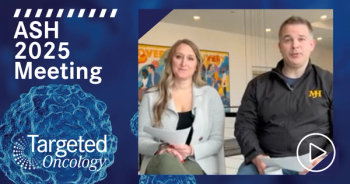
Co-hosts Kristie L. Kahl and Andrew Svonavec highlight what to look forward to at the 67th Annual ASH Meeting in Orlando.

Discover the most anticipated abstracts at the 67th ASH Annual Meeting and Exposition, showcasing groundbreaking research in hematologic malignancies and innovative treatments.

Patients with AML aged 80 years and older face poor survival despite treatment advances, highlighting the need for improved, equitable care strategies and tailored treatment approaches.

Here are some of the highlights from this year's 2024 ASH Annual Meeting & Exposition.
Real-world data suggest optimal CLL/SLL treatment sequencing involves targeted therapies, including covalent BTKis and BCL2 inhibitors, for better survival outcomes.
Adverse events associated with ponatinib in CML and ALL were shown to have decreased significantly since its approval, following various risk management measures.
Selinexor with ruxolitinib demonstrated encouraging efficacy with a manageable safety profile in patients with myelofibrosis who were previously treated with ruxolitinib.
Adding tafasitamab to lenalidomide and rituximab significantly reduced the risk of disease progression or death in patients with relapsed/refractory follicular lymphoma.
"[Patients with] mantle cell lymphoma in first complete response with undetectable MRD did not benefit from consolidative autologous transplant," said Timothy Fenske, MD, MS.
“These long-term data support axicabtagene ciloleucel as a highly effective therapeutic approach for patients with relapsed or refractory indolent non-Hodgkin lymphoma, with curative potential in patients with follicular lymphoma,” said Sattva S. Neelapu, MD.
The novel Bruton tyrosine kinase degrader BGB-16673 shows promise in relapsed/refractory Waldenström macroglobulinemia previously exposed to BTK inhibitors, and in heavily pretreated patients with R/R chronic lymphocytic leukemia/small lymphocytic lymphoma.
Fixed-duration glofitamab combined with polatuzumab vedotin achieved high response rates and sustained remissions in heavily pretreated relapsed/refractory large B-cell lymphoma.