Manojkumar Bupathi, MD, MS, discusses the updated efficacy results of the CheckMate 9ER trial of cabozantinib plus nivolumab for patients with previously untreated advanced clear cell renal cell carcinoma.

Manojkumar Bupathi, MD, MS, discusses the updated efficacy results of the CheckMate 9ER trial of cabozantinib plus nivolumab for patients with previously untreated advanced clear cell renal cell carcinoma.
Glenn J. Hanna, MD, discusses the results of a study investigating nivolumab as treatment for proliferative leukoplakia leading to oral cancer.

Peter A. McSweeney, MD, discusses the challenges that come with administering chimeric antigen receptor T-cell therapy. He also explains how CAR T cells entering the second-line may change the ways community practices choose treatments for their patients.

In the interview with Targeted Oncology, Anna Jo Bodurtha Smith, MD, discusses the effects various insurance types have on the quality of care of patients with gynecologic cancers.
William J. Gradishar, MD, discusses the choice of adjuvant or neoadjuvant regimens for patients with HER2-positive breast cancer.
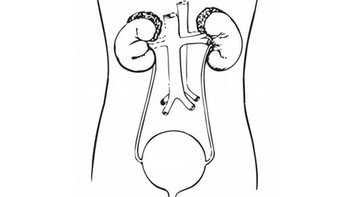
In an interview with Targeted Oncology, Jeanny B. Aragon-Ching, discussed recent updates from the JAVELIN Bladder 100 trial. She also discussed ongoing research involving the novel agent EV-103 in patients with advanced or metastatic urothelial cancer.

Wesley Burkett, MD, adiscusses his excitement for the approval of pembrolizumab in combination with lenvatinib for patients with advanced endometrial carcinoma that is not microsatellite instability-high or mismatch repair deficient.
Glenn J. Hanna, MD, discusses proliferative leukoplakia and risk of oral cancer.

In an interview with Targeted Oncology, Hagop Kantarjian, MD, analyzed the results of the phase 2, OPTIC and PACE trials and explained what these data mean for the future use and administration of ponatinib.

David O'Malley, MD, looks at the preclinical signals of the novel MUC16 antibody ubamatamab, which showed promising results for patients with recurrent ovarian cancer.
Frederick Marme, MD, discusses new results from the TROPICS-02 study of sacituzumab govitecan for the treatment of patients with hormone receptor-positive, HER2-negative metastatic breast cancer.
Isabelle Ray-Coquard, MD, discusses the final overall survival results from the phase 3 PAOLA-1/ENGOT-ov25 trial.

In an interview with Targeted Oncology, Ronan Kelly, MD, discussed the most recent updates seen in these patient populations and what research aims to further examine.

In an interview with Targeted Oncology, Larisa Greenberg, MD discussed the current state of thyroid cancer, challenges, and where the field is headed in the near future.

Gene G. Finley, MD, explains a questions lingering on the benefit of immunotherapy in patients with small call lung cancer.
Jean Bourhis, MD, discusses results from the phase 2 study of xevinapant plus chemoradiation vs placebo and chemoradiation in patients with locally advanced squamous cell carcinoma of the head and neck.

In an interview with Targeted Oncology, Ghassan K. Abou-Alfa, MD, discussed 3 late breaking abstracts in the hepatocellular carcinoma space currently influencing the field.
Salman Fazal, MD, explains how to lower the risk of graft-versus-host disease in patients who undergo allogeneic stem cell transplant.

Cary Gross, MD, discusses the background of his research on patients with lung cancer and Medicaid.
In an interview with Targeted Oncology, Naval G. Daver, MD, discussed the approved and investigational CD47 monoclonal antibodies for patients with acute myeloid leukemia and myelodysplastic syndrome and where research is taking this space.
Naval G. Daver, MD, discusses the latest research on magrolimab, a CD47 monoclonal antibody, for patients with acute myeloid leukemia and myelodysplastic syndrome.
Andrew A. Lane, MD, PhD, discusses the study design of a phase 1/2 trial of tagraxofusp-erzs for patients with blastic plasmacytoid dendritic cell neoplasms.

In an interview with Targeted Oncology, Paul Richardson, MD, discussed the outcome of the ODAC meeting and provided his personal insights on what may be next for melphalan flufenamide.
Bradley A. McGregor, MD, discusses new trials of intensified combination regimens for frontline treatment of patients with intermediate- or poor-risk advanced renal cell carcinoma.

Chenyu Lin, MD, discusses the significance of a 10-year follow up of a study of patients who underwent allogeneic stem cell transplant with the novel cell therapy omidubicel.

In an interview with Targeted Oncology Richard Finn, MD, discussed the implications of the LEAP-002 trial.

In an interview with Targeted Oncology, Mazyar Shadman, MD, MPH, discussed what community oncologists should keep in mind when treating patients who are viable for CAR T-cell therapy.
Jonathan E. Rosenberg, MD, discusses what the frontline treatment landscape for metastatic urothelial cancer currently looks like.
Alexander Drilon, MD, discusses what community oncologists should know about testing for NTRK gene fusions in patients with solid tumors.
Genevieve Boland, MD, PhD, discusses the latest updates to the melanoma treatment landscape.