With the incidence of HPV-positive oropharyngeal cancers on the rise, researchers are currently seeking less intense treatment options that combine effectiveness and low toxicity for patients.

With the incidence of HPV-positive oropharyngeal cancers on the rise, researchers are currently seeking less intense treatment options that combine effectiveness and low toxicity for patients.
The kinase inhibitors sorafenib (Nexavar) and lenvatinib (Lenvima) have significantly altered the treatment paradigm for patients with advanced radioactive iodine (RAI)-refractory differentiated thyroid cancer in both older and younger populations, with combination strategies hoping to further build upon this success.
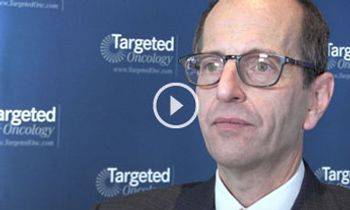
George D. Demetri, MD, director, Center for Sarcoma and Bone Oncology, Dana-Farber Cancer Institute, discusses the trial the led to the approval of trabectedin (Yondelis) for advanced leiomyosarcoma or liposarcoma.
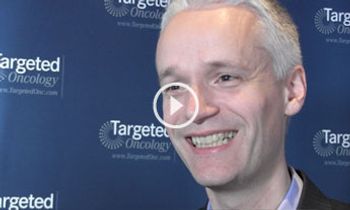
Robin L. Jones, BSc, MB, MRCP, MD, Consultant Oncologist, Royal Marsden Hospital, London, England, discusses results and takeaways from a phase III trial presented at the 2015 Connective Tissue Oncology Society (CTOS) Annual Meeting.
Dr. Jonathan Trent discusses the FDA approval of trabectedin for patients with soft tissue sarcomas.
Maurie Markman, MD, president of Medicine and Science, Eastern Regional Medical Center, talks about use of PD-1 inhibitors in ovarian cancer and the lack of evidence pointing toward their functionality.
Monoclonal antibodies, specifically the CD3 and CD19 bispecific agent blinatumomab (Blincyto) and the CD22-targeted antibody-drug conjugate inotuzumab ozogamicin, are set to overhaul the treatment of adults with relapsed acute lymphoblastic leukemia.
Achieving optimal results with novel antibodies like elotuzumab (Empliciti) and daratumumab in multiple myeloma treatment will involve combination regimens with established agents, according to Sagar Lonial, MD.
The news of a shifting landscape for the diagnosis and treatment of polycythemia vera (PV) is a good thing for patients and practitioners. The altered playing field means refined criteria for diagnosing symptomatic patients, identifying those at highest risk, and an impressive arsenal for treating a disease which carries such heavy symptom burdens.
While CLL patients have lived longer with the use of B-cell pathway inhibitors, they require diligent monitoring and even potential suspension to control adverse events.
Pro-inflammatory cytokines were elevated in patients with melanoma undergoing the combination treatment of radiation therapy and the systemic anti�CTLA-4 immunotherapy, ipilimumab.
Paul Walfish, MD, professor emeritus at the University of Toronto School of Medicine, senior consult Mount Sinai Hospital discusses programmed death ligand 1 (PD-1) expression in aggressive metastatic papillary thyroid cancer.

A Japanese research team attempted to standardize therapy for anaplastic thyroid carcinoma by assessing the feasibility and efficacy of weekly paclitaxel administration.

A comprehensive review of patients receiving pembrolizumab has found an incidence of abnormal thyroid function tests as high as 15%.
Investigators at the Mount Sinai School of Medicine, Toronto, Canada, have been working on a potential correlation for aggressiveness and/or disease-free survival in thyroid cancer patients.

Patients who had prostate cancer recurrence after radical prostatectomy lived significantly longer with the addition of hormonal therapy to salvage radiotherapy, long-term follow-up from a randomized trial showed.
Michael Tuttle, MD, endocrinologist Memorial Sloan Kettering (MSK), discusses best management approaches to radioactive iodine treatment in patients with radioiodine avid distant metastases from differentiated thyroid cancer.

Intensity-modulated radiation therapy (IMRT) for cervical cancer has led to a double-digit decrease in late bowel toxicity compared with 3-D conformal radiation therapy without statistical significance.
Researchers have posited that well-differentiated thyroid cancers harbor distinct molecular pathological profiles that may be useful as prognostic indicators of future aggressiveness.
The rising overall risk of all sizes of malignant thyroid cancer has made clinicians question whether or not sub-centimeter thyroid nodules should also be biopsied.
While medullary thyroid cancer is not common as other thyroid cancers, it does have a poorer prognosis than these more common forms of metastatic thyroid cancer.

Ultra-hypofractionated radiation therapy for low-risk prostate cancer led to significantly lower rates of bowel and urinary dysfunction compared with patients treated with conventional radiotherapy regimens.
A novel serotonin synthesis inhibitor, telotristat etiprate, helped reduce daily bowel movements for patients with carcinoid syndrome no longer responding to standard-of-care treatments, an encouraging sign for an emerging class of drugs.
Dr. Erin Murphy talks about a study presented by Dr. Thomas E. Merchant regarding young patients with ependymoma and how they can be treated effectively with a regiment of adjuvant radiation.

Danae Delivanis, MD, Division of Endocrinology, Diabetes, Metabolism, and Nutrition at Mayo Clinic, discusses pembrolizumab-induced thyroiditis in patients with cancer.
BRAF V600E is essential to the survival of many tumors and has been the focus of targeted therapeutics like a new BRAF V600E-selective inhibitor, which has been used for papillary thyroid carcinomas.
Keith Bible, MD, PhD, Mayo Clinic professor of oncology goes into detail about the current status of using VEGFR tyrosine kinase inhibitors to treat thyroid cancer.

Cabozantinib, an oral multikinase inhibitor, showed promise as second- or third-line therapy in patients with advanced differentiated thyroid cancer (DTC).
Hypofractionated radiotherapy can achieve similar cure rates with similar side effects compared with conventional radiotherapy for men with low-risk, early prostate cancer, according to a recent study.

Dr. Sylvia Asa, MD, PhD, pathologist with the Toronto General Hospital/Research Institute (UHN) and a professor at the University of Toronto, discusses genotyping and the role it can play in diagnosing and selecting targeted treatments for thyroid cancer.