

New study reveals a blood-based test effectively detects cancers in survivors, bridging the surveillance gap and enhancing long-term monitoring.


Your AI-Trained Oncology Knowledge Connection!
New study reveals a blood-based test effectively detects cancers in survivors, bridging the surveillance gap and enhancing long-term monitoring.

AstraZeneca and Daiichi Sankyo launch a pivotal trial to assess T-DXd as a potential adjuvant therapy for HER2-expressing endometrial cancer.
FDA approves mosunetuzumab-axgb for quick subcutaneous treatment of relapsed follicular lymphoma, enhancing patient care and reducing clinic time.

Pirtobrutinib shows significant efficacy and safety in treating relapsed/refractory follicular lymphoma, with promising response rates and durable outcomes.
During a live event, Hannah Choe, MD, analyzed key findings from the AGAVE-201 trial of axatilimab in chronic graft-vs-host disease.
JSKN003, a novel HER2-targeting ADC, shows promising efficacy in treating platinum-resistant ovarian cancer, earning FDA breakthrough therapy designation.
FDA designates T-DXd as breakthrough therapy for high-risk HER2-positive early breast cancer, promising improved survival rates over current treatments.

A phase 2 trial reveals elraglusib shows potential benefits in select patients with recurrent salivary gland carcinomas despite missing primary response goals.

Discover the latest FDA approvals and groundbreaking treatments in oncology, setting new standards for cancer care and improving patient outcomes.
FDA approves CBI-1214 for colorectal cancer, enabling fast-tracked clinical trials and highlighting innovative T-cell engager technology.

New trial results reveal nivolumab plus relatlimab fails to improve recurrence-free survival in resected stage III-IV melanoma, prompting further research.
Duvelisib is now a recommended treatment for cutaneous T-cell lymphoma, highlighting its evolving role in oncology amidst safety concerns.

Trial results in multiple myeloma at the 2025 ASH Annual Meeting provide potential practice-changing paradigm shifts.
Emerging evidence of the benefit of antibody-drug conjugates in diffuse large B-cell lymphoma continues to make a strong case for the agents to be used in earlier lines of therapy.
The FDA fast-tracks BGB-B2033, a promising bispecific antibody, for advanced hepatocellular carcinoma, enhancing treatment options for patients.

Ultrasensitive ctDNA analysis reveals early predictive insights for immunotherapy outcomes in advanced solid tumors, enhancing patient management and survival predictions.

Interim results reveal RAD 101's promising potential in accurately diagnosing brain metastases, enhancing treatment decisions for patients.

Pelareorep shows promising results in treating KRAS-mutant metastatic colorectal cancer, achieving a 33% response rate and improved survival outcomes.
Miguel-Angel Perales, MD, spoke with Targeted Oncology® about the problems the CAR T Vision group has identified and the key short-term and long-term steps being taken to expand the accessibility of CAR T-cell therapy.

Liquid biopsy enhances risk assessment for patients with neoadjuvant therapy-resistant tumors, guiding treatment decisions and improving survival outcomes.
The FDA approves a new subcutaneous formulation of amivantamab, enhancing treatment for advanced lung cancer with reduced administration time and improved safety.
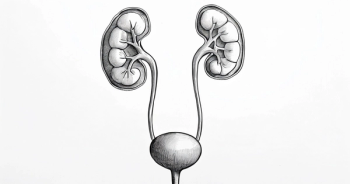
New combination therapy shows a 96% survival rate in patients with BCG-unresponsive bladder cancer, offering a promising alternative to radical cystectomy.
During a live event, Christine M. Parseghian, MD, examined the key trials guiding treatment selection for a patient who received 2 prior lines of therapy for metastatic colorectal cancer.
Rucaparib receives full FDA approval for treating metastatic castration-resistant prostate cancer, offering a vital chemotherapy-free option for patients.
Orca-T immunotherapy shows promising results in improving survival and reducing complications in patients with hematologic malignancies compared to traditional treatments.
A groundbreaking trial shows that combining enfortumab vedotin and pembrolizumab enhances survival rates in muscle-invasive bladder cancer patients.
PLT012, a groundbreaking anti-CD36 antibody, enters clinical trials to enhance immune responses in solid tumors, promising new hope for cancer treatment.

During a live event, Matthew Lunning, DO, discussed key factors that determine whether patients should receive CAR T-cell therapy, autologous stem cell therapy, or other treatment options.
FDA fast-tracks muzastotug and pembrolizumab for metastatic colorectal cancer, showcasing promising efficacy and safety in early studies.
Roxadustat receives orphan drug designation for myelodysplastic syndromes, highlighting its potential to improve transfusion independence in patients.