

Ongoing and future trials will attempt to demonstrate the benefi t of NK cell therapies in lymphomas, multiple myeloma, sarcomas, and glioblastoma multiforme, among others.

Ongoing and future trials will attempt to demonstrate the benefi t of NK cell therapies in lymphomas, multiple myeloma, sarcomas, and glioblastoma multiforme, among others.
Pembrolizumab shows promise in advanced endometrial cancer, cutting progression risk by up to 70%. The FDA has granted a priority review for this treatment option.
The FDA has accepted and granted priority review for the new drug application for vorasidenib for the treatment of IDH-mutant diffuse glioma, with a PDUFA action date set for August 20, 2024.

AI is seemingly everywhere, and while its applications in cancer care have increased, it still faces challenges.

Lori J. Wirth, MD, provides an overview on the latest advancements in diagnosis of thyroid cancer.

Stem cell treatments offer hope for a variety of conditions. However, access to these potentially life-altering procedures is often hampered by social factors such as socioeconomic status, race, cultural background, and geographic location.

Osimertinib shows significant progression-free survival improvement in stage III EGFR-mutated non-small cell lung cancer post-chemoradiotherapy, marking a major advance in treatment options for this patient population.
The FDA has accepted the biologics license application of datopotamab deruxtecan for the treatment of nonsquamous non-small cell lung cancer.
This week's Targeted Pulse touches on the latest in cancer news and research updates.

Adding prophylactic acyclovir therapy to the treatment regimen for patients undergoing a stem cell transplant reduced the rates of chemotherapy-induced oral mucositis, a common and significant adverse effect of the treatment.
A study suggests that a novel CAR T-cell therapy could be a curative treatment for some patients with chronic lymphocytic leukemia, with 25% of responders still in remission after 6 years.
The FDA has approved the combination of osimertinib plus chemotherapy for the treatment of EGFR-mutated non-small cell lung cancer.
The FDA has approved lifileucel, a tumor infiltrating lymphocyte therapy, for the treatment of advanced melanoma.

Michiel S. Van der Heijden, MD, PhD, discusses the methods, design, and findings of the phase 3 CheckMate 901 trial of concurrent frontline nivolumab and chemotherapy followed by nivolumab maintenance therapy in urothelial carcinoma.
In an interview with Targeted Oncology, Douglas Tremblay, MD, discussed the significance of cytoreductive therapy in mitigating thrombotic risk in myeloproliferative neoplasms.

Pedro Barata, MD, MSc, FACP, discusses tackling unmet needs in oncology at the NRG Oncology Semiannual Meeting taking place February 15-17, 2024.
Following the FDA clearance of an investigational new drug application, a phase 1 trial will evaluate KME-0584 for the treatment of patients with acute myeloid leukemia and myelodysplastic syndrome.
The FDA has granted an orphan drug designation to tigilanol tiglate for the treatment of soft tissue sarcoma.
In an interview with Targeted Oncology, Stephen J. Schuster, MD, further discussed the rationale and findings from the phase 2 ELARA study of tisa-cel among patients with follicular lymphoma.
The FDA has now fully approved tepotinib for the treatment of metastatic non-small cell lung cancer.

A phase 2 trial is underway to assess alisertib for extensive-stage small cell lung cancer treatment, aiming to enroll up to 60 patients.

In an interview with Targeted Oncology, Eric Schroeder, MD, discussed the transformative shift that the landscape of ovarian cancer treatment has undergone in recent years.
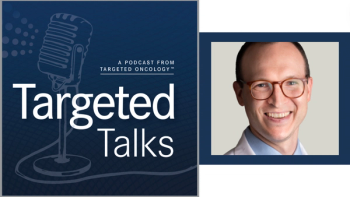
In this episode of Targeted Talks, Ben Derman, MD, dissects the latest advancements in myeloma treatment, focusing on the role of ClonoSeq and minimal residual disease monitoring.

In an interview for Cholangiocarcinoma Awareness Day, Domenech Asbun, MD, discussed how the management of cholangiocarcinoma continues to evolve and addressed unmet needs in early detection and systemic therapy.

Paula Rodriguez-Otero, MD, PhD, provides an overview of the phase 3 KarMMa-3 trial of idecabtagene vicleucel for the treatment of adult patients with relapsed and refractory multiple myeloma.
Neal Shore, MD, FACS, discusses a study aimed to investigate the real-world survival outcomes of men with metastatic castration-sensitive prostate cancer treated with either apalutamide or enzalutamide in the United States.

In an interview with Targeted Oncology, Shervin Tabrizi, MD, discussed the development of a 2-part priming strategy aimed at enhancing the sensitivity of liquid biopsies for cancer detection and monitoring.
A phase 1, first-in-human study is evaluating a novel CAR T-cell therapy in patients with ovarian cancer at Moffitt Cancer Center.
The biologics license application for denileukin diftitox has been resubmitted to the FDA for the treatment of cutaneous T-cell lymphoma after at least 1 prior systemic therapy.
The FDA has granted the supplemental new drug application of repotrectinib priority review.