

A recent study found that CXC chemokine ligand 13 and galectin-9 could be prognostic biomarkers of progression-free survival and treatment response in patients with chronic lymphocytic leukemia.

A recent study found that CXC chemokine ligand 13 and galectin-9 could be prognostic biomarkers of progression-free survival and treatment response in patients with chronic lymphocytic leukemia.
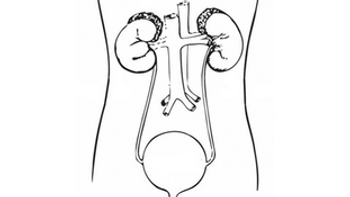
An analysis, based on data from the JAVELIN 100 Bladder trial, found the NCCN/FACT Bladder Symptom Index-18 for assessing quality-of-life in patients with advanced urothelial carcinoma to be reliable and valid.

Viktor Grünwald, MD, PhD, discusses what findings from the post hoc analysis of the CLEAR trial of lenvatinib plus pembrolizumab vs sunitinib for patients with renal cell carcinoma mean for community oncologists.
Arnab Basu, MD, MPH, FACP, discusses molecular residual disease-guided adjuvant therapy in patients with renal cell carcinoma, highlighting the rationale and goals of the MRD gate RCC clinical trial.
Survival benefits for immunotherapy doublets outweigh chemotherapy alone in advanced stage PD-L1-negative non-small cell lung cancer.
Hossein Borghaei, MS, DO, provides an overview on his presentation given at the 18th Annual New York Lung Cancers Symposium.
The early adoption of ctDNA into the clinical workflow improves time to treatment, survival, and monitoring for patients undergoing molecular-based therapy.
Early trials are exploring the benefit of chimeric antigen receptor T-cell therapy in advanced renal cell carcinoma.
In a presentation at the 2023 International Kidney Cancer Symposium, Maxine Sun, PhD, MPH, discussed the relationship between clonal hematopoiesis in patients with kidney cancer and their risk for cardiac events.

In an interview with Targeted Oncology, Penn Medicine’s Qian Wang, MD, MPH, gives an in-depth overview of the molecular targets in the small cell lung cancer field.
The RCC Cancer Immunity Cycle may inform the treatment and development of novel therapies in renal cell carcinoma moving forward.
An expert discussed how the use of circulating tumor DNA in patients with RCC may help guide whether treatment should be intensified or deescalated.
For many immune-related adverse events, steroids are used as frontline treatment. However, it remains unclear if steroids allow for preservation of the antitumor immune response, resulting in the need for more options for patients with cancer.

Alan Tan, MD, discusses areas of interest in the research and development of circulating tumor DNA in renal cell carcinoma.
Results unveiled at the 2023 International Kidney Cancer Symposium revealed that patients with advanced clear cell renal cell carcinoma in the 200-mg dose group achieved an overall response rate of 23.1% based on blinded independent central review.

In an interview with Peers & Perspectives in Oncology, Barbara Morris, DHSc, LAT, ATC, CSCS, HDDP, the director of corporate safety at Florida Cancer Specialists and Research Institute (FCS), discussed how her organization prepares for hurricanes, so that patients and employees remain safe and up-to-date throughout the storm.
In a presentation at the 2023 International Kidney Cancer Symposium, Jaleh Fallah, MD, discussed the regulatory agency’s evaluation of data from the phase 2 LITESPARK-004 trial, which led to the approval of belzutifan.
Patients with advanced clear cell renal cell carcinoma treated with zanzalintinib had experienced promising antitumor activity with manageable toxicity regardless of prior treatment with cabozantinib.
RP2 demonstrated promising response rates and tolerability in the treatment of metastatic uveal melanoma, both as a monotherapy and in combination with nivolumab.

In an interview with Targeted Oncology, Joshua Sabari, MD, discussed the rationale of studying LY3537982 in the LOXO-RAS-20001 trial and next steps for the evaluation of the agent.
An expert discussed how recent studies in patients with translocation RCC, a rare type of RCC, have demonstrated that the disease responds well to immune checkpoint inhibitors, but more focus is needed on novel targets to treat it.
The combination of and investigational immune checkpoint inhibitor, immunotherapy, and antibody-drug conjugate showed improvements in overall survival in patients with a variety of human papillomavirus-positive cancers.

Paul Lammers, MD, MSc, talks about the future of cell therapies and the applications of TAC-01 in solid tumors.

TX-030, a potential first-in-class, anti-CD39 antibody, is being evaluated in a phase 2 trial in metastatic pancreatic ductal adenocarcinoma.
AU-007 demonstrated promising early efficacy and safety data when given alone or in combination with aldesleukin across multiple solid tumor types.

A phase 1/2 trial is evaluating the safety, efficacy, and tolerability of RZ-001 in patients with glioblastoma.

THIO has received 2 prior orphan drug designations, and the agent has shown promise in preclinical studies for the treatment of glioblastoma.
The application for lisocabtagene maraleucel in relapsed or refractory chronic lymphocytic leukemia/small lymphocytic lymphoma has been accepted by the FDA, following positive results from the TRANSCEND CLL 004 study.

Johanna Kaufmann, PhD, discusses promising preclinical findings on first-in-class oncolytic viral therapy in breast cancer treatment.
Paul Lammers, MD, MSc, talks about the ongoing clinical trial investigating TAC-01 in HER2-expressing solid tumors.