
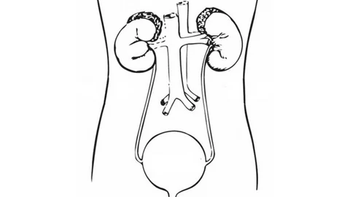
Treatment with TARA-002 at 3 different dose levels was generally well-tolerated, and no dose limiting toxicities were observed among patients with high-grade non-muscle invasive bladder cancer.

Treatment with TARA-002 at 3 different dose levels was generally well-tolerated, and no dose limiting toxicities were observed among patients with high-grade non-muscle invasive bladder cancer.
Here is a look back at all of the FDA happenings from April 2023.

Charles Geyer, MD, advises his peers on how to manage the grade 3 or higher toxicities and any serious adverse events seen in the clinical trial setting with adjuvant olaparib.
Findings from the COMMANDS study in which luspatercept showed statistically significant and clinically meaningful improvements for patients with low-risk myelodysplastic syndrome, the FDA has set a target action date of August 28, 2023.

The combination of lenvatinib and pembrolizumab continued to show benefits in efficacy vs chemotherapy among patients with endometrial cancer treated in Study 309/KEYNOTE-775.

Nivolumab plus ipilimumab showed clinically meaningful overall survival results at 3 years among special populations of patients with metastatic non–small cell lung cancer.

In an interview with Targeted Oncology, Ken Kato, MD, PhD, discussed background and findings from the phase 3 CheckMate 648 trial among patients with esophageal squamous cell carcinoma.

Valencia D. Thomas, MD, MHCM, discusses the current landscape for patients with non-melanoma skin cancers.

An accelerated diagnostic assessment program was initiated to improve wait times for a diagnostic work-up in which a cancer diagnosis is suspected.
The Oncologic Drugs Advisory Committee has discussed the approval application for olaparib plus abiraterone and prednisone or prednisolone for patients with metastatic castration-resistant prostate cancer and voted on its potential future.

The prespecified interim analysis of the RENOTORCH study showed toripalimab plus axitinib improved progression-free survival, overall response rates, and showed no new safety signals among patients with renal cell carcinoma.
This trial of HST-1011 will evaluate the safety, tolerability, pharmacokinetics, harmacodynamics, and preliminary clinical activity of the agent when administered as a monotherapy or in combination with cemiplimab.

Pierre Gholam, MD, discusses his thoughts on a phase 3 trial which evaluated camrelizumab plus rivoceranib vs sorafenib in the first-line for patients with unresectable hepatocellular carcinoma.

Rupesh Kotecha, MD, discusses results of an analysis which centered around the use of pulse reduced dose rate intensity-modulated radiotherapy in patients with central nervous system malignancies.
Additional findings from KEYNOTE-826 reveal no negative health-related quality-of-life impact when using pembrolizumab plus chemotherapy with or without bevacizumab.

The use of DecisionDx-Melanoma to guide better risk-aligned care for patients with cutaneous melanoma who are considered low-risk by staging is supported by study findings.

As we better understand the use of artificial intelligence in oncology, experts can improve outcomes, develop approaches to solve problems, advance the development of treatments that are made available to patients with cancer, and more.

Matthew A. Ingham, MD, discusses the key takeaways from an article he co-authored regarding novel therapeutics in uterine sarcoma.
Treatment with ceralasertib with and without olaparib showed promising signals of clinical activity in multiple rare gynecologic cancers, according to findings presented at the European Society for Medical Oncology Gynaecologic Cancers Congress 2023.

For Head and Neck Cancer Awareness Month, we looked at the connection between the human papillomavirus and this disease, and the role it has in determining treatment now and in the future.

Anna Jo Bodurtha Smith, MD, MPH, MSc, discusses why the number of patients with gynecologic cancer that never see a gynecologic oncologist is so high.
Treatment with niraparib elicited durable conditional progression-free survival rates vs placebo in patients with ovarian cancer whose tumors were homologous recombination deficient.
A patient treated with the second highest dose level of FHD-609 had a grade 4 adverse event. Enrollment in the study of the agent in patients with synovial sarcoma or SMARCB-1 deleted tumors has been halted.
Primary end point data from the phase 2 KEYNOTE-695 study did not meet the prespecified end point of overall response rate for patients with advanced melanoma.

Bruno Bockorny, MD, explains the mechanism of action of botensilimab and its use in combination with balstilimab for ovarian cancer treatment.
The FDA continues to push forward PSMA-targeted therapies to address unmet needs for patients with metastatic castration-resistant prostate cancer.
Promising results from a type C meeting with the FDA has led to a phase 2/3 trial of darovasertib and crizotinib being initiated in 2023 for patients with first-line HLA-A2 negative metastatic uveal melanoma.
Significant rates of homologous recombination deficiency somatic gene mutations were found in patients with uterine serous cancer, resulting in possible implications for future testing and treatment for the patient population, according to the results of a research study.

Promising efficacy has been seen with the use of immunotherapy for the management of patients with hepatocellular carcinoma, Now, durvalumab and tremelimumab combination therapy is being studied for this patient population listed for a liver transplant.

A phase 1 trial of EPI-7386 will evaluate the safety, pharmacokinetics, drug-drug interactions, and preliminary anti-tumor activity of the agent in combination with apalutamide or abiraterone acetate plus prednisone.