

According to findings from the phase 1 COBALT-RCC trial, CTX130 led to an objective response rate of 8%, a stable disease rate of 69%, and a disease control rate of 77% in patients with advanced clear cell renal cell carcinoma.

According to findings from the phase 1 COBALT-RCC trial, CTX130 led to an objective response rate of 8%, a stable disease rate of 69%, and a disease control rate of 77% in patients with advanced clear cell renal cell carcinoma.

Months after the FDA granted accelerated approval to dostarlimab for this rectal cancer indication, phase 2 data have confirmed its efficacy and safety.
Based on the acceptance of its investigational new drug application by the FDA, the safety and tolerability of HT-001 will be evaluated in the phase 2a CLEER of patients with rash and skin disorders associated with EGFR inhibitor therapy.

In an interview with Targeted Oncology, Gayathri Ravi, MD, further discussed findings from a presentation at ASH 2022, and the role of minimal residual disease testing in multiple myeloma.

Following clearance by the FDA and AEMPS, the phase 2b VIRAGE trial of VCN-01 plus gemcitabine and nab-paclitaxel dosed its first patient with pancreatic ductal adenocarcinoma.
The ability to modify disease in patients with myelofibrosis was signaled in the REFINE study. The combination also displayed positive efficacy and was tolerable.
BXQ-350 in combination with modified FOLFOX7 and bevacizumab will be evaluated in a phase 1b/2 study of metastatic colorectal carcinoma.
Lucio Gordan, MD, has assumed the role of President & Managing Physician at Florida Cancer Specialists & Research Institute.

John M. Burke, MD, highlights progress in the field of hematology and oncology presented at the 64th American Society of Hematology Annual Meeting and Exposition.

In an interview with Targeted Oncology, Ariel Perez, MD, explained the outcomes of patients with R/R large B-cell lymphoma who were treated with Pola-BR in the real-world setting, and the key takeaways from a single-institution study.

Melanie Goldfarb, MD, MSc, FACS, FACE, FSSO, discusses the importance of survivorship and providing care to patients with thyroid cancer.
In an interview with Targeted Oncology, Jennifer R. Brown, MD, PhD, discussed the findings from the ALPINE study and the effectiveness of zanubrutinib when used for patients with chronic lymphocytic leukemia or small lymphocytic lymphoma.

In an interview with Targeted Oncology, Ben Derman, MD, discussed data from an ongoing clinical trial evaluating MRD-guided discontinuation of maintenance therapy in patients with multiple myeloma.

In an interview with Targeted Oncology, Guenther Koehne, MD, PhD provided a detailed explanation on the impact of cytomegalovirus reactivation post-transplant, cytomegalovirus reactivation prevention, and refractory cytomegalovirus reactivation.
With the FDA clearing an investigational new drug application for HBM1020, the antibody can begin to be evaluated in clinical trials of patients with solid tumors.
In an interview with Targeted Oncology, Yazan Samhouri, MD, discussed new agents, clinical trials, and developments creating change in diffuse large B-cell lymphoma, as well as the key takeaways from ASH 2022.

The phase 1 study of ADXS-504 for the treatment of early prostate cancer is ongoing and new patients with be enrolled to test a higher dose level.
Findings from the phase 2 ROCKET trial showed a benefit in progression-free survival, overall survival, and overall response rate in patients with colorectal cancer treated with RRx-001 plus irinotecan.

Anna Jo Bodurtha Smith, MD, discusses her research on insurance mediated disparities in gynecologic oncology.
The FDA has granted the OncobiotaLUNG assay a breakthrough device designation for the early detection of lung cancer.
JBI-802, which is being evaluated in a phase 1/2 trial, received an orphan drug designation from the FDA for the treatment of patients with small cell lung cancer and acute myeloid leukemia.

Patients with cancer at the end of their life may receive different pain management based on their race/ethnicity. A study has revealed fewer prescriptions and lower doses for 2 racial/ethnic groups.

A phase 1 trial showed efficacy of a novel T-cell therapy targeting MAGE-A4 in solid tumors, particularly synovial sarcoma.

Alexey Danilov, MD, PhD, explains the unmet needs for patients with relapsed/refractory chronic lymphocytic leukemia.

In a cohort of 7 patients with ER+ breast cancer, treatment with zotatifin in combination with fulvestrant and abemaciclib led to 2 partial responses and and additional patient with stable disease continuing beyond 24 weeks.

Robert J. Soiffer, MD, discusses the role of transplant in the post chimeric antigen receptor setting for patients with hematologic malignancies.
In an interview with Targeted Oncology, Srdan Verstovsek, MD, discussed the potential use of momelotinib as a treatment for patients with myelofibrosis if approved by the FDA in June 2023.
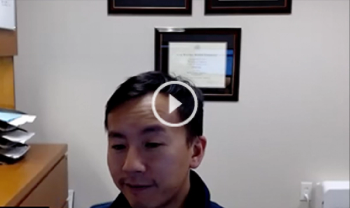
Chad Tang discusses where he sees the future of treatment for patients with oligometastatic prostate cancer heading and how the phase 2 EXTEND trial will impact this patient population.

Based on the positive interim safety data from a phase 1 trial of STRO-002, the phase 2/3 REFRaME study will be initiated to further evaluate the agent in patients with advanced ovarian cancer.
In an interview with Targeted Oncology, Patrick Wagner, MD, FACS, discussed the possibility of using the gut microbiome for patients with colorectal cancer, as well as his own research on the topic.