
Azeliragon has been granted an orphan drug designation by the FDA for patients with glioblastoma after previous trials demonstrated the agent to be well-tolerated in Alzheimer’s disease.

Azeliragon has been granted an orphan drug designation by the FDA for patients with glioblastoma after previous trials demonstrated the agent to be well-tolerated in Alzheimer’s disease.

The investigational drug, CFI-402257, has earned the FDA’s attention for promising preclinical results, and is now under investigation in a phase 1 study.

Starting with the PRESERVE 1 trial of patients with metastatic colorectal cancer, 5 pivotal trials evaluating trilaciclib will announce results in 2023.

Based on topline results from tovorafenib in the FIREFLY-1 study, the developer plans to file a new drug application with the FDA.

After preclinical and early clinical studies show promising data with CTX-009 therapy, a phase 2 study of the agent has dosed its first patient with metastatic colorectal cancer.

In an interview with Targeted Oncology, Gustavo Fonseca, MD, FACP, discussed the positive health-related quality of life findings in patients with diffuse large B-cell lymphoma from the POLARIX study.

A phase 2 dose expansion cohort which received the investigational agent abequolixron plus docetaxel showed clinical responses in patients with non–small cell lung cancer and small cell lung cancer.
Pareshkumar Patel, MD and Andres Soriano, MD, have been appointed to the Executive Board at the Florida Cancer Specialists & Research Institute, LLC.
Three members of the Senior Management Team have been promoted at the Florida Cancer Specialists & Research Institute.

According to The Cancer Genome Atlas and the ProMisE algorithm, there are 4 molecular subtypes of endometrial cancer, including POLE, dMMR, p53 abnormal, and no specific molecular profile.
Edward B. Garon, MD, MS, discusses the mechanism of action of canakinumab.
Patients with small cell lung cancer will receive diagnostic and post-progression tumor tissue profiling, plasma ctDNA biomarker profiling, standard of care therapy, and disease surveillance in the Sculptor study.

Wesley Burkett, MD, discusses the next steps for treating patients with endometrial cancer.

While upfront transplant showed benefit vs carfilzomib, cyclophosphamide, and dexamethasone in the phase 2 CARDAMON study of patients with multiple myeloma, 57.7% of patients achieved at least a very good partial response with the combination.

Eytan M. Stein, MD, discusses the unmet needs and challenges for treating patients with acute myeloid leukemia.

Positive topline results were announced from a study comparing TAVT-45, a formulation of abiraterone acetate that is easier to swallow, to the current formulation.
Based on data from a phase 1/2 study, a biologics license application has been accepted for glofitimab and the product has been granted priority review to for relapsed/refractory large B-cell lymphoma.
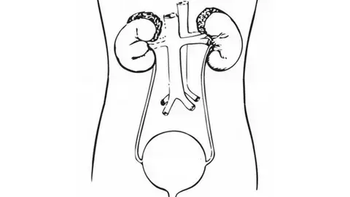
A Nectin-4–directed drug received FDA Fast Track Designation based on preclinical and clinical data showing potential efficacy and safety in patients with locally advanced or metastatic urothelial cancer.
The FDA has approved the liquid biopsy next-generation sequencing-based test FoundationOne Liquid CDx in companion with entrectinib for patients with non–small cell lung cancer with a ROS1 mutation in their tumor.
Martin Dreyling, MD, discusses the outcomes of the phase 3 TRIANGLE study evaluating ibrutinib in patients with mantle cell lymphoma.
In an interview with Targeted Oncology, Cyrus M. Khan, MD, further discussed the background of the phase 1/2 trial and the potential use of glofitamab for patients with large B-cell lymphoma in the future.
In the diffuse large B-cell lymphoma and follicular lymphoma cohorts of the ELM-1 and ELM-2 trials, odronextamab led to high overall response rates.

The primary end point of overall survival improvement has been reached in the phase 3 LUNAR study, which is evaluating Tumor Treating Fields in combination with standard therapies for the treatment of stage IV non–small cell lung cancer.

A phase 1/2 study of uproleselan combined with chemotherapy led to a complete response of 35% and median overall survival of 8.8 months in a cohort of patients with relapsed/refractory acute myeloid leukemia.

Florida Cancer Specialists & Research Institute, LLC is pleased to announce that Board-certified hematologist and medical oncologist William T. McGarry, MD has joined the statewide practice.

INTRIGUE study results show that patients with gastrointestinal stromal tumor who harbor certain KIT mutations have significantly improved responses and survival with ripretinib treatment.

Andreas Saltos, MD, discusses the current space for patients with non-small cell lung cancer harbording EGFR and KRAS mutations.
Based on findings from a phase 1 study, the FDA has received a biologics license application for cosibelimab for patients with advanced or metastatic cutaneous squamous cell carcinoma.
The THUNDER case-control study elicited a 69.1% rate of sensitivity and 98.9% rate of specificity with the OverC™ MCDBT in adult patients with various cancers.

The combination of PDS0101, M9241, and bintrafusp alfa elicited a promising median overall survival in patients with checkpoint inhibitor refractory advanced human papillomavirus-positive cancers.