

The trial is evaluating the safety and efficacy of taletrectinib in ROS1 NSCLC. Taletrectinib is a novel TKI.

The trial is evaluating the safety and efficacy of taletrectinib in ROS1 NSCLC. Taletrectinib is a novel TKI.

Extended follow-up of patients in COSMIC-311 showed continued survival benefit and tumor reduction with cabozantinib versus placebo in patients with radioactive iodine-refractory differentiated thyroid cancer.
Two approvals for asciminib were issued by the FDA for the treatment of CML with a Ph+ mutation.

In a phase 1 dose-escalation study, an investigational BTK degrader showed clinically meaningful results in patients with chronic lymphocytic leukemia and elicited a response.
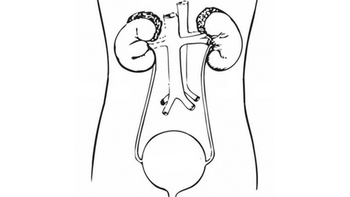
Retrospective data suggest that perinephric fat invasion, sarcomatoid or rhabdoid component, and necrosis are independent prognostic indicators of recurrence-free survival in renal cell carcinoma.

Jesús García-Foncillas, MD, PhD, discussed the comparison of larotrectinib versus entrectinib for the treatment of NTRK fusion-positive tumors in an interview with Targeted OncologyTM.
While some studies have found that obesity provides a survival advantage in certain cancers, sarcopenia obesity was found to be associated with worse survival outcomes in patients with endometrial cancer.
A gene therapy development initiative from the FDA, National Institute of Health and 15 other organizations may move CRISPR closer to use in patients with rare cancers.

Efficacy observed with the combination of devimistat and modified FOLFIRINOX in patients with metastatic pancreatic cancer has lead to a negative result in the phase 3 AVENGER 500 clinical trial.
NBTXR3, which is activated by radiotherapy, was found to be safe and tolerable in frail patients with head and neck squamous cell carcinoma. The agent can be used on its own or in combination with other immunotherapy agents.

Jason Westin, MD, discusses the future of diffuse large B-cell lymphoma treatment.

Florida Cancer Specialists & Research Institute, in collaboration with AdventHealth Heart of Florida and Central Florida Cancer Institute, has received a 3-year accreditation from the National Accreditation Program for Breast Centers.

Lead investigator Arndt Vogel, MD, discussed the use of immunotherapy in earlier-stage HCC and findings from the IMMUTACE in an interview with Targeted Oncology.

After discovering the potential of a prophylactic breast cancer vaccine, Cleveland Clinic will be the site of a phase 1 clinical trial to test its safety.
The FDA has accepted a biologics license application for tisagenlecleucel and granted it priority review as a potential treatment for relapsed or refractory follicular lymphoma after 2 lines of therapy
Patients with advanced ovarian cancer who respond to platinum-based chemotherapy are eligible for olaparib monotherapy. Data from the SOLO1 trial found that the safety profile of the agent is manageable.

Guiseppe Curigliano, MD, discusses the rationale behind a subgroup HER2CLIMB study, which evaluated the efficacy and safety of tucatinib in combination with trastuzumab and capecitabine in pretreated HER2-positive breast cancer patients with and without brain metastases compared with placebo.
Frederick Howard, MD, a medical oncology fellow in the Department of Medicine at the University of Chicago, discussed the clinical benefits of the SimBioSys TumorScope model for the treatment of early breast cancer in an interview with Targeted Oncology.
Through a new a new collaborative partnership, Florida Cancer Specialists & Research Institute plans to build a proton therapy center in the Tampa Bay area of Florida.
A new Florida Cancer Specialists & Research Institute location has opened to providing the most advanced and personalized treatments and services for patients with all forms of cancers and blood disorders.

The trial is designed to evaluate eltanexor monotherapy in high-risk MDS. It is recruiting in 8 separate states.
In an interview with Targeted Oncology, study investigator David Dawe, MD, BASc, MSC, FRCPC, discussed the impact of age, comorbidities, and polypharmacy on cancer care in greater detail.
Topline results show that the addition of eryaspase to chemotherapy does not prolong survival in the general advanced pancreatic cancer population, but there may be benefit for those treated with irinotecan.

The phase CANOPY-1 study has missed its co primary end points, but signals observed in a non–small cell lung cancer subgroup warrant further investigation.
Significant survival improvement was achieved with durvalumab in combination with chemotherapy as treatment of patients with biliary tract cancer.

The American Oncology Network has earned accreditation for specialty pharmacy practice and for digital pharmacy practice.
Melphalan flufenamide is being removed from the US market after the OCEAN study failed to show an improvement in OS over pomalidomide and dexamethasone. The agent was granted approval for use in R/R MM in February.
With a fast track designation for platinum-resistant ovarian cancer, development of the agent in this disease state will be expedited to potentially fill an unmet medical need.
Adding the oral mutant isocitrate dehydrogenase-2 inhibitor enasidenib to azacitidine helps to extend ORR in patients with AML, compared to azacitidine monotherapy.
Good activity was seen with acalabrutinib in combination with venetoclax and obinutuzumab in the front-line setting for select patients with chronic lymphocytic leukemia.