

The combination had a 24-month OS rate of 80%.

The combination had a 24-month OS rate of 80%.

Theodore W. Laetsch, MD, an attending physician at the Cancer Center at Children’s Hospital of Philadelphia, discusses the safety profile of larotrectinib in thyroid cancer and other solid tumors.

Three medical oncologists from Florida Cancer Specialists are co-authors on a new integrated safety analysis of umbralisib, used to treat lymphoid malignancies.
Obinutuzumab is associated with greater toxicity compare to rituximab in follicular lymphoma.

In an interview with Targeted Oncology, Marcia S. Brose, MD, PhD, discussed a multiple trial analysis of patients treated with larotrectinib over a median of 24 months.
The CAR T-cell therapy may provide another therapy option for patients with large B-cell lymphoma.
Pembrolizumab is now FDA approved in combination with chemotherapy and with or without bevacizumab, for the treatment of patients with persistent, recurrent or metastatic cervical cancer whose tumors express PD-L1.
Srdan Verstovsek, MD, PhD, a professor of Medicine and a hematologic oncologist at the University of Texas MD Anderson Cancer Center, discusses the need for new drugs after patients with myelofibrosis are treated with JAK inhibitors.
A new database organizes information on driver mutations for researchers.
The combination of abemaciclib and endocrine therapy has been approved by the FDA as an adjuvant treatment for a subgroup of patients with hormone receptor-positive, HER2-negative, node-positive, early breast cancer.
In an interview with Targeted Oncology, Jason Westin, MD, discussed the future of DLBCL treatment in both the frontline and later-line settings, along with current unmet clinical needs.
A novel ATR inhibitor displayed early signals of activity and was tolerable in patients with solid tumor harboring various molecular alterations.
Following a safety evaluation, the FDA has lifter its clinical hold of studies of rusfertide.
Arndt Vogel, MD, discusses the trial design of IMMUTACE, which is evaluating the efficacy of transarterial chemoembolization in combination with nivolumab for the treatment of intermediate-stage hepatocellular carcinoma.

Catherine Callaghan Coombs, MD, discusses the results of the phase 1/2 BRUIN study of pirtobrutinib in chronic lymphocytic leukemia and small lymphocytic leukemia.
In an interview with Targeted Oncology, Nino Balanchivadze, MD, FACP, discussed the toxicity profile of platinum pemetrexed with pembrolizumab in patients with nonsquamous NSCLC treated in the KEYNOTE-189 study and how demographics and clinical characteristics may impact treatment.
The designation is based on a phase 1/2 study of the agent in patients 3-19 years of age.

Evanthia Roussos Torres, MD, PhD, discusses the efficacy of entinostat in patients with breast cancer.
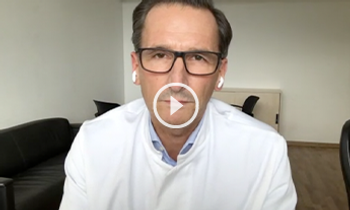
Arndt Vogel, MD, the managing senior consultant and professor in the department of Gastroenterology, Hepatology, and Endocrinology, at the Hannover Medical School, discusses the real-world data of immunotherapy combinations in hepatocellular carcinoma.

Alicia K. Morgans, MD, PhD, an associate professor of Medicine at the Robert H. Lurie Comprehensive Cancer Center of Northwestern University Feinberg School of Medicine, gives an overview of androgen receptor therapy in men with non-metastatic castration-resistant prostate cancer.
All clinical trials of allogeneic CAR T cells developed by Allogene Therapeutics, Inc have been halted by the FDA pending an investigation of a chromosomal abnormality event.
Alpha DaRT, an intraumoral conformal alpha-irradiation strategy, has been granted a second breakthrough device designation by the FDA.
In an interview with Targeted Oncology, Richard Anderson, PhD discussed how fertility is impacted by many lymphoma treatments, and what can be done to help preserve fertility in patients prior to treatment.

Michael R. Bishop, MD, discusses chimeric antigen receptor T cells therapy in non-Hodgkin lymphoma.
A subgroup analysis of the phase 3 COSMIC-311 study revealed no key differences in the survival and responses observed with cabozantinib based on the age of patients with RAI-refractory differentiated thyroid cancer.
Florida Cancer Specialists & Research Institute has expanded its molecular testing capabilities at its state-of-the-art Pathology Laboratory in Fort Myers and is providing patients with clinical next-generation sequencing.
Kamran A. Ahmed, MD, discusses the data leading up to the phase 1/2 study of radiotherapy followed by intrathecal trastuzumab and pertuzumab for the management of HER2-positive breast cancer with leptomeningeal disease and what impact the study may have on the community oncology space.
Further research is warranted after a phase 1 study found the agent has a good safety profile with clinical efficacy.
Evanthia Roussos Torres, MD, PhD, discusses the study design of the phase 1 trail evaluating entinostat, nivolumab, and ipilimumab in patients with locally advanced or metastatic HER2-negative breast cancer that cannot be removed by surgery.

In an interview with Targeted Oncology™, Michael Chuong, MD explained of the validity of the MRI-guided radiation technique for use in patients with pancreatic cancer, how it compares with CT-guided radiation, and how a shift toward MRI-guided radiation may impact patients with pancreatic cancer in the future.