

Julia White, MD, discusses the upcoming phase II trial, the toxicities associated with the treatment, and the potential for control of these metastases. According to White, the trial is still accruing its 143 patients.

Julia White, MD, discusses the upcoming phase II trial, the toxicities associated with the treatment, and the potential for control of these metastases. According to White, the trial is still accruing its 143 patients.
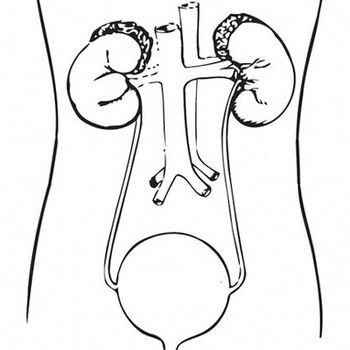
The FDA has granted a priority review to a biologics license application for durvalumab for the treatment of patients with locally advanced or metastatic urothelial carcinoma whose disease has progressed on standard platinum‑based chemotherapy.
Gopa Iyer, MD, discusses the standard chemotherapy options available for patients with bladder cancer, the ongoing progress with immunotherapy, and the management of immune-related toxicities.
Dean Bajorin, MD, discusses the ongoing studies exploring new chemotherapy approaches in these patients and how the cytotoxic treatments could still ultimately be replaced with immuno-oncology agents.
The addition of enzalutamide to abiraterone acetate and prednisone failed to improve progression-free survival versus abiraterone and prednisone alone in chemotherapy-naïve patients with metastatic castration-resistant prostate cancer who progressed on enzalutamide.
Paul Kelly Marcom, MD, discusses the future landscape of HR-positive breast cancer, highlighting the influence of CDK4/6 inhibitors and targeted agent/endocrine therapy combinations.

Several phase I trials of vadastuximab talirine in acute myeloid leukemia have been placed on hold by the FDA, according to Seattle Genetics, the manufacturer of the antibody-drug conjugate.
Nancy Gordon, MD, speaks about her osteosarcoma research, the next steps following the findings of the study, and what she envisions for the treatment landscape of osteosarcoma over the next decade.

Multidisciplinary tumor boards led to higher utilization of guideline-recommended curative therapies, which was associated with improved overall survival (OS) for patients with early-stage hepatocellular carcinoma.
Patients with breast cancer who received radiation therapy following a mastectomy reported increased complications and lower satisfaction, according to the results of a large, multicenter study.
Alan P. Venook, MD, discusses several of the big queries that remain in mCRC and the possible explanations for survival differences between left- and right-sided tumors. He also explained how answering these questions could pave the way for more novel treatment approaches.
The FDA has granted a priority review to a supplemental biologics license application (sBLA) for pembrolizumab (Keytruda) for previously treated patients with advanced microsatellite instability-high (MSI-H) cancer.
The FDA has granted a priority review to a supplemental new drug application supporting the conversation of the accelerated approval of palbociclib to a full approval for use in combination with letrozole as a frontline treatment for postmenopausal women with ER-positive, HER2-negative metastatic breast cancer.
The FDA has approved the marketing of AeroForm, a new system for soft tissue expansion in 2-stage breast reconstruction following mastectomy, and in the treatment of underdeveloped breasts and soft tissue deformities.
The phase II HERMIONE trial was halted after the antibody-drug conjugate MM-302 combined with trastuzumab (Herceptin) failed to improve progression-free survival (PFS) versus chemotherapy plus trastuzumab in patents with HER2-positive metastatic breast cancer who had previously received trastuzumab, pertuzumab (Perjeta), and ado-trastuzumab emtansine (T-DM1, Kadcyla).

In an interview with <em>Targeted Oncology</em>, Howard Fine discusses the reason for renewed interested in metabolic targets, the effect it has had on treatment of gliomas, and what he sees on the horizon for neuro-oncology in this area.<br />
Treatment with onartuzumab did not provide any additional clinical benefit when added to bevacizumab (Avastin) in the treatment of patients with recurrent glioblastoma multiforme (GBM), according to a study recently published in the <em>Journal of Clinical Oncology</em>.
According to results presented during the 2016 San Antonio Breast Cancer Symposium, neoadjuvant combination of CDK4/6 inhibitor abemaciclib plus anastrazole may represent a novel therapeutic option for patients with hormone receptor (HR)-positive, HER2-negative early breast cancer.
A new drug application (NDA) for niraparib has been granted priority review by the FDA for use as a maintenance therapy in patients with recurrent epithelial ovarian, fallopian tube, or primary peritoneal cancer who have responded to platinum-based chemotherapy, according to Tesaro, the manufacturer of the PARP 1/2 inhibitor.

Jared Weiss, MD, recently sat down with <em>Targeted Oncology</em> to discuss treatment considerations and options for patients with metastatic lung cancer based on 3 case scenarios.
Lenalidomide (Revlimid) monotherapy led to hematologic improvement with erythroid response in almost 40% of patients with low or intermediate-1 risk myelodysplastic syndrome who were refractory to or unlikely to respond to erythropoietin and granulocyte-colony stimulating factor.
The FDA has approved rucaparib (Rubraca) as a treatment for patients with <em>BRCA</em>-positive advanced ovarian cancer who have received at least 2 prior lines of chemotherapy.
The 2017 Miami Breast Cancer Conference, to be held March 9 to 12 at the Fontainebleau Miami Beach, welcomes an expanded group of program chairs, and a newly established curriculum committee made up of a multidisciplinary group of breast cancer specialists.
The American Society of Hematology (ASH) recently presented Charles Mullighan, MD, of St. Jude Children’s Research Hospital, with the 2016 William Dameshek Prize in recognition of his leadership in defining the landscape of genetic alterations of acute lymphocytic leukemia (ALL).
The American Society of Hematology (ASH) recently honored Thalia Papayannopoulou, MD, with the Wallace H. Coulter Award for Lifetime Achievement in Hematology in recognition of her innovative contributions to the field of hematology.
The American Association for Cancer Research (AACR) recently recognized 2 renowned researchers for their work in breast cancer during the 2016 San Antonio Breast Cancer Symposium (SABCS).
Selective internal radiation therapy (SIRT) using yttrium 90 (Y-90) microspheres has been recommended for selected patients with chemotherapy-resistant or refractory metastatic colorectal cancer (mCRC) with liver metastases in an update to the NCCN guidelines for colon cancer and rectal cancer.
According to recent study findings, the investigational BTK inhibitor acalabrutinib was shown to be well-tolerated and effective in patients with chronic lymphocytic leukemia (CLL) and small lymphocytic leukemia (SLL) who display intolerance to ibrutinib (Imbruvica).
President Barack Obama has signed the 21st Century Cures Act into law, earmarking $6.3 billion over 10 years to go toward advancements in precision medicine development, brain research, heroin and prescription drug abuse prevention, and mental health.
The Society for Immunotherapy of Cancer (SITC) has announced that Paul M. Sondel, MD, PhD, will receive the 2017 Richard V. Smalley, MD Memorial Lectureship Award.