

Clinical holds on several phase I trials of vadastuximab talirine in acute myeloid leukemia have been lifted by the FDA.

Clinical holds on several phase I trials of vadastuximab talirine in acute myeloid leukemia have been lifted by the FDA.
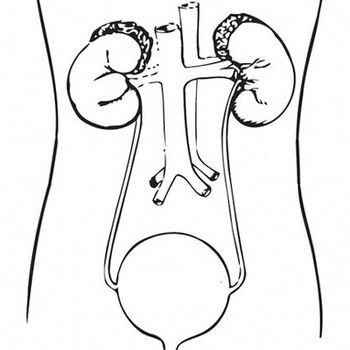
The combination of the PD-1 inhibitor pembrolizumab with chemotherapy induced objective responses in one-third of patients with previously treated metastatic urothelial carcinoma.
Andrea Apolo, MD, discusses promising early data demonstrating the activity and safety of cabozantinib and nivolumab, with or without ipilimumab, in bladder cancer and other advanced genitourinary cancers.<br />

Arturo Loaiza-Bonilla, MD, the potential role of <em>BRAF</em> and <em>CTNNB1</em> mutations in the survival difference between CRC patients with left- and right-sided tumors.

The addition of pertuzumab to trastuzumab and chemotherapy reduced the risk of recurrence of invasive disease or death in patients with HER2-positive early breast cancer in the phase III APHINITY study.
A new drug application for enasidenib has been granted a priority review by the FDA as a treatment for patients with relapsed or refractory <em>IDH2</em>-mutated acute myeloid leukemia.

Alectinib has been approved by the European Commission as a treatment for patients with metastatic ALK-positive non–small cell lung cancer following progression on crizotinib.
Lisa Carey, MD, discusses the current state of the science in TNBC, the potential for immunotherapy, and future treatment approaches she anticipates in the coming years.
PFS was improved with Olaparib versus standard chemotherapy in patients with <em>BRCA</em>-positive, HER2-negative breast cancer, according to findings from the phase III OLYMPIAD trial.
Telotristat ethyl has been approved by the FDA for use in combination with somatostatin analog as a treatment for carcinoid syndrome diarrhea in patients with metastatic neuroendocrine tumors.
The results of a new study have provided yet more evidence that survivors of endometrial cancer should be closely monitored for cardiovascular disease.
A biologics license application for avelumab has been granted a priority review by the FDA for the treatment of patients with locally advanced or metastatic urothelial carcinoma.
Dabrafenib combined with trametinib continued to demonstrate durable efficacy for patients with <em>BRAF</em> V600E/K-mutant melanoma.
Ceritinib has been granted a priority review by the FDA as a first-line treatment for patients with <em>ALK</em>-positive, metastatic NSCLC.
The investigational compound 5-imino-13-deoxydoxorubicin showed promising activity in patients with metastatic and nonresectable soft tissue sarcoma.
Lenalidomide has been approved by the FDA as a maintenance therapy for patients with multiple myeloma following autologous hematopoietic stem cell transplant.
The anti-CD22 antibody-drug conjugate inotuzumab ozogamicin has been granted a priority review designation by the FDA for the treatment of patients with relapsed or refractory ALL.
Thomas Gajewski, MD, PhD, has been awarded an Outstanding Investigator Award by the National Cancer Institute.
The American Urological Association has announced Ian M. Thompson Jr., MD, has been appointed to the National Cancer Institute’s (NCI) Board of Scientific Advisors.
A third of patients with previously treated, high- and intermediate-risk myelofibrosis had objective responses to the investigational second mitochondria-derived activator of caspases mimetic LCL161.
NYU Langone has announced Theodore H. Welling III, MD, will lead a new state-of-the-art liver cancer program at the medical center to advance clinical care and accelerate the translation of lab breakthroughs into superior treatments.
Multiple myeloma expert Kenneth C. Anderson, MD, will serve as president of the American Society of Hematology through the end of this year.
Benjamin Levy, MD, has been named clinical director of medical oncology and medical director of thoracic oncology for the Johns Hopkins Kimmel Cancer Center at Sibley Memorial Hospital.
The much anticipated initial results of the Gynecologic Oncology Group 252 trial failed to provide additional clarity for the use of intravenous versus intraperitoneal chemotherapy in patients with ovarian cancer.
Joel Neal, MD, PhD, discusses how recent immunotherapy advances are transitioning the field of NSCLC and how the impact of molecular testing continues to shape treatment decisions.
A novel tissue-preserving treatment, padeliporfin vascular-targeted photodynamic therapy, may offer men with low-risk prostate cancer a safe and effective alternative to either active surveillance or radical therapy.
An axillary lymph node dissection can be avoided for patients with large, operable tumors in the breast, no clinical signs of cancer in the axillary nodes before being treated with neoadjuvant chemotherapy, and no signs of cancer following a sentinel lymph node biopsy during surgery.

Matthew E. Spector, MD, discusses a new biomarker study which found that patients whose oropharyngeal cancer recurred had higher levels of antibodies for 2 proteins, E6 and E7, which are found in HPV-driven cancers.
A novel approach has been developed by researchers at the University of Michigan to treating patients with advanced laryngeal cancer with the hope of improving historical survival rates of 50% to 60% in this setting.
The number of futile laparotomies was reduced with diagnostic laparoscopy in patients with suspected advanced-stage ovarian cancer, according to the results of a recent study.