

To gain further insight into the expanded approval of this agent, Targeted Oncology interviewed Tomasz M. Beer, MD, a co-principal investigator on the PREVAIL trial.

To gain further insight into the expanded approval of this agent, Targeted Oncology interviewed Tomasz M. Beer, MD, a co-principal investigator on the PREVAIL trial.

Last week, the FDA approved pembrolizumab (Keytruda) for the treatment of patients with advanced or unresectable melanoma following progression on prior therapies.

The combination of ramucirumab and FOLFIRI significantly improved overall survival and progression-free survival compared with chemotherapy alone as a second-line treatment for patients with mCRC.

Bristol-Myers Squibb has filed a lawsuit over Merck’s newly approved immunotherapy drug pembrolizumab, contending that the much-heralded PD-1 inhibitor will infringe upon patents that Bristol-Myers holds on the groundbreaking technology.
The FDA has expanded the approval for enzalutamide (Xtandi) to include the treatment of men with chemotherapy-naive metastatic castration-resistant prostate cancer (mCRPC).

This activity is supported by an educational grant from Eli Lilly.

A guideline for the treatment of men with metastatic castration-resistant prostate cancer (mCRPC) has been issued by the American Society of Clinical Oncology (ASCO) and Cancer Care Ontario (CCO).

The FDA has approved pembrolizumab (Keytruda) as a treatment for patients with advanced or unresectable melanoma following progression on prior therapies.

Cabozantinib (Cometriq) failed to significantly extend overall survival (OS) compared with prednisone as a treatment for men with metastatic castration-resistant prostate cancer (mCRPC).

A series of papers have been published in the journal Nature in which researchers conducted detailed comparisons of the worm, fly, and human genomes using data from the ENCODE and modENCODE projects.

Advaxis and Merck have entered into a clinical trial collaboration agreement to evaluate the combination of two novel immunotherapies for the treatment of patients with metastatic castration-resistant prostate cancer.
The FDA has approved eltrombopag (Promacta) as a treatment for patients with severe aplastic anemia (SAA) following an insufficient response to immunosuppressive therapy, based on data from an open-label, single-arm phase II trial.

Researchers from The Cancer Genome Atlas (TCGA) Network have proposed a molecular classification system that separates gastric cancers into four subtypes.

A New Drug Application has been submitted to the FDA for palbociclib plus letrozole as a frontline treatment for postmenopausal women with ER-positive, HER2-negative advanced breast cancer.

A preliminary analysis has shown that eribulin mesylate (Haloven) failed to meet its primary endpoint of improving overall survival in pre-treated patients with advanced NSCLC.

A new study has recommended priority targets for immunotherapy in epithelial ovarian cancer (EOC) by profiling the expression of certain tumor-associated antigens (TAA), called MAGE cancer-testis antigens (CTA), in a large panel of tumor samples.

The FDA has approved bevacizumab in combination with paclitaxel and cisplatin or paclitaxel and topotecan as a treatment for patients with persistent, recurrent, or metastatic cervical cancer, based on the improvement in OS in the phase III GOG 240 study.

The favorable safety profile of T-DM1 (ado-trastuzumab emtansine; Kadcyla) makes it apt to be looked at in other settings of breast cancer, according to a large study published in the Journal of Clinical Oncology.

Treatment with single-agent carfilzomib (Kyprolis) was unable to significantly extend overall survival (OS) compared with best supportive care in heavily pretreated patients with multiple myeloma.

The FDA has approved Cologuard as the first noninvasive stool-based DNA test for the detection of CRC in asymptomatic individuals at average risk, based on clinical trial results demonstrating superiority to the fecal immunochemical test.

The FDA has expanded the bortezomib (Velcade) label to allow for retreatment in patients with multiple myeloma who previously responded to the proteasome inhibitor.

AstraZeneca has announced new collaborations with QIAGEN and Roche to create 2 separate, noninvasive companion diagnostic tests to be used with 2 of its drugs for NSCLC, gefitinib (IRESSA) and AZD9291.

Women harboring a loss-of-function mutation in the PALB2 gene demonstrated an increased risk of developing breast cancer that was similar to the predisposition seen with mutations in BRCA.

The FDA has assigned a priority review designation to the JAK1/2 inhibitor ruxolitinib as treatment for patients with polycythemia vera who are resistant or intolerant to hydroxyurea.

The combination of carfilzomib, carfilzomib, and low-dose dexamethasone extended PFS by 8.7 months compared with lenalidomide and dexamethasone alone for patients with relapsed multiple myeloma.

Last week, the US Food and Drug Administration (FDA) announced two steps it will take to ensure the safety and utility of certain diagnostic tests.
The FDA has expanded the approval of ibrutinib (Imbruvica) to include the treatment of patients with chronic lymphocytic leukemia (CLL) who have received at least one previous therapy and harbor a 17p deletion.

A phase III trial analyzing sorafenib for the treatment of patients with advanced breast cancer did not meet its primary endpoint of improving progression-free survival (PFS).
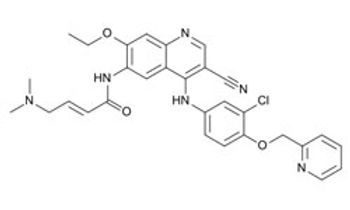
Extended adjuvant treatment with neratinib (PB272, HKI-272) significantly improved disease-free survival (DFS) compared with placebo for patients with HER2-positive breast cancer who received prior adjuvant trastuzumab.