

Tamoxifen significantly lowered the risk of contralateral or secondary breast cancer by more than half in patients with BRCA1/2 mutations.

Tamoxifen significantly lowered the risk of contralateral or secondary breast cancer by more than half in patients with BRCA1/2 mutations.

Men with non-metastatic prostate cancer are commonly treated with androgen deprivation therapy (ADT) for various reasons including biochemical relapse after primary therapy.

The week of July 29 in review, featuring stories and physician interviews on genetic testing, expanding anti-HER2 therapy, and nivolumab for the treatment of melanoma.
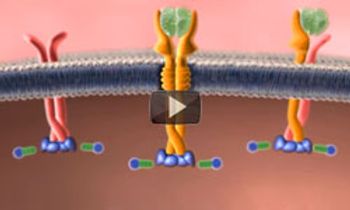
Afatinib is an FDA-approved pan-HER inhibitor for the first-line treatment of patients with metastatic NSCLC whose tumors have EGFR exon 19 deletions or exon 21 (L858R) substitution mutations.
The week of July 22 in review, featuring stories and physician interviews on crizotinib in NSCLC, the G-200 vaccine for glioblastoma, and ibrutinib in non-Hodgkin lymphoma.

Studies have confirmed that dysregulation of apoptosis is implicated in the pathogenesis of many diseases. Deficient apoptosis is key in the development of cancer.

Researchers at the NCI have developed the most comprehensive analysis of coding variants in the most frequently studied human tumor cell lines in cancer research.
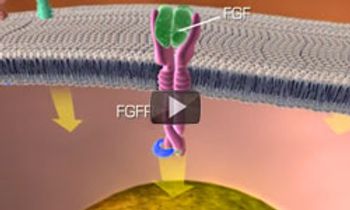
The risk of developing ovarian cancer has been linked to several factors including family history, age, and pregnancy history. In the U.S., ovarian cancer accounts for 3% of all cancer in women.

The FDA has approved the pan-HER inhibitor afatinib (Gilotrif), along with a companion diagnostic, to treat patients with metastatic NSCLC who express specific types of EGFR mutations.
The week of July 8 in review, featuring clinical articles and videos on targeting the PI3K and AKT pathways, ASCO's CancerLinQ program, and ibrutinib in CLL and MCL.

A phase III study of Revlimid in combination with dexamethasone in patients with newly diagnosed multiple myeloma met its primary endpoint of PFS.

The FDA has received a new drug application for ibrutinib as a therapy for previously treated CLL and previously treated MCL.

If approved, this regimen would be the first neoadjuvant regimen ever approved for the treatment of cancer.

Learn how Genentech researchers Shiva Malek and Georgia Hatzivassiliou worked together to solve a mystery and change cancer research.

The mechanism of action of trastuzumab (Herceptin), a monoclonal antibody that is approved for the treatment of early-stage breast cancer that is HER2-positive.
The week of June 24 in review, featuring clinical articles and physician interviews on an FDA approval, crizotinib in NSCLC, sorafenib in DTC, and more.

The FDA approved an update to the product labeling for dasatinib (Sprycel), Bristol-Myers Squibb Company and Otsuka America Pharmaceutical announced on June 20.
Patients with chronic lymphocytic leukemia (CLL) and patients with mantle cell lymphoma (MCL) showed high response rates to therapy with ibrutinib.

In advance of the 2013 ASCO Annual Meeting, Targeted Healthcare spoke with Mike Thompson, MD, PhD, about the use of social media in the field of oncology.

Elotuzumab in combination with lenalidomide and low-dose dexamethasone showed efficacy in patients with previously treated multiple myeloma.
The week of June 10 in review, featuring stories and videos on testing for BRCA1/2, bevacizumab in cervical cancer, gene patenting, MPDL3280A in lung cancer, and more.

The US Supreme Court ruled that patents held on a test for genetic mutations associated with breast cancer is not eligible for patent protection.
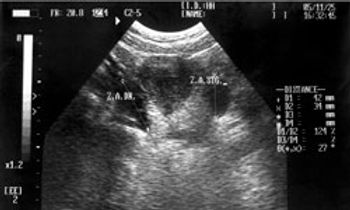
A phase III study of the investigational peptibody trebananib has met its primary endpoint of an improvement in progression-free survival.

The mechanisms of the cMET signaling pathway and potential therapeutic implications. After binding with its ligand, cMET activates a wide range of different cellular signaling pathways.

Data from the French National Cancer Institute showed an increase in testing for BRCA1/2 for breast and ovarian cancer, though not for the MMR mutation for Lynch syndrome.

The FDA rejected a new drug application for tivozanib, an inhibitor of vascular endothelial growth factor (VEGF), for the treatment of advanced renal cell carcinoma (RCC).
The week of June 3 in review, featuring content on crizotinib in NSCLC, an FDA approval, novel agents for the treatment of prostate cancer, and more.

Lenalidomide has been approved to treat patients with mantle cell lymphoma who have relapsed or whose disease has progressed after two prior therapies including at least one prior treatment with bortezomib.

Crizotinib demonstrated superiority to chemotherapy for the treatment of previously treated, advanced non-small cell lung cancer (NSCLC) with ALK rearrangement in a trial published online by The New England Journal of Medicine.
The week of May 27 in review, featuring stories and videos on an FDA approval, T-DM1 for breast cancer, novel agents in early development, and the Notch pathway in gliomas.