
Experts discuss a virtual collaborative care model that integrates mental health support into oncology, enhancing patient care and improving treatment outcomes.

Experts discuss a virtual collaborative care model that integrates mental health support into oncology, enhancing patient care and improving treatment outcomes.
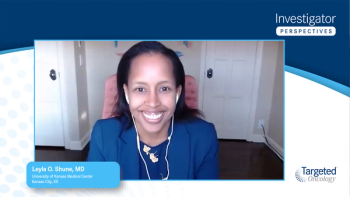
Leyla O. Shune, MD, discusses results from an interim safety analysis of a randomized phase 2 study exploring axatilimab in combination with ruxolitinib in patients with newly diagnosed chronic graft-versus-host disease.
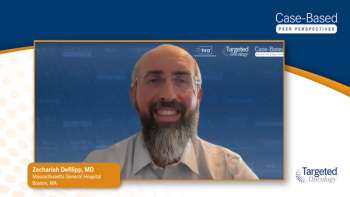
Explore effective management strategies for chronic graft-versus-host disease, focusing on transitioning from steroids to second-line therapies like ruxolitinib.
A patient with chronic graft-versus-host disease faces treatment challenges, highlighting the need for effective management strategies post-transplant.

Jason S. Starr, DO, discusses his approach to dose reduction of cabozantinib in patients with neuroendocrine tumors.
Researchers explore the impact of virtual collaborative care on mental health and quality of life for breast cancer patients, revealing significant improvements.
Experts explore a virtual collaborative care model to enhance mental health support for breast cancer patients, aiming to improve treatment adherence and outcomes.

A 62-year-old woman with stage IIIA lung cancer faces complex diagnostic and treatment decisions, highlighting the importance of multidisciplinary evaluation.
New findings reveal promising advancements in treating relapsed mantle cell lymphoma with BCL-2 inhibitors and novel agents, enhancing patient outcomes.
Experts discuss the underutilization of biomarker testing in metastatic lung cancer, emphasizing the need for improved testing strategies and healthcare access.
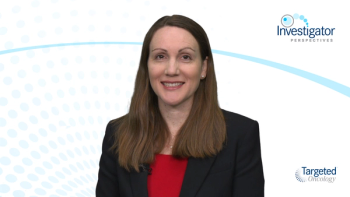
Ramez N. Eskander, MD, discusses the optimal use of lenvatinib/pembrolizumab in clinical practice for patients with endometrial cancer. He provides advice for integrating this regimen into the treatment paradigm.
Real-world data reinforces the efficacy and tolerability of lenvatinib and pembrolizumab for treating recurring endometrial cancer.
In this final segment, Dr Luskin discusses treatment sequencing considerations in blastic plasmacytoid dendritic cell neoplasm (BPDCN), with a focus on integrating targeted therapy and allogeneic stem cell transplantation.
Recent studies highlight the effectiveness of lenvatinib and pembrolizumab in improving overall survival for patients with prior therapy in endometrial cancer.
This segment addresses the clinical implications of disease burden in blastic plasmacytoid dendritic cell neoplasm (BPDCN), a condition that frequently presents with extensive skin involvement or other high-burden manifestations.
Leyla O. Shune, MD, discusses an expanded access program in the United States that administered axatilimab to patients with chronic graft-versus-host disease. Specifically, she highlights the tolerability of axatilimab in the real-world setting.
Endometrial cancer treatment evolves with molecular insights, enhancing patient outcomes through tailored therapies and innovative clinical trials.
Research on myeloma shows significant progress in treatment options, emphasizing the need for early detection and access to care for affected communities.

Giredestrant shows lower treatment discontinuation rates compared to standard therapy and is being explored in combination with other drugs.
A recent study reveals promising results for CLL patients using zanubrutinib and venetoclax, highlighting effective time-limited therapy options.
This segment focuses on safety considerations associated with tagraxofusp in the treatment of blastic plasmacytoid dendritic cell neoplasm (BPDCN), with an emphasis on early toxicity recognition in community oncology settings
In this segment, Dr Luskin examines how patient-related factors influence treatment decisions in blastic plasmacytoid dendritic cell neoplasm (BPDCN), a disease that predominantly affects older adults
Leyla O. Shune, MD, describes the available treatment options for patients with chronic graft-versus-host disease who are steroid refractory/dependent. She also discusses treatment approaches and results with these agents in clinical trials and in real-world settings.

Dr Benjamin George champions innovative oncology care in rural Nebraska, emphasizing collaboration and multidisciplinary teamwork to enhance patient outcomes.
Dr Benjamin George transforms oncology care in rural Nebraska, addressing unique challenges and enhancing access to vital treatments for underserved patients.
Dr Benjamin George champions accessible cancer care in rural Nebraska, transforming patient support with innovative programs and community engagement.
Dr Benjamin George transforms cancer care in rural Nebraska, ensuring accessible, high-quality treatment for patients in underserved communities.
Benjamin George, MD, combines compassionate oncology care with cutting-edge science, fostering deep patient relationships and offering hope through advanced treatments.