Lilit Karapetyan, MD, MS, discusses the importance of considering TIL therapy for melanoma in advance and not as a last resort.

Lilit Karapetyan, MD, MS, discusses the importance of considering TIL therapy for melanoma in advance and not as a last resort.
Ohio State’s BRIDGE program coordinates age-tailored cancer care, tackling fertility, careers, and research gaps to transform outcomes for AYA patients.
CAR T therapy spreads beyond academic centers, but insurance, cost and policy gaps keep most eligible lymphoma patients from receiving it.
Learn how zangontinib affects statins and liver risk, when to switch to pravastatin, and how to monitor labs remotely for hepatitis B safety.
Learn how zangontinib affects atorvastatin, raises liver-risk, and why frequent LFTs plus entecavir may prevent hepatitis B reactivation.
A new program for young cancer patients breaks disease silos, showing how multidisciplinary teamwork improves coordination, insights, and care.
Rawan Faramand, MD, discusses how reducing the cost of GVHD therapy could benefit health systems.
EGFR lung cancer trials show combo therapy better prevents brain metastases, improving intracranial response and PFS compared with osimertinib alone.
Dr. Doroshow addresses financial toxicity as a central concern in Sandra's case and broader challenge in HER2-directed therapy access. Sandra has high-deductible Affordable Care Act marketplace plan with $6,000 annual deductible, is currently on medical leave with uncertain prospects for returning to work and is understandably worried about out-of-pocket expenses that reset each calendar year.
New trial data weigh EGFR lung cancer first-line combos, hinting amivantamab–lazertinib may edge osimertinib plus chemo, especially with TP53.
This episode examines Dr. Doroshow's approach to safety counseling when selecting among HER2-directed therapies, with particular attention to Sandra's concern about interstitial lung disease risk given prior pembrolizumab exposure.
Rawan Faramand, MD, explains how a cost analysis supported Orca-T engineered graft by reducing the need for GVHD therapy vs standard prophylaxis.

Experts discuss the critical role exercise plays in improving survival and quality of life in patients with cancer.
Dr. Leal addresses diagnostic challenges with newer therapies, particularly tarlatamab's potential neurologic side effects including immune effector cell-associated neurotoxicity syndrome (ICANS), which can manifest as weakness and create diagnostic overlap concerns with cancer-associated LEMS symptoms.
Dr. Leal addresses the complex interaction between cancer-associated LEMS as an autoimmune condition and standard SCLC therapies, particularly immunotherapy agents like checkpoint inhibitors and newer treatments like tarlatamab T-cell engagers.
Dr. Leal introduces amifampridine, an FDA-approved oral potassium channel blocker that increases acetylcholine release at neuromuscular junctions for treating LEMS, including cancer-associated cases.
Andrzej Jakubowiak, MD, PhD, addressed why using multidrug regimens to remove the need for autologous transplant in multiple myeloma could benefit patients.
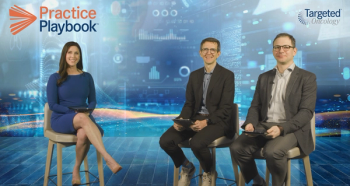
In this closing segment on advanced renal cell carcinoma, Dr. Wulff invites final reflections on anticipated changes in treatment guidelines over the coming year.
Zongertinib shows strong tolerability in frontline lung cancer cohort, with mostly mild diarrhea, minimal rash, low ILD, and few dose stops.
In this segment on advanced renal cell carcinoma, Dr. Geynisman focuses on key principles for applying NCCN guideline recommendations in real-world community practice.
New data show zongertinib is well tolerated in frontline lung cancer, with manageable diarrhea, minimal rash, and low ILD risk.
Ohio State’s BRIDGE model unites research, wraparound care, digital tools and support services to improve outcomes in early-onset cancers.
Dr. Leal discusses the updated NCCN guidelines recommending VGCC antibody testing for patients with suspected neurologic paraneoplastic syndromes like cancer-associated LEMS, asking about the impact of these guideline changes on awareness and testing rates in community and academic settings. Dr. Iams acknowledges the guidelines help somewhat but emphasizes that broader awareness of the diagnosis and specific available treatments remain more significant factors in improving recognition.
Dr. Ticiana Leal from Emory University's Winship Cancer Institute and Dr. Wade Iams from Tennessee Oncology introduce their discussion on Lambert-Eaton myasthenic syndrome (LEMS) in patients with small-cell lung cancer (SCLC). This paraneoplastic syndrome affects approximately 3% of patients with SCLC but remains undiagnosed in up to 90% of cases, representing a significant clinical challenge where symptoms often overlap with expected disease progression or treatment-related adverse effects in busy oncology settings.
A trial comparing triplet maintenance to lenalidomide alone demonstrated improved progression-free and overall survival in transplant-eligible multiple myeloma.
Ohio State’s BRIDGE Program targets early-onset and AYA cancers, adding fertility, financial, and psychosocial support alongside specialists.
Luciano Costa, MD, PhD, María Victoria Mateos, MD, PhD, and Roberto Mina, MD, shared their thoughts on the use of teclistamab and CRS management earlier in multiple myeloma.
NCCN guidance highlights how HER2-mutant lung cancer may still benefit from chemo‑immunotherapy, as PD‑L1 and response patterns differ from EGFR/ALK/RET/ROS1.
Andrzej Jakubowiak, MD, PhD, discusses how the ATLAS trial intensified, then deescalated posttransplant maintenance in newly diagnosed multiple myeloma.

Helena Yu, MD, discusses unmet needs and new frontiers in lung cancer treatment.