
MSK researchers found that BRCA2 mutations lower the barrier for RB1 loss, causing CDK4/6 inhibitor resistance.

MSK researchers found that BRCA2 mutations lower the barrier for RB1 loss, causing CDK4/6 inhibitor resistance.
New targeted therapies reshape biliary tract cancer care, highlighting FGFR2/IDH1, HER2 and KRAS options plus smarter second-line sequencing.
Dr. Costa discusses evolution from initial single-arm bispecific experience in heavily pretreated patients to recent earlier-setting data.
Dr. Costa addresses community-based versus academic center care debates for complex patients requiring multiple therapy lines.

At SGO 2026, Alison Schram, MD, highlighted first-in-class tumor suppressor reactivation and emphasized early NGS testing in ovarian cancer.

Bradley Monk, MD, discusses the KEYNOTE-B96 trial in which pembrolizumab plus paclitaxel +/- bevacizumab improved OS in platinum-resistant ovarian cancer.

MSK experts discuss FLAURA2 updates, emerging targets in mesothelioma, and next-gen immunotherapies from the 2026 European Lung Cancer Congress.

BCMA bispecifics in relapsed myeloma deliver 60–70% responses and year-long PFS, expanding options beyond limited CAR T access.
BCMA bispecifics boost relapsed myeloma responses to 60–70% and extend PFS to 12–18 months, offering durable options beyond CAR-T.

HER2-targeted ADCs show ~50% response rates in pretreated endometrial cancer, with durable responses and manageable safety profiles per 2026 SGO data.
Pancreatic cancer research tackles treatment resistance with targeted drug delivery, immune-boosting combinations, and smarter therapy pairings to extend responses in trials.

Lilit Karapetyan, MD, MS, discusses how a single-center trial suggests patients with poorer performance status could be eligible for tumor-infiltrating lymphocyte therapy.
In this segment on advanced renal cell carcinoma, Dr. McGregor focuses on how clinicians move beyond guideline recommendations when multiple appropriate treatment options are available.
In this segment on advanced renal cell carcinoma, Dr. Geynisman raises the increasingly relevant question of how prior adjuvant pembrolizumab or earlier immunotherapy exposure influences treatment selection in the metastatic setting.
Nodal burden predicts higher preoperative ctHPVDNA levels, while aggressive pathologic features paradoxically correlate with lower values in oropharynx cancer.

Roisin E. O'Cearbhaill reviews a phase 1/2 trial evaluating REGN5668, a MUC16×CD28 bispecific antibody, in combination with other targeted therapies for recurrent ovarian and endometrial cancers.
Dr Naomi Haas discusses the feasibility of neoadjuvant therapy in RCC, highlighting the PROSPER trial's results and its role in treating unresectable disease.
Dr Danny Nguyen discusses the shift of clinical trials to community settings, the impact of AI in oncology, and the latest drug approvals in lung cancer care.
Relacorilant targets glucocorticoid receptor signaling to restore chemo sensitivity in platinum-resistant ovarian cancer, no biomarker testing needed.
Dr. Costa addresses the primary clinician concern regarding BCMA-directed T-cell engagers: infection risk.

Experts from Memorial Sloan Kettering Cancer Center discuss updates from the 2026 European Lung Cancer Congress.
Dr. Costa analyzes efficacy patterns for patients with advanced multiple myeloma after 3-4 prior therapy lines.
Dr Komrokji explains how the IPSS-M improves prognostic precision in MDS but cautions that upstaging alone should not automatically drive treatment escalation.
Lilit Karapetyan, MD, MS, discusses a single-center trial of reduced-intensity conditioning before tumor-infiltrating lymphocyte therapy in melanoma.
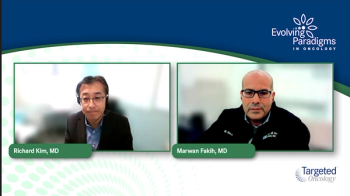
In this final segment, the discussion turns to practical challenges patients face during first-line treatment with carboplatin, paclitaxel, and retifanlimab, along with key considerations for optimizing outcomes.
Learn when to treat relapsed myeloma: who can wait, who needs urgent therapy, and why bispecifics plus daratumumab reshape 2026 care.
Learn why MRD negativity drives longer survival in multiple myeloma and when to pair teclistamab with daratumumab after CD38 exposure.
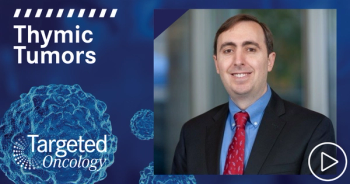
Dr Charles Simone highlights the necessity of multidisciplinary care and advanced radiation, like proton therapy, to improve survival in rare thymic cancers.
In this segment on advanced renal cell carcinoma, Dr. Wulff focuses on the role of cabozantinib across different treatment settings and how clinicians decide between monotherapy and combination approaches in practice.
In this segment on advanced renal cell carcinoma, Dr. McGregor explores the role of VEGFR TKI monotherapy in patients with favorable risk disease, where NCCN guidelines include both IO-TKI combinations and, in select cases, TKI alone.