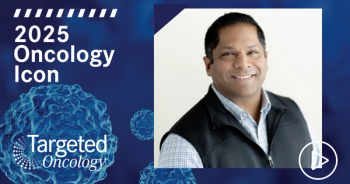
Dr Benjamin George transforms cancer care in rural Nebraska, ensuring accessible, high-quality treatment for patients in underserved communities.

Dr Benjamin George transforms cancer care in rural Nebraska, ensuring accessible, high-quality treatment for patients in underserved communities.
Benjamin George, MD, combines compassionate oncology care with cutting-edge science, fostering deep patient relationships and offering hope through advanced treatments.
Remaining Obstacles to Widespread Use of MRD Detection in TNBC
Design and Function of Oncodetect Assay for MRD Detection
A recent study reveals promising results for CLL patients using zanubrutinib and venetoclax, highlighting effective time-limited therapy options.
Explore the complexities of assessing chronic graft-versus-host disease severity and the role of NIH criteria in treatment decisions.
Experts discuss the underutilization of biomarker testing in metastatic lung cancer, emphasizing the need for reflexive testing and improved communication.
Dr. DeFilipp explores innovative strategies for managing chronic graft-versus-host disease, emphasizing personalized treatment and the shift towards targeted therapies.
Biomarker testing in non-small cell lung cancer is underutilized, hindering optimal treatment. Streamlined processes and education are vital for improvement.
Emergence and Evolution of ctDNA Assays for MRD in TNBC
TNBC Treatment and the Emergence of MRD Detection Assays
Discover the latest advancements in BPDCN treatment, including targeted therapies and promising chemotherapy regimens for better patient outcomes.
Explore the effective management of recurrent endometrial cancer with lenvatinib and pembrolizumab, emphasizing patient education and multidisciplinary care.
Explore the complexities of blastic plasmacytoid dendritic cell neoplasm, its challenges in diagnosis, and advancements in targeted therapies for better outcomes.
Addressing Treatment Challenges in Chronic Graft-Versus-Host Disease
Artificial intelligence (AI) has the potential to transform biomarker testing in early-stage NSCLC by streamlining data analysis, improving interpretation of complex genomic profiles, and predicting actionable mutations from imaging or pathology data.
The KEYNOTE-775 study confirms long-term benefits of Lenvatinib and Pembrolizumab for recurrent endometrial cancer, showing sustained survival rates and efficacy.
Explore how thalidomide derivatives enhance T-cell responses and combat exhaustion in multiple myeloma therapies for improved patient outcomes.
New research highlights nivolumab AVD as a promising new standard of care for advanced Hodgkin lymphoma, showing improved survival rates and tolerability.
This preview introduces the central themes of the upcoming Evolving Paradigms in Oncology program focused on targeted therapies and CELMoD agents in multiple myeloma. Dr. Nisha Joseph offers an early look at the questions that guide current treatment choices, the place of next generation CELMoD agents, and the way clinicians think about patient selection. The teaser sets the stage for a deeper conversation that will review clinical evidence, safety features, and practical points that influence decisions in daily practice. Viewers will gain an early sense of the topics and insights that will be explored in full during the complete expert discussion.

Maen Abdelrahim, MD, PhD, discusses how to manage the dose of NALIRIFOX in patients with metastatic pancreatic ductal adenocarcinoma.
The HER2CLIMB-05 trial reveals tucatinib enhances progression-free survival in HER2-positive metastatic breast cancer, offering new hope for patients.
A promising trial reveals pumitamig combined with chemotherapy shows high response rates, suggesting potential benefits for advanced cancer treatments.
Pumitamig shows promise as a bispecific antibody, enhancing immunotherapy effectiveness in treating triple-negative breast cancer patients.
Dr. Michael Wang discusses ECHO long-term data, revealing that concurrent therapy for mantle cell lymphoma significantly outperforms sequential treatment.
UCSF's Dr Laura Huppert explores a phase 2 trial assessing ARX788's safety and efficacy for HER2-low breast cancer patients, targeting unmet clinical needs.
Dr. Marc S. Hoffmann reveals promising 6-year results from the SEQUOIA study on zanubrutinib for chronic lymphocytic leukemia at the 2025 ASH Meeting.