

Opinion|Videos|October 28, 2026
Subcutaneous Dosing Schedule and Chair-Time Advantage
Author(s)Paul L. Swiecicki, MD
Paul L. Swiecicki, MD, of the University of Michigan Rogel Cancer Center, walks through the dosing schedule and administration of subcutaneous amivantamab in cohort 1 of the OrigAMI-4 study.
Advertisement
Episodes in this series
Paul L. Swiecicki, MD, of the University of Michigan Rogel Cancer Center, walks through the dosing schedule and administration of subcutaneous amivantamab in cohort 1 of the OrigAMI-4 study. He explains that patients received a weekly loading dose for the first 3 weeks, followed by administration once every 3 weeks, and notes that future studies are evaluating a once-every-4-week schedule that could offer additional dosing flexibility. Unlike intravenous amivantamab, Dr Swiecicki reports that the subcutaneous formulation produced no infusion-related reactions in this study; instead, administration-related reactions occurred, all grade 2 or lower, seen in 6% of patients at grade 2 and 9% at grade 1. He contrasts this favorably with the longer infusion-chair time required for intravenous administration, positioning subcutaneous dosing as a more convenient option for patients and infusion centers.
Advertisement
Related to this article

Updated survival findings, perioperative treatment strategies, and circulating tumor DNA analyses highlight evolving approaches to genitourinary cancers.

The GOBLET trial showed durability in patients with previously treated squamous cell anal carcinoma.
New Name, Same Connection to Care

Five ESMO 2026 abstracts report responses with 4 antibody-drug conjugates in ovarian cancer and a subcutaneous HER2-directed ADC plus PD-L1 inhibitor in cervical cancer.
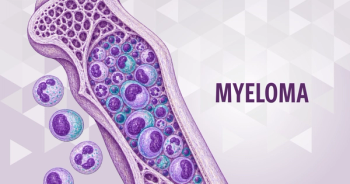
Elranatamab reduced the risk of disease progression or death vs standard care in patients with R/R myeloma after prior anti-CD38 therapy and lenalidomide.

Late-breaking ESMO 2026 data show PFS gains with 3 antibody-drug conjugates, a 6-year OS benefit with adjuvant ribociclib, and no OS gain with pembrolizumab.
Etentamig, a BCMAxCD3 bispecific antibody, was submitted for potential FDA approval based on the phase 3 CERVINO trial in relapsed/refractory multiple myeloma.

ADCs improved on chemotherapy-based regimens in PD-L1–negative and EGFR-mutated NSCLC, while chemotherapy plus pembrolizumab and pumitamig plus docetaxel showed activity in PD-L1–high and post-chemoimmunotherapy disease.
Advertisement
Advertisement
Trending on Targeted Onc - Immunotherapy, Biomarkers, and Cancer Pathways
1
ESMO 2026: ADCs and New Combinations Advance Lung Cancer Care
2
Late-Breaking Breast Cancer Data at ESMO 2026 Highlight ADCs and Ribociclib
3
Elranatamab Improves PFS in Relapsed/Refractory Multiple Myeloma
4
ESMO 2026: Survival Gains and New Treatment Strategies in GI Cancers
5