In this closing segment, Dr. Peter Voorhees, Dr. Luciano Costa, and Dr. Doris Hansen discuss the limitations of available evidence for sequencing therapies in relapsed/refractory multiple myeloma.

Peter Voorhees, MD, specializes hematology and medical oncology in Charlotte, NC, at Atrium Health Levine Cancer Institute and is a professor of cancer medicine at Wake Forest University School of Medicine.
In this closing segment, Dr. Peter Voorhees, Dr. Luciano Costa, and Dr. Doris Hansen discuss the limitations of available evidence for sequencing therapies in relapsed/refractory multiple myeloma.
In this segment, Dr. Peter Voorhees presents a modified case involving a patient in their early 70s with relapsed multiple myeloma whose disease has become refractory to both lenalidomide and daratumumab following frontline daratumumab, lenalidomide, and dexamethasone therapy.
In this segment, Dr. Peter Voorhees opens the panel discussion on sequencing and patient selection across the multiple myeloma treatment continuum.
In this segment, Dr. Peter Voorhees and Dr. Doris Hansen discuss the safety profile and post-treatment management of CAR T-cell therapy in relapsed/refractory multiple myeloma, with emphasis on considerations for community oncologists caring for patients after discharge from the CAR T-cell center.
In this segment, Dr. Peter Voorhees and Dr. Doris Hansen discuss how the findings from CARTITUDE-2 Cohort A relate to the randomized CARTITUDE-4 study and how these data inform consideration of CAR T-cell therapy in relapsed/refractory multiple myeloma.
In this segment, Dr. Peter Voorhees introduces the role of BCMA-directed CAR T-cell therapy in relapsed/refractory multiple myeloma and its movement into earlier lines of treatment.
In this segment, Dr. Peter Voorhees discusses treatment selection with bispecific antibodies in relapsed/refractory multiple myeloma, focusing on patients with prior CD38 antibody exposure.
In this segment, Dr. Peter Voorhees discusses the MonumenTAL-3 study evaluating the GPRC5D-directed bispecific antibody talquetamab in earlier-line relapsed/refractory multiple myeloma.
In this segment, Dr. Peter Voorhees introduces the evolving role of bispecific antibodies in relapsed/refractory multiple myeloma, highlighting the movement of these therapies into earlier lines of treatment.
In this segment, Dr. Luciano Costa provides practical considerations for managing patients with newly diagnosed multiple myeloma receiving frontline quadruplet therapy.
In this segment, Dr. Peter Voorhees and Dr. Luciano Costa discuss how treatment selection can be individualized for patients with newly diagnosed multiple myeloma, including considerations when choosing between triplet and quadruplet regimens.
In this segment, Dr. Peter Voorhees and Dr. Luciano Costa discuss the design and clinical implications of the CEPHEUS trial in newly diagnosed multiple myeloma, with particular attention to patients who were transplant-ineligible or transplant-deferred.
In this segment, Dr. Peter Voorhees introduces the Targeted™ Oncology Investigator Perspectives program and outlines the evolving treatment landscape in newly diagnosed multiple myeloma, including the movement of novel therapies into earlier lines of treatment.
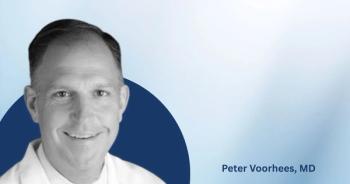
In an interview, Peter Voorhees, MD, discusses his presentation of the CERVINO trial data from the International Myeloma Society meeting.
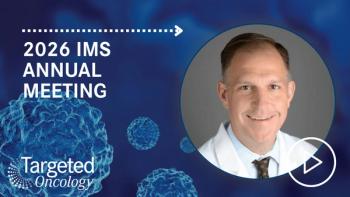
Peter Voorhees, MD, discusses the CERVINO trial of the bispecific antibody etentamig that he is presenting at the IMS conference.
Peter Voorhees, MD, discusses the cost-benefit question of adding pomalidomide to daratumumab and talquetamab in early relapsed multiple myeloma.
In an interview, Peter Voorhees, MD, discusses why talquetamab is typically sequenced after BCMA-targeting agents and the unique situations where it might be used first.
Peter Voorhees, MD, discusses the evolving treatment landscape for smoldering multiple myeloma, highlighting new therapies and clinical trial opportunities.
Dr. Peter Voorhees discusses risk stratification in smoldering multiple myeloma, highlighting the IMWG criteria and the benefits of daratumumab treatment.
Peter Voorhees, MD, discusses groundbreaking AQUILA study results, highlighting daratumumab's significant impact on high-risk smoldering multiple myeloma treatment.
Peter Voorhees, MD, discusses the AQUILA study's impact on treating patients with high-risk smoldering multiple myeloma, paving the way for new therapies.
FDA approves daratumumab for high-risk smoldering multiple myeloma, transforming treatment strategies and enhancing patient outcomes in early intervention.
Peter M. Voorhees, MD, shares key insights from the 2025 American Society of Clinical Oncology Annual Meeting, specifically in the multiple myeloma space.
Peter M. Voorhees, MD, discusses the 5-year follow-up results from the CARTITUDE-1 trial of ciltacabtagene autoleucel for the treatment of relapsed/refractory multiple myeloma.
Peter M. Voorhees, MD, discusses the 5-year follow-up results from the CARTITUDE-1 trial, highlighting the long-term efficacy and durability of ciltacabtagene autoleucel in multiple myeloma.
In this companion article, Dr Peter Voorhees provides insights into effective management of patients with newly diagnosed multiple myeloma (NDMM).
Expert insights into the evolving therapeutic landscape for newly diagnosed multiple myeloma, highlighting transplant eligibility, combination regimens, and emerging data.
Dr Peter Voorhees outlines advice for community oncologists who treat patients with R/R multiple myeloma.
Dr Voorhees shares his perspective on bispecifics, ADCs, and CAR T-cell therapy in the treatment landscapes of R/R multiple myeloma.
November 26th 2025