
EGFR+ Lung Cancer
Latest News
Advertisement
Latest Videos














































Advertisement
More News


The Hutchinson Institute for Cancer Outcomes Research released the first Community Care Cancer in Washington State: Quality and Cost Report to provide transparency for patients and health providers, establishing a more value-based care model.
Osimertinib (Tagrisso) has been approved by The European Commission as a frontline treatment for patients with <em>EGFR</em>-mutant locally-advanced or metastatic non–small cell lung cancer. The approval is based on data from the phase III FLAURA trial.
Robert L. Ferris, MD, PhD, Physician Editor-In-Chief of the Journal of Targeted Therapies, discusses genomic rearrangements and the allelic fraction of that genomic rearrangement as a major component of an individual’s cancer.
The 2018 ASCO Annual Meeting was a great success, with over 40,000 people in attendance and over 5000 abstracts presented from June 1-5 in Chicago, Illinois. Data from several phase III trials in lung cancer were presented, with especially significant results in non–small cell lung cancer. Other big areas during this year’s meeting included breast, gastrointestinal, genitourinary, and hematologic cancers.
Upfront treatment with the combination of bevacizumab (Avastin) and erlotinib (Tarceva) is superior to erlotinib alone as for patients with non–small cell lung cancer harboring<em> EGFR</em> mutations, according to results of a preplanned interim analysis of the phase III study known as NEJ026.
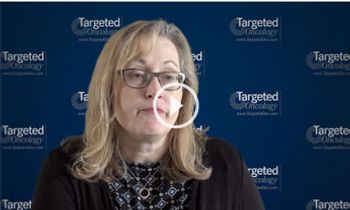
Julie R. Brahmer, MD, associate professor of oncology and co-director of the Upper Aerodigestive Department at the Bloomberg Kimmel Institute for Cancer Immunotherapy, John Hopkins Medicine, discusses the change in standard of care for patients with stage III non–small cell lung cancer. Durvalumab was recently approved by the FDA as a consolidation therapy for patients with stage III locally-advanced, unresectable NSCLC who had not progressed following standard chemoradiotherapy.
The investigational second-generation tyrosine kinase inhibitor dacomitinib demonstrated an improved median overall survival of 34.1 months compared to 26.8 months with gefitinib as a first-line treatment for patients with advanced, <em>EGFR</em>-mutant non–small cell lung cancer, according to data from a open-label, phase III trial presented at the 2018 ASCO Annual Meeting.<sup>1</sup>
Overall survival improved with the combination of atezolizumab, bevacizumab, carboplatin, and paclitaxel versus a treatment regimen of bevacizumab and chemotherapy alone in patients with advanced wild-type nonsquamous non–small cell lung cancer.
According to findings of an early study presented at the 2018 ASCO Annual Meeting, the combination of pegilodecakin and a PD-1 inhibitor demonstrated an overall response rate of 41% in patients with advanced non–small cell lung cancer.
According to the phase III KEYNOTE-407 trial, when pembrolizumab was added to frontline carboplatin/paclitaxel or nab-paclitaxel, the combination reduced the risk of death by 36% compared with chemotherapy alone for patients with metastatic squamous non–small cell lung cancer. These results were presented at the 2018 ASCO Annual Meeting.
According to findings from the phase III KEYNOTE-042 trial, patients with non–small cell lung cancer demonstrated improved survival of 4 to 8 extra months with upfront pembrolizumab therapy compared with chemotherapy, the current standard of care. Patients treated with pembrolizumab also experienced fewer adverse events.
According to findings of the IMPACT study discussed at the 2018 ASCO Annual Meeting, overall survival was improved with personalized therapy based on tumor molecular profiling in patients with advanced, hard-to-treat cancers.
According to initial results reported at the 2018 ASCO Annual Meeting from the Circulating Cell-Free Genome Atlas study, 3 cell-free DNA tests showed high degrees of specificity in identifying signs of early stage lung cancer.
Julie Brahmer, MD, recently shared the treatment considerations and decisions she makes when treating patients with non–small cell lung cancer (NSCLC). Brahmer, co-director of the Upper Aerodigestive Department, Johns Hopkins Hospital, in Baltimore, Maryland, discussed her treatment considerations based on case scenarios during a <em>Targeted Oncology </em>live case-based peer perspectives presentation.
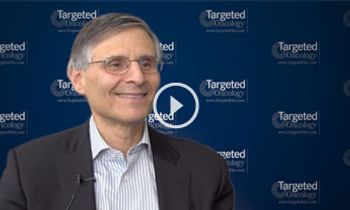
Benjamin G. Neel, MD, PhD, director of the Laura and Isaac Perlmutter Cancer Center at NYU Langone, discusses how his institution has changed vastly over the last few years, with an increasing number of clinical trials available for patients with lung cancer and other cancers. Clinical trials are often the best option for cancers where the outcomes with conventional treatments may be uncertain, Neel says.

Crizotinib has been granted a breakthrough therapy designation by the FDA for the treatment of patients with metastatic non–small cell lung cancer with MET exon 14 alterations who progress after receiving platinum-based chemotherapy. Additionally, the kinase inhibitor was granted a designation for use patients with relapsed/refractory ALK+ anaplastic large cell lymphoma.
Following a planned interim analysis, 2 early-phase clinical trials exploring daratumumab in combination with either a PD-1 inhibitor for multiple myeloma or a PD-L1 inhibitor for non–small cell lung cancer have been terminated, according to a statement from Genmab, the company codeveloping daratumumab with Janssen.


Advertisement
Advertisement
Trending on Targeted Oncology - Immunotherapy, Biomarkers, and Cancer Pathways
1
Denosumab Biosimilar Approved For Existing Oncology Indications
2
FDA Oncology Recap: Approvals, Designations, and Decisions in September 2026
3
Plinabulin Receives FDA Fast Track Designation in Post-ICI NSCLC
4
Tile-Based Radiation Improves Local Control in Resected Brain Metastases
5