

GENITOURINARY CANCERS
Latest News
Significance of Early Genetic Testing in HRR-Mutated mCRPC Highlighted by Real-World Observations
By Ryan Scott
Advertisement
Latest Videos




































Advertisement
More News
While germline and somatic testing is standard of care in the metastatic castration-resistant prostate cancer setting, it is still underutilized in the real world, leading to negative impacts on therapeutic offerings.
Patients with metastatic hormone-sensitive prostate cancer treated with darolutamide plus androgen deprivation therapy and docetaxel had lower rates of hospitalizations but marginally longer lengths of stay compared with those treated with placebo, androgen deprivation therapy, and docetaxel.

Thomas Powles, MD, MBBS, MRCP, discusses the mechanism of action of enfortumab vedotin-ejfv and its use in treating locally advanced or metastatic urothelial carcinoma.

The FDA has approved erdafitinib for the treatment of locally advanced or metastatic urothelial carcinoma with FGFR3 alterations.

Nasir Chaudry, MD, discusses treatment decisions for patients with prostate cancer and the importance of individualized treatment based on the specific case and patient preferences.
Francesca Jackson-Spence, PhD, and Matthew Young, MD, delved into the major advances in genitourinary cancer treatment, including breakthroughs in immunotherapy, targeted therapies, and early detection that offer new hope for patients.

In this Q&A discussion, Hans Hammers, MD, PhD, explains the rationale for continued use of tyrosine kinase inhibitor and PD-L1 therapy combinations, like lenvatinib and pembrolizumab, for patients with advanced renal cell carcinoma.
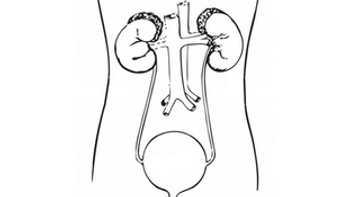
Three-year data showed durable clinical activity with nadofaragene firadenovec-vncg in patients with high-risk, BCG-unresponsive non–muscle-invasive bladder cancer with carcinoma in situ with or without papillary tumors.
The gene therapy, nadofaragene firadenovec-vncg, is now fully available across the United States for patients with this aggressive bladder cancer.

In season 5, episode 1 of Targeted Talks, Badrinath Konety, MD, delves into the critical topic of prostate cancer screening and discusses some of the recent advancements in the prostate cancer space.

Rucaparib showed a significant improvement in progression-free survival compared with docetaxel in metastatic castration- resistant prostate cancer.

BCG-unresponsive NMIBC requires vigilant surveillance during new treatments to avoid missing signs of progression and avoid delaying cystectomy, which remains the best chance for cure if intravesical therapies are failing.
BCG-unresponsive non-muscle invasive bladder cancer has multiple emerging treatment options in trials showing good response rates, though optimal sequencing remains to be determined.
TAR-200 is being studied for carcinoma in situ with or without papillary disease since it addresses diffuse CIS that cannot be surgically removed, though future trials will expand to papillary disease as adjuvant therapy like BCG, with the goal of extending the disease-free period before potentially reintroducing therapy as needed.
The TAR-200 treatment has demonstrated a favorable safety profile in clinical trial, with primarily low-grade irritated voiding symptoms that are manageable and expected with intravesical therapy, without concerning systemic side effects, making it a promising new option to delay or reduce radical cystectomy in patients with BCG-unresponsive NMIBC.
The TAR-200 treatment for BCG-unresponsive NMIBC works through a catheter-placed intravesical device that elutes gemcitabine over 3 weeks, providing a high complete response rate of 77% in early testing, likely due to the sustained release mechanism.
TAR-200, a novel targeted therapy, has been granted breakthrough therapy designation by the FDA in high-risk non-muscle-invasive bladder cancer that is unresponsive to Bacillus Calmette-Guérin.
No serious adverse events or dose-limiting toxicities were observed in the phase 1/2 trial of the antibody drug conjugate ARX517.
BCG-unresponsive NMIBC treatment aims to eradicate disease or prolong disease-free intervals, with radical cystectomy as gold standard; newer options like pembrolizumab and gemcitabine/docetaxel provide improved alternatives, though logistic challenges remain.
BCG-unresponsive non-muscle invasive bladder cancer risks invasive progression; providers should suspect disease based on any abnormalities in cystoscopy and cytology, not just voiding symptoms.
Neal Shore, MD, FACS, discussed the phase 3 EMBARK trial and what the FDA approval of enzalutamide means for the prostate cancer treatment landscape.
An analysis, based on data from the JAVELIN 100 Bladder trial, found the NCCN/FACT Bladder Symptom Index-18 for assessing quality-of-life in patients with advanced urothelial carcinoma to be reliable and valid.

In patients with metastatic castration-resistant prostate cancer of the adenocarcinoma phenotype, the combination of BXCL701 and pembrolizumab led to a median overall survival of 15.5 months.

The combination of SRK-181 and pembrolizumab demonstrated improvements in objective response rate among patients with clear cell renal cell carcinoma in a phase 1 proof-of-concept study.
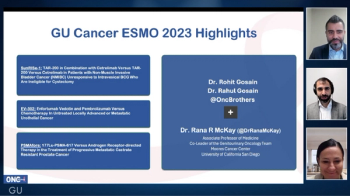
Following their program on data updates in GU cancer from ESMO 2023, Oncology Brothers Rahul Gosain, MD, and Rohit Gosain, MD, share key takeaways from SunRISe-1, EV-302, and PSMAfore.
Advertisement
Advertisement
Trending on Targeted Oncology - Immunotherapy, Biomarkers, and Cancer Pathways
1
Denosumab Biosimilar Approved For Existing Oncology Indications
2
Plinabulin Receives FDA Fast Track Designation in Post-ICI NSCLC
3
FDA Oncology Recap: Approvals, Designations, and Decisions in September 2026
4
Giredestrant Plus Everolimus Improves PFS in ER+ Advanced Breast Cancer
5