


GYNECOLOGIC CANCERS
Latest News

Advertisement
Latest Videos
















































Advertisement
More News

I think one of the most important advancements in biomedical technology that has improved our understanding of the complexities of cancer is the ability to sequence the cancer genome for any individual patient, in a rapid and cost-effective manner, to help us make treatment decisions in the clinic.
Data from a posthoc analysis of the phase II QUADRA trial support the use of niraparib in later lines of therapy in patients with relapsed ovarian cancer who have <em>BRCA</em> mutations, said Kathleen N. Moore, lead investigator of the trial. According to findings reported at the 2018 ESMO Annual Congress, when used in the fourth line or later, niraparib exhibited an overall response rate of approximately 30% in this subset of patients.
As an add-on to bevacizumab, carboplatin plus pegylated liposomal doxorubicin significantly extended progression-free survival compared with carboplatin and gemcitabine in patients with recurrent ovarian cancer whose first disease recurrence was >6 months after first-line platinum-based chemotherapy.

Groundbreaking developments in cancer therapies can change lives, extending survival and sending patients who previously thought their chances were slim into remission. But these therapies come at a cost, and many patients reel at the prospect of heavy financial burdens. To help patients and programs meet the challenges of affording cancer treatments, community cancer centers are expanding the role of financial advocates in their organizations.

Thomas A. Gallo, MS, MDA, president of the Association of Community Cancer Centers, discusses his mission as president to “reflect, renew, and reignite” in order to create a more resilient oncology team for the community.
Frontline maintenance therapy with olaparib demonstrated a statistically significant improvement in progression-free survival for women with <em>BRCA</em>-positive advanced ovarian cancer.
Larotrectinib induced an objective response rate of 80% in patients with advanced solid tumors who harbored <em>NTRK </em>gene fusions, according to results pooled from 3 small trials of the TRK inhibitor. Results were presented during the 2018 ESMO Congress.

Rising prescription drug prices continue to add to the burden of paying for quality healthcare. In an effort to confront such costs, the Centers for Medicare & Medicaid Services has rescinded a prohibition on step therapy for Medicare Advantage plans. But some contend such a policy will reduce patient access to optimal medication.
Nadeem R. Abu-Rustum, MD, discusses options and treatments that can allow women to maintain their reproductive ability.
The number of women who develop gestational trophoblastic neoplasia during pregnancy is limited, yet physicians believed that a greater understanding of how to manage this disease was necessary. New guidelines were recently issued by the National Comprehensive Cancer Network to help gynecologic oncologists understand how to treat this rare gestational cancer. Generally, the use of single-agent chemotherapy for most patients with low-risk disease is recommended, with the guidelines reserving surgery and combination chemotherapy for patients at high risk of GTN.<sup>1</sup>
Douglas A. Levine, MD, has suggested that many cases of ovarian cancer are preventable, especially in the case of women with hereditary mutations that lead to an increased risk for developing the disease.
Combining the PD-1 checkpoint inhibitor nivolumab with the CTLA-4 checkpoint inhibitor ipilimumab led to superior survival rates compared to treatment with nivolumab alone in patients with persistent or recurrent ovarian cancer, according to findings from the phase II NRG-GY003 trial.
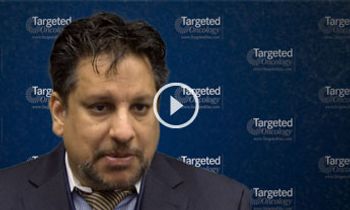
Krishnansu S. Tewari, MD, discusses the excitement around immunotherapy in cervical cancer.

Gardasil 9 (HPV 9-valent Vaccine, Recombinant), a vaccine for the prevention of HPV, has been approved by the FDA for use in males and females aged 9 through 45 years.
In an interview with <em>Targeted Oncology</em>, lead investigator Krishnansu S. Tewari, MD, discussed the investigation of cemiplimab in cervical cancer and the promise of immunotherapy.
The next-generation sequencing assay clonoSEQ has gained FDA approval as a test for minimal residual disease in patients with acute lymphoblastic leukemia or multiple myeloma.
The landscape for treatment of gynecologic cancer has changed since 2014, however, better therapeutic strategies and better biomarkers are needed in the realm of gynecologic cancers, Bradley J. Monk, MD, said during a recent webinar about meeting unmet clinical needs in cervical cancer.
Matthew Powell, MD, discusses the promise of immunotherapy in ovarian cancer, despite its challenges.
David O’Malley, MD, lead investigator of the FORWARD II trial, discusses the emerging combination of mirvetuximab soravtansine plus bevacizumab and the evolving treatment landscape in ovarian cancer.
Ophira Ginsburg, MD, discusses cervical cancer prevention, screening, and elimination on a global scale.
Laura Michaelis, MD, associate professor of medicine, Medical College of Wisconsin, discusses thrombotic risk for patients with essential thrombocythemia and polycythemia vera.
Vicky Makker, MD, a medical oncologist at Memorial Sloan Kettering Cancer Center, discusses 2 agents, lenvatinib and pembrolizumab, in patients with endometrial cancers.

Adding the combination of venetoclax (Venclexta) and navitoclax (ABT-263) to chemotherapy induced an objective response rate of 66.7% in adults with relapsed/refractory acute lymphoblastic leukemia or lymphoblastic lymphoma, according to results from a small phase I study presented at the 2018 SOHO Annual Meeting.
In a presentation during the 2018 SOHO Annual Meeting, Terry J. Fry, MD, discussed some of the data that have been seen so far with CD19- and CD22-direct CAR T cells, and addressed resistance to these products.
The adoption of intensive pediatric treatment regimens has resulted in improved survival for adolescents and young adults with acute lymphoblastic leukemia over the past decade, said Wendy Stock, MD, at the 2018 SOHO Annual Meeting.
Advertisement
Advertisement
Trending on Targeted Oncology - Immunotherapy, Biomarkers, and Cancer Pathways
1
Denosumab Biosimilar Approved For Existing Oncology Indications
2
Plinabulin Receives FDA Fast Track Designation in Post-ICI NSCLC
3
FDA Oncology Recap: Approvals, Designations, and Decisions in September 2026
4
Tile-Based Radiation Improves Local Control in Resected Brain Metastases
5