


HEMATOLOGY
Latest News

Advertisement
Latest Videos




CME Content





































Advertisement
More News
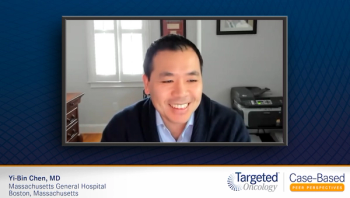
Yi-Bin Chen, MD, discusses diagnostic criteria and measurements of response as they relate to the case of a 50-year-old woman with steroid-refractory acute GvHD.
Yi-Bin Chen, MD, defines acute graft-versus-host disease (aGvHD) as a complication of allogeneic transplant, discusses the clinical risk factors, and reviews prophylactic treatment options.
Yi-Bin Chen, MD, gives insight into the current accuracy of predictive prognostics and the potential use of biomarkers to risk stratify patients with acute GvHD in the future.
Yi-Bin Chen, MD, provides an overview of the case of a 50-year-old woman with steroid-refractory acute GvHD, including initial presentation, clinical work-up, and treatment.
Yi-Bin Chen, MD, reviews the case of a 50-year-old woman with steroid-refractory acute graft versus host disease (aGvHD) following allogeneic transplant and provides a discussion on treatment considerations for patients with aGvHD.
During a virtual Targeted Oncology Case-Based Roundtable, Ajai Chari, MD. a professor of Medicine, Hematology, and Medical Oncology at the Icahn School of Medicine at Mount Sinai in New York, NY, discussed the case of a 72-year-old patient with multiple myeloma.

The FDA has granted an accelerated approval to axicabtagene ciloleucel for the treatment of adult patients with relapsed or refractory follicular lymphoma who have received 2 or more prior lines of systemic therapy.

Blinatumomab consolidation demonstrated significantly prolonged event-free survival in pediatric patients with high-risk first-relapse B-cell precursor acute lymphoblastic leukemia when compared with chemotherapy before allogeneic hematopoietic stem cell transplantation.
During a Targeted Oncology Case-Based Peer Perspectives event, Peter Hillmen, MBChB, PhD, discussed the case of 61-year-old patient with diffuse infiltration by chronic leukocytic leukemia.
The FDA has accepted a supplemental New Drug Application for ruxolitinib and granted it Priority Review as a potential treatment option for adult and pediatric patients 12 years and older with steroid-refractory chronic graft-versus-host disease.
Omidubicel was faster than standard myeloablative umbilical cord blood transplantation and correlated with promising clinical benefit, according to phase 3 data.
High rates of sustained MRD negativity were achieved with daratumumab-containing combinations compared with the standard-of-care combinations, according to an exploratory analysis of 2 ongoing clinical trials.
Ruxolitinib is one of only 2 treatments for MF that significantly improved the survival of patients. Still oncologists see opportunity to prolong survival in these patients even more.
The FDA has accepted a supplemental New Drug Application for zanubrutinib for the treatment of adult patients with Waldenström macroglobulinemia.
Early antitumor activity was seen with cord blood–derived natural killer immunotherapy in combination with high-dose chemotherapy and autologous stem cell transplant in patients with B-cell non-Hodgkin lymphoma, according to early results from a phase 2 trial.
In hematologic malignancies, a new class of molecules is emerging that may ultimately offer clinical benefits comparable to those chimeric antigen receptor T-cell therapies while reducing some of the negatives associated with them.
For the treatment of patients with newly diagnosed acute graft-versus-host disease, itolizumab has demonstrated promise in part A of the multicenter dose-ascending phase 1b/2 EQUATE study.
Results from the phase 3, randomized REACH3 trial further demonstrated the benefit of ruxolitinib over BAT in rates for failure-free survival, symptom improvement, and duration of response.
Data presented during the 2021 Transplantation and Cellular Therapy Meeting showed that treatment with Orca-T, achieved a significant reduction in cases of graft-versus-host disease and other impressive outcomes.
Results from 2 phase 3 clinical trials showed that use of the investigational gene cell therapy betibeglogene autotemcel led to durable transfusion independence in 87% of pediatric patients under the age of 18 years with transfusion-dependent beta-thalassemia.

Michael Bishop, MD, discusses the impact of chimeric antigen receptor T cell therapy across hematologic malignancies.
Ruxolitinib was found to be safe for utilization in children after a pediatric dosing algorithm was tested in patients with chronic graft-versus-host disease and induced responses.
A phase 1 study is the first to demonstrate that JSP191 is safe and effective in older patients with MRD-positive acute myeloid leukemia or myelodysplastic syndrome who are undergoing nonmyeloablative allogeneic hematopoietic cell transplantation.
In a pivotal phase 2 trial, administration of narsoplimab to patients with high-risk hematopoietic stem cell transplant-associated thrombotic microangiopathy led to impressive responses and a favorable survival benefit.
Finding presented on patients with hematologic malignancies at the 2021 Transplantation and Cellular Therapy Meetings of ASTCT and CIBMTR show that patients who had undergone a hematopoietic stem cell transplantation can accumulate effective immunity against SARS-CoV2 infection and non-SARS human coronaviruses.
Advertisement
Advertisement
Trending on Targeted Oncology - Immunotherapy, Biomarkers, and Cancer Pathways
1
FDA Grants Final Approval to Cabozantinib Capsule Formulation
2
David DiBardino, MD, on the Rationale for Intratumoral Therapy in Lung Cancer
3
Subcostal Robotic Surgery Cuts Thoracic Pain
4
Four Approvals Reflect Growth in Hormone-Sensitive Prostate Cancer Treatment
5