

HEMATOLOGY
Latest News
Advertisement
Latest Videos



CME Content






































Advertisement
More News
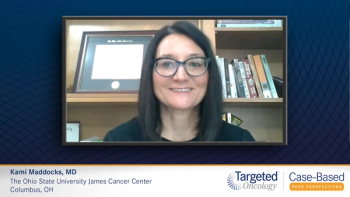
Kami Maddocks, MD, reviews the case of a 74-year-old man with relapsed/refractory follicular lymphoma and discusses current treatment options.
Rafael Fonseca, MD, reviews efficacy and safety data from the phase 3 MAIA trial and discusses their implications for clinical practice.
Rafael Fonseca, MD, discusses the role of monoclonal antibodies in the first-line setting in patients with newly diagnosed multiple myeloma.
Rafael Fonseca, MD, reviews first-line therapy options and considerations for treatment selection for patients with newly diagnosed multiple myeloma.
Rafael Fonseca, MD, discusses the challenges of treating patients with newly diagnosed multiple myeloma.
Rafael Fonseca, MD, reviews the case overview of a 77-year-old woman with multiple myeloma.
Rafael Fonseca, MD, discusses the case of a 77-year-old woman with multiple myeloma, treatment approach for patients with newly diagnosed multiple myeloma, and the trials providing insight into the treatment of this disease.

A phase 3 study with the goal of demonstrating overall survival benefit with imetelstat versus best available therapy in patients with refractory myelofibrosis has dosed the first patient with the experimental agent.

Ixazomib plus cyclophosphamide, and dexamethasone elicited higher rates of efficacy compared with ixazomib/dexamethasone, followed by single-agent ixazomib maintenance, in patients with transplant-ineligible newly diagnosed multiple myeloma/
Adriana Rossi, MD, provides clinical pearls on the management of triple-class refractory multiple myeloma.
An expert in multiple myeloma shares her perspective on the significance of recent single-agent approvals for patients with triple-class refractory multiple myeloma and highlights promising combination regimens under investigation.
Dr Adrianna Rossi reviews considerations for treatment selection in the triple-class refractory setting in patients with multiple myeloma.
Adriana Rossi, MD, describes key clinical trials and their implications for the management of triple-class refractory multiple myeloma.
Dr Adriana Rossi reviews the therapeutic options for patients with triple-class refractory multiple myeloma in terms of mechanism of action and safety profile.
An expert in multiple myeloma provides insight on the treatment challenges for patients with triple-class refractory disease, particularly after fourth or later lines.
Adriana Rossi, MD, presents the case of a 75-year-old woman with triple-class refractory multiple myeloma.
Adriana Rossi, MD, describes the treatment approach in caring for a 75-year-old woman with triple-class refractory multiple myeloma [RRMM] while highlighting results from the relevant DREAMM and SOHO studies.
Experts decide whether ruxolitinib is a viable treatment option for steroid-refractory acute graft-versus-host-disease based on the case of a 48-year-old patient.
Primary results from the phase 3 CHRONOS-3 study revealed a survival benefit with the combination of copanlisib in combination with rituximab over rituximab plus placebo in patients with relapsed indolent non-Hodgkin lymphoma.
Jonathan L. Kaufman, MD, discusses current challenges and unmet needs in the treatment landscape and provides insight into potential improvements in the future of multiple myeloma.
Expert in the management of multiple myeloma Jonathan Kaufman, MD, reviews factors to consider when selecting a treatment regimen for patients with relapsed disease.
Jonathan L. Kaufman, MD, considers updates from the GRIFFIN trial, the MAIA trial, and the PEGASUS study and comments on factors to consider for daratumumab-containing induction regimens.
Key opinion leader in hematology Jonathan L. Kaufman, MD, discusses standard treatment options for newly diagnosed multiple myeloma in transplant and nontransplant treatment settings.
An expert hematologist discusses factors to consider when determining a treatment approach in newly diagnosed multiple myeloma including symptom burden, comorbidities, age, and ECOG performance status.
Jonathan L. Kaufman, MD reviews the case of a 75-year-old man with multiple myeloma by discussing the patient’s presentation, clinical workup, and initial prognosis.
Advertisement
Advertisement
Trending on Targeted Oncology - Immunotherapy, Biomarkers, and Cancer Pathways
1
David DiBardino, MD, on the Rationale for Intratumoral Therapy in Lung Cancer
2
FDA Grants Final Approval to Cabozantinib Capsule Formulation
3
Four Approvals Reflect Growth in Hormone-Sensitive Prostate Cancer Treatment
4
Subcostal Robotic Surgery Cuts Thoracic Pain
5