





Renal Cell Carcinoma
Latest News
Advertisement
Video Series




Latest Videos







































Advertisement
More News
Explore the complexities of non-clear cell renal cell carcinoma, its treatment challenges, and promising immunotherapy advancements for better patient outcomes.

During a live event, Saby George, MD, and participants discussed tolerability concerns in patients with recurrent renal cell carcinoma who received prior immune checkpoint inhibitor.

During a live event, Chandler H. Park, MD, and participants discuss NCCN guidelines and TiNivo-2 data for second-line renal cell carcinoma.
The STELLAR-002 study reports promising efficacy and manageable safety for zanzalintinib plus nivolumab in untreated stage 4 RCC patients.
Hyung Kim, MD, discussed the PROBE trial, a trial in progress, for patients with advanced kidney cancer.
Pembrolizumab consistently improves overall and disease-free survival in clear cell renal cell carcinoma, showing sustained benefit at 5 years post surgery.

David A. Braun, MD, PhD, reveals how integrating tumor and circulating biomarkers enhances treatment response predictions in advanced renal cell carcinoma.
Manojkumar Bupathi, MD, MS, discussed his takeaways on physician decision-making for frontline metastatic renal cell carcinoma (RCC) treatment from a Case-Based Roundtable event.
Atezolizumab plus cabozantinib or cabozantinib alone showed efficacy and manageable safety in second-line renal cell carcinoma.
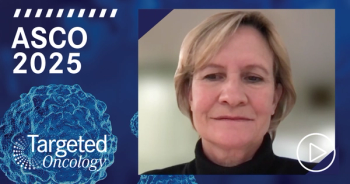
Naomi Haas, MD, discusses the 5-year follow-up of the KEYNOTE-564 study being presented at the 2025 ASCO Annual Meeting.
During a live event, Chandler H. Park, MD, and event participants looked at quality of life, tolerability, and rechallenging in second-line RCC therapy.
During a live event, Pedro C. Barata, MD, MSc, discussed the case of a patient with advanced clear cell renal cell carcinoma who requires second-line therapy.
The FDA approved belzutifan as the first oral therapy for advanced or metastatic pheochromocytoma and paraganglioma in patients 12 years and older.
During a live event, Daniel M. Geynisman, MD, and participants discussed which efficacy end points they value and how they modify doses of combination renal cell carcinoma therapies.
A retrospective analysis showed higher response rate for cabozantinib/nivolumab vs. lenvatinib/pembrolizumab in advanced RCC, with no significant survival or safety differences.
During a live event, Guru P. Sonpavde, MD discussed improvements to survival with cabozantinib plus nivolumab in metastatic renal cell carcinoma.
During a live event, Guru P. Sonpavde, MD discussed first-line renal cell carcinoma regimens with varying efficacy and toxicity profiles.
During a live event, Martin Voss, MD, reviewed the trials of lenvatinib plus pembrolizumab, cabozantinib plus nivolumab, and ipilimumab plus nivolumab in non–clear cell renal cell carcinoma.
Advertisement
Advertisement
Trending on Targeted Oncology - Immunotherapy, Biomarkers, and Cancer Pathways
1
Denosumab Biosimilar Approved For Existing Oncology Indications
2
Plinabulin Receives FDA Fast Track Designation in Post-ICI NSCLC
3
FDA Oncology Recap: Approvals, Designations, and Decisions in September 2026
4
Giredestrant Plus Everolimus Improves PFS in ER+ Advanced Breast Cancer
5