


Renal Cell Carcinoma
Latest News
Advertisement
Latest Videos







































Advertisement
More News
Dr. Campbell evaluates the efficacy and safety results from the 55-month analysis of the CheckMate-9ER trial, and explores the considerations for discontinuing or continuing immunotherapy (IO) in IO/IO versus IO/TKI combination regimens.
The key opinion leaders examine the data from the KEYNOTE-426 trial, focusing on safety and efficacy outcomes along with other pertinent updates.
The FDA has granted fast track designation to ADI-270, an off-the-shelf CD70-targeted gamma delta CAR T-cell therapy, for treating metastatic or advanced clear cell renal cell carcinoma.
A genitourinary oncologist discusses the role of multidisciplinary care in the treatment of patients with advanced renal cell carcinoma.
Martin H. Voss, MD, outlines adverse events encountered with different IO-TKI and IO-IO combination regimens in RCC and discusses the importance of open communication with patients.
During a Case-Based Roundtable® event, Rana McKay, MD, discussed the updated favorable-risk group data for 4 frontline combination trials in renal cell carcinoma in the first article of a 2-part series.
Matthew Campbell, MD, MS, analyzes the crucial efficacy and safety results from the CLEAR trial's 4-year final analysis, incorporating insights on how these findings influence clinical decision-making for treatment-naïve patients with advanced renal cell carcinoma.
Rana McKay, MD, examines the pivotal efficacy and safety outcomes from the 8-year follow-up of the CheckMate-214 trial in treatment-naïve patients, presented at ASCO GU 2024, and discusses how these findings impact clinical practice.

Combining stereotactic radiosurgery with immunotherapy significantly improves overall survival in patients with renal cell carcinoma and brain metastasis.
An expert on non–clear cell renal cell carcinoma provides clinical insights on TKI dosing strategies and duration of therapy implications for IO-TKI combinations.
Following the 2024 ASCO Annual Meeting, Martin H. Voss, MD, discusses long-term follow-up data from the phase 2 KEYNOTE-B61 trial investigating pembrolizumab plus lenvatinib in the first-line treatment of advanced non–clear cell RCC.

During a Case-Based Roundtable® event, Deepak Kilari, MD, discussed with participants how updated data on frontline regimens affects their choice of therapy for patients with metastatic clear cell renal cell carcinoma.
The key opinion leaders explore extended follow-up results from the CheckMate-214 clinical trial.
During a Case-Based Roundtable® event, Nizar M. Tannir, MD, discussed the importance of site of metastasis and other factors in the use of nivolumab plus ipilimumab in renal cell carcinoma in the first article of a 2-part series.
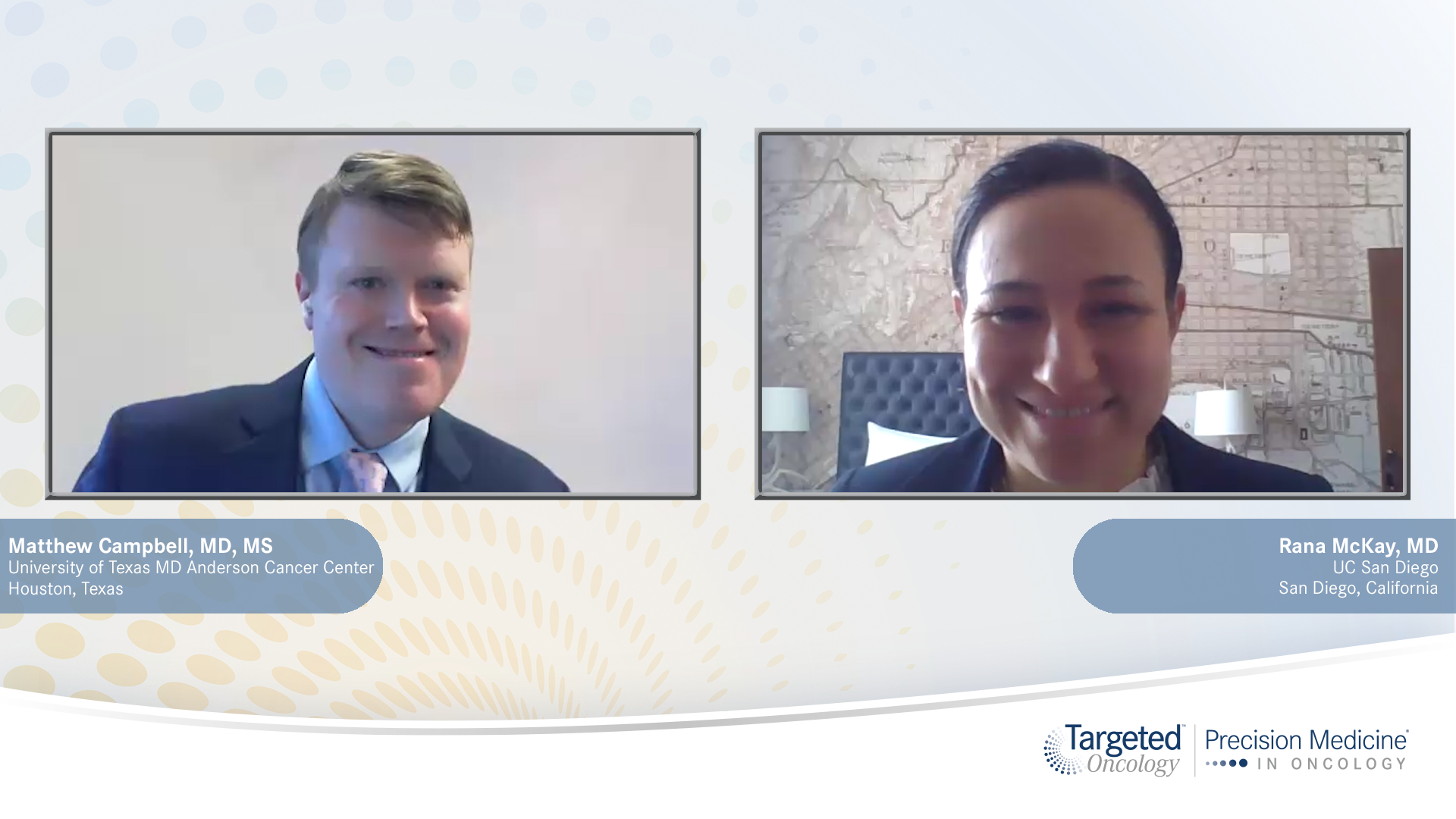
Matthew Campbell, MD, MS, and Rana McKay, MD, offer a concise review of existing treatment approaches for clear cell renal cell carcinoma across risk categories, along with considerations for sequencing therapies.
At a live virtual event, Moshe Ornstein, MD, looked at the latest data behind the 4 main combination therapies available for patients with metastatic renal cell carcinoma (RCC).
A genitourinary oncologist discusses current treatment options available for patients with non–clear cell renal cell carcinoma and discusses the roles of tyrosine kinase inhibitors (TKIs), PD-1 inhibition, and combination therapy.
During a Case-Based Roundtable® event, Sumanta Kumar Pal, MD, discussed regimens for recurrent metastatic clear cell renal cell carcinoma including lenvatinib plus everolimus, belzutifan, and investigational cell therapy and bispecific agents in the second article of a 2-part series.

The combination therapy showed consistent benefits across various subgroups, including those with poor-risk disease and higher PD-L1 expression.
During a Case-Based Roundtable® event, Stephanie A. Berg, DO, moderated a discussion on the impact of adverse events and dosing approaches on treatment of metastatic renal cell carcinoma.
Pending FDA review, TLX250-CDx awaits consideration following the successful outcomes of the phase 3 ZIRCON trial in clear cell renal cell carcinoma.
Lenvatinib plus pembrolizumab delivered a significant benefit in time to disease progression in all organs vs sunitinib in advanced renal cell carcinoma.
A retrospective analysis of the phase 3 IMmotion010 trial suggests that KIM-1 levels might hold promise as a biomarker in renal cell carcinoma.
Lenvatinib in combination with pembrolizumab yielded a greater clinical benefit rate compared with sunitinib in advanced clear cell renal cell carcinoma, regardless of patient biomarker subtype.
CD8-positive, PD-1-positive, TIM3-negative, and LAG3-negative tumor infiltrating lymphocytes did not serve as a biomarker of improved clinical outcomes of nivolumab plus ipilimumab in metastatic ccRCC.
Advertisement
Advertisement
Trending on Targeted Oncology - Immunotherapy, Biomarkers, and Cancer Pathways
1
Denosumab Biosimilar Approved For Existing Oncology Indications
2
Plinabulin Receives FDA Fast Track Designation in Post-ICI NSCLC
3
FDA Oncology Recap: Approvals, Designations, and Decisions in September 2026
4
Giredestrant Plus Everolimus Improves PFS in ER+ Advanced Breast Cancer
5