

SKIN CANCERS
Latest News
Advertisement
Latest Videos













































Advertisement
More News

According to data presented at the 2017 World Congress of Melanoma, the combination of nivolumab (Opdivo) and ipilimumab (Yervoy) induced a 3-year relapse-free survival rate of 71% in the adjuvant treatment of patients with high-risk resected stage IIIC/IV melanoma, but it was also associated with significant toxicity.

Celeste Lebbé, MD, from the Hôpital Saint Louis, in Paris, France, discusses the use of immunotherapy for the treatment of melanoma.

The combination of dabrafenib and trametinib has been granted a breakthrough therapy designation by the FDA for the adjuvant treatment of patients with stage III melanoma with a <em>BRAF V600</em> mutation following complete resection.
Adjuvant treatment with a combination of dabrafenib (Tafinlar) and trametinib (Mekinist) continues to show a long-term survival benefit in patients with melanoma, even across subgroup populations, according to a presentation at the 2017 World Congress of Melanoma (WCM).
According to updated results from the phase II ABC trial presented at the 2017 World Congress of Melanoma, Nivolumab (Opdivo) combined with ipilimumab (Yervoy) showed activity in asymptomatic patients with melanoma brain metastases who had not received prior local therapy to the brain.
While immunotherapty has led a transformation for melanoma care, combinations of anti–PD-1 and CTLA-4 agents are toxic, and biomarkers are not yet available to help personalize treatment. Therefore, Carolina Robert, MD, PhD, says, further research is needed to explore less toxic, more effective options.
In a small phase I study, engineered tumor-infiltrating lymphocytes demonstrated signs of antitumor activity in patients with metastatic melanoma following treatment with a prior checkpoint inhibitor. Results of the pilot study of TILs that were engineered to express transforming growth factor-β dominant negative receptor and nerve growth factor receptor were presented during the 2017 World Congress of Melanoma.
Triplet therapy with the combination of anti–PD-1/PD-L1 therapy, BRAF, and MEK inhibitors have already shown promise for patients with <em>BRAF</em>-positive advanced melanoma, and the potential for these combinations are increasing, according to Antoni Ribas, MD, PhD.
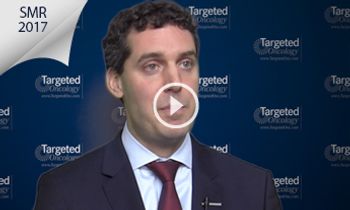
Michael A. Postow, MD, medical oncologist, Memorial Sloan Kettering Cancer Center, discusses BRAF and MEK inhibitor combinations studies in melanoma.
In patients with melanoma, the use of intralesional therapies in combination with checkpoint inhibitors has demonstrated to be an improvement to monotherapy and combinations with immunotherapy, according to a presentation by Robert Andtbacka, MD, at the 2017 World Congress of Melanoma.
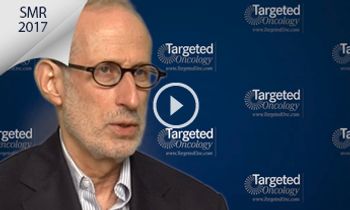
Jeffrey S. Weber, MD, PhD, deputy director and co-director of the Melanoma Program at the Laura and Isaac Perlmutter Cancer Center at NYU Langone Medical Center,
Triplet therapy for advanced, <em>BRAF</em> V600-mutant melanoma led to objective responses in 73% of a small group of patients enrolled in a phase I trial, according to updated results reported at the 2017 ESMO Annual Congress in Madrid.
Nearly half of patients with resectable stage IIIB/C BRAF V600-mutant melanoma achieved pathologic complete response with neoadjuvant treatment with dabrafenib and trametinib, according to results of a phase II study presented at the 2017 ESMO Congress in Madrid.
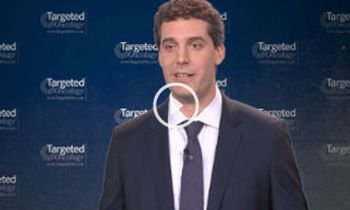
Michael A. Postow, MD, medical oncologist, Memorial Sloan Kettering Cancer Center, discusses how the results of the COMBI-AD study and the CheckMate-238 study will impact the care of patients with melanoma.
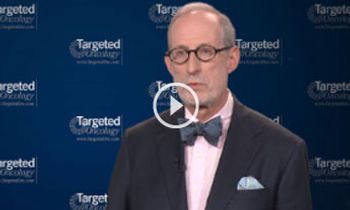
Jeffrey S. Weber, MD, PhD, deputy director of the Laura and Isaac Perlmutter Cancer Center, co-director of the Melanoma Program, and head of Experimental Therapeutics at NYU Langone Medical Center, discusses how results of the CheckMate-238 study will impact patients with melanoma.
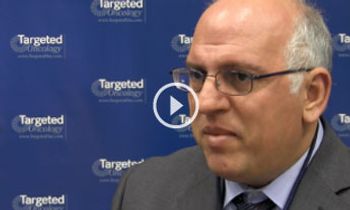
Paolo A. Ascierto, MD, director at the Unit of Melanoma, Cancer Immunotherapy and Innovative Therapy, National Tumor Institute Fondazione G. Pascale, discusses the initial efficacy findings for the anti-LAG-3 antibody BMS-986016 plus nivolumab in patients with immunotherapy-relapsed/refractory melanoma.
An overall response rate of 61% was induced by adding the IDO inhibitor indoximod to pembrolizumab in patients with advanced melanoma, according to updated results presented at the International Cancer Immunotherapy Conference in Frankfurt/Mainz, Germany.
Based on findings of the randomized CheckMate-236 trial, nivolumab may be a less toxic, better tolerated adjuvant treatment option over ipilimumab for patients with resected stage IIIB/C and IV melanoma, whether or not they have a <em>BRAF</em> mutation.
After a median follow-up of 2.8 years, the 3-year relapse-free survival rate in patients with <em>BRAF</em>-mutant stage III melanoma who were treated with adjuvant dabrafenib and trametinib was 58% compared with 39% for placebo, according to findings from the phase III COMBI-AD study.

Celeste Lebbé, MD, from the Hôpital Saint Louis, in Paris, France, discusses avelumab treatment in chemotherapy-naive patients with distant metastatic Merkel cell carcinoma during the 2017 ESMO Annual Congress.
In findings reported at the 2017 ESMO Annual congress in Madrid, a majority of patients with advanced melanoma responded to the combination of pembrolizumab (Keytruda) and the investigational IDO1 inhibitor epacadostat.
For patients with <em>BRAF</em>-mutant advanced melanoma, the BRAF inhibitor encorafenib combined with the MEK inhibitor binimetinib demonstrated significant improvements in progression-free survival (PFS) compared with single-agent vemurafenib or encorafenib, according to updated findings from the phase III COLUMBUS trial presented at the 2017 ESMO Congress.
Jason J. Luke, MD, assistant professor of Medicine, The University of Chicago Medicine, discusses the combination of epacadostat and pembrolizumab (Keytruda) for the treatment of melanoma during the 2017 ESMO Annual Congress.

Dirk Schadendorf, MD, professor, director, and chair of the clinic for dermatology at the University Hospital Essen in Germany, discusses the combination of targeted therapy and checkpoint blockade for the treatment of melanoma.
Robert Andtbacka, MD, discusses long-term results for T-VEC in melanoma and the remaining challenges with the oncolytic immunotherapy.<br />
Advertisement
Advertisement
Trending on Targeted Oncology - Immunotherapy, Biomarkers, and Cancer Pathways
1
Plinabulin Receives FDA Fast Track Designation in Post-ICI NSCLC
2
Denosumab Biosimilar Approved For Existing Oncology Indications
3
FDA Oncology Recap: Approvals, Designations, and Decisions in September 2026
4
Tile-Based Radiation Improves Local Control in Resected Brain Metastases
5