


SKIN CANCERS
Latest News
Advertisement
Latest Videos

















































Advertisement
More News

According to phase Ib study findings presented at the 2018 AACR Annual Meeting, combining the intratumoral toll-like receptor 9 (TLR9) agonist CMP-001 and pembrolizumab showed clinical activity in reversing PD-1 checkpoint inhibition resistance in patients with metastatic melanoma.

Alexander M. M. Eggermont, MD, PhD, director general of Gustave Roussy Cancer Campus Grand Paris in Villejuif, France, discusses the phase III results from the EORTC 1325-MG/KEYNOTE-054 trial presented at the 2018 AACR Annual Meeting.

According to the results from a phase I study, BLU-667, a next-generation tyrosine kinase inhibitor, was well-tolerated and demonstrated clinical benefit in patients with advanced, <em>RET</em>-altered solid tumors who had progressed on previous therapies. These findings were presented April 14 to 18 at the ASCR Annual Meeting 2018 in Chicago, Illinois.
According to phase III results from the EORTC 1325-MG/KEYNOTE-054 trial presented at the 2018 AACR Annual Meeting and published in the <em>New England Journal of Medicine, </em>adjuvant pembrolizumab (Keytruda) reduced the risk of recurrence or death by 43% in patients with resected, high-risk stage III melanoma.

According to findings from the phase III ECHO-301/KEYNOTE-252 trial, progression-free survival was not improved with the combination of the PD-1 inhibitor pembrolizumab (Keytruda) and the IDO1 inhibitor epacadostat versus single-agent pembrolizumab in patients with unresectable or metastatic melanoma.
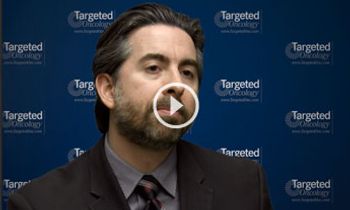
Jason J. Luke, MD, assistant professor of medicine at the The University of Chicago Medicine, discusses the importance of conducting research into less common subsets of melanoma. After giving a talk on non-cutaneous melanoma, a rare subtype, Luke explained that not all cases of melanoma arise on the skin and shared why more research is necessary in the field.
The new drug application for larotrectinib (LOXO-101) for treatment of patients with locally advanced or metastatic solid tumors that harbor an NTRK gene fusion has been completed.



Advertisement
Advertisement
Trending on Targeted Oncology - Immunotherapy, Biomarkers, and Cancer Pathways
1
Plinabulin Receives FDA Fast Track Designation in Post-ICI NSCLC
2
Denosumab Biosimilar Approved For Existing Oncology Indications
3
FDA Oncology Recap: Approvals, Designations, and Decisions in September 2026
4
Tile-Based Radiation Improves Local Control in Resected Brain Metastases
5