

SKIN CANCERS
Latest News
Advertisement
Latest Videos













































Advertisement
More News




Pembrolizumab (Keytruda) induced a median overall survival (OS) of 32.7 months versus 15.9 months for ipilimumab (Yervoy) in patients with unresectable stage III-IV melanoma, according to 4-year survival results from the KEYNOTE-006 trial presented at the 2018 ASCO Annual Meeting.

Alexander M. Eggermont, MD, PhD, director general of Gustave Roussy Cancer Campus Grand Paris in Villejuif, France, discusses the history of immune checkpoint inhibitors in the treatment landscape of melanoma.
Researchers’ understanding of why patients with cancer do or do not respond to treatment with immune checkpoint inhibition is constantly evolving, with new developments in innate and adaptive immunity, the tumor microenvironment, and more changing the way that immunotherapy is viewed and used. Many researchers are now pointing to the effect that gut microbiota have on patients’ response to checkpoint inhibitors and its implications for the treatment of patients receiving immunotherapy.
Results from a phase II trial demonstrated that cemiplimab, a PD-1 inhibitor, induced an overall response rate (ORR) of 47.5% in patients with metastatic cutaneous squamous cell carcinoma.
According to updated data from the phase I/II PIVOT-02 trial presented at the 2018 ASCO Annual Meeting, the combination of NKTR-214 plus the PD-1 inhibitor nivolumab demonstrated promising antitumor activity in patients with advanced solid tumors, particularly in PD-L1–negative patients.

Keith T. Flaherty, MD, professor of Medicine, Harvard Medical School, director of Clinical Research, Massachusetts General Hospital, discusses overall survival results from the phase III COLUMBUS trial investigating encorafenib plus binimetinib versus vemurafenib (Zelboraf) or encorafenib in BRAF-mutant melanoma during the 2018 ASCO Annual Meeting.
According to findings of the IMPACT study discussed at the 2018 ASCO Annual Meeting, overall survival was improved with personalized therapy based on tumor molecular profiling in patients with advanced, hard-to-treat cancers.
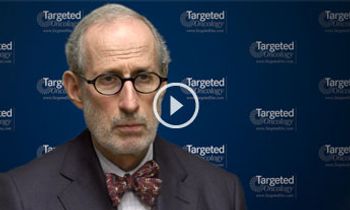
Jeffrey S. Weber, MD, PhD, deputy director of the Perlmutter Cancer Center at NYU Langone Medical Center, discusses the adverse events commonly associated with the combination of dabrafenib and trametinib in the adjuvant setting for patients with BRAF V600E– or V600K–positive stage III melanoma.
Adjuvant therapy for melanoma to lower the risk of disease recurrence and death in patients with high-risk disease who have undergone definitive surgical treatment has previously been administered primarily to patients with stage III disease, as well as a small group of patients with stage IV disease who could be rendered disease free surgically, according to Ahmad A. Tarhini, MD, PhD.
Ahmad Tarhini, MD, PhD, director of the Melanoma and Skin Cancer Program and Immune-Oncology Research at the Cleveland Clinic Taussig Cancer Institute, discusses 3 recent trials that are changing the adjuvant treatment landscape of melanoma. The treatments presented in these trials have less toxicities overall and less impact on the quality of life, according to Tarhini.

The FDA approved several indications throughout the month of April 2018. A number of drugs were granted priority review and Fast Track designation. The FDA also halted all clinical trials using tazemetostat as treatment, and new initiatives were introduced to help ease the development of genetic and genomic-based tests. Check out our list of all FDA happenings from April 2018.
A new set of National Comprehensive Cancer Network guidelines have been created for the diagnosis and management of uveal melanoma. During the 2018 NCCN Annual Conference, a member of the NCCN Melanoma Subcommittee, Christopher A. Barker, MD, presented the inaugural guidelines as “the first pathway-based guidelines” to be developed for the disease.
A priority review has been granted by the FDA to a biologics license application (BLA) for the PD-1 inhibitor cemiplimab as a treatment for patients with metastatic cutaneous squamous cell carcinoma (CSCC) or those with locally advanced CSCC not eligible for surgery.
Based on data from the phase III COMBI-AD study, the combination of dabrafenib and trametinib has been granted FDA approval for the adjuvant treatment of patients with BRAF V600E– or V600K–positive stage III melanoma following complete resection.
A 4-week dosing schedule for nivolumab has been approved by the European Commission for the treatment of patients with advanced melanoma and previously treated renal cell carcinoma, Bristol-Myers Squibb (BMS), the manufacturer of the PD-1 inhibitor, has announced.


Advertisement
Advertisement
Trending on Targeted Oncology - Immunotherapy, Biomarkers, and Cancer Pathways
1
Plinabulin Receives FDA Fast Track Designation in Post-ICI NSCLC
2
Denosumab Biosimilar Approved For Existing Oncology Indications
3
FDA Oncology Recap: Approvals, Designations, and Decisions in September 2026
4
Tile-Based Radiation Improves Local Control in Resected Brain Metastases
5