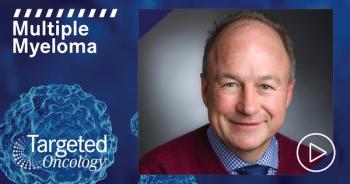
Paul G. Richardson, MD, detailed the strategic integration of mezigdomide into several areas including the unmet need of post CAR T-cell therapy.

Paul G. Richardson, MD, detailed the strategic integration of mezigdomide into several areas including the unmet need of post CAR T-cell therapy.

A wave of innovations across antibody-drug conjugates, synergistic combinations, and expanding biomarkers is transforming the genitourinary cancer landscape from metastatic rescue toward curative, earlier-line paradigms.

TP53 mutations represent a critical high-risk factor across myeloid diseases, necessitating immediate transplant referral as the only curative option due to the limited durability of current standard therapies such as venetoclax and hypomethylating agents.
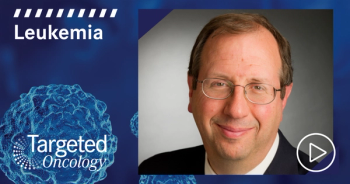
Menin inhibitors reshape AML care, boosting targeted options for KMT2A- and NPM1-mutant disease, with promising frontline combinations beyond relapsed settings.
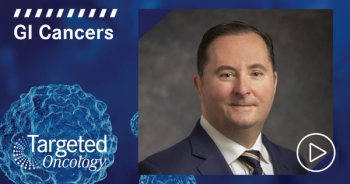
Frontline gastric/GE junction cancer care now pairs chemo with checkpoint inhibitors for PD-L1 CPS≥1, improving survival and spotlighting new targets like HER2 and Claudin 18.2.
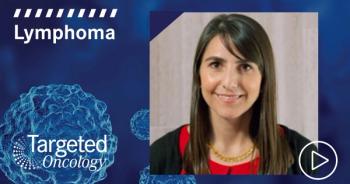
Epigenetic drugs boost CD20/CD19 and T-cell activity, making bispecific antibodies hit lymphoma harder—now moving into clinical trials.
AML induction shifts beyond 7+3 as venetoclax, hypomethylating agents, and FLT3 inhibitors drive less toxic combos and oral options.
Paul G. Richardson, MD, explains the distinct potential roles and combinations including iberdomide and mezigdomide in multiple myeloma treatment.
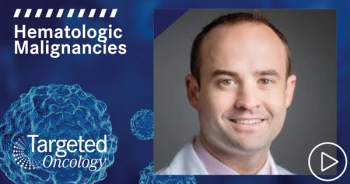
Dr David Sallman tailors venetoclax dosing based on transplant candidacy, using 21-day induction for transplant-eligible patients followed by rapid tapering upon response.
PARADIGM data suggest azacitidine plus venetoclax improves AML event-free survival vs 7+3 with less toxicity; survival looks similar.
A patient's chronological age is no longer a barrier to allogeneic stem cell transplant in MDS/MPN, according to David Sallman, MD. Proceeding directly to transplant in patients with TP53-mutated disease may lead to optimal outcomes.
Explore why community and academic oncologists collaborate, share expertise, and deliver faster, more nuanced care for complex patients.

Estelamari Rodriguez, MD, delivers her top takeaways from the 2026 IASLC Targeted Therapies in Lung Cancer meeting.
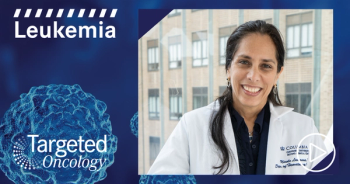
CLL17 finds fixed-duration venetoclax regimens match continuous ibrutinib at 3 years, boosting confidence in personalized frontline CLL choices.
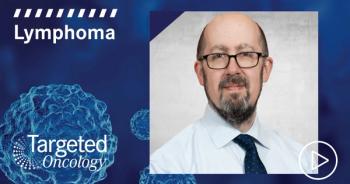
New DLBCL trials test bispecifics with chemo, BTK add-ons, and MRD-guided preemptive allo CAR-T to cut relapse risk.
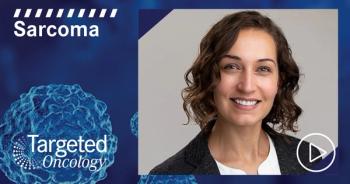
Erica Pimenta, MD, PhD, discusses her research into using existing GLP-1 receptor agonists in dedifferentiated liposarcoma.
Lymphoma care still leaves gaps—research aims for higher cure rates, longer remission, and fewer toxicities across B-, T-cell and Hodgkin.

ADCs revolutionize breast cancer care, expanding beyond HER2-positive to HER2-low tumors, reshaping early therapy—and spotlighting MRD testing as the next frontier.
Lymphoma care shifts beyond harsh chemo as CAR T, bispecific antibodies, and antibody-drug conjugates deliver stronger, safer treatment.
Learn how ctDNA/MRD testing guides gastroesophageal cancer care—patient counseling, coverage hurdles, and what rising ctDNA means before scans.
Luciano Costa, MD, PhD, discusses the considerations for managing infection risk with bispecific antibodies in multiple myeloma.

FDA clears teclistamab plus daratumumab for early-relapse multiple myeloma, delivering striking PFS gains and scalable outpatient use.
Vincent Ma, MD, discusses the next steps in proving the value of circulating tumor DNA in predicting outcomes of advanced melanoma treatment.
New study signals ctDNA MRD clearance and 90% drops predict better gastroesophageal cancer outcomes, fueling calls for prospective trials.

Erica Pimenta, MD, PhD, discusses how the IGF-1 and GLP-1 pathways could potentially be targets in dedifferentiated liposarcoma.

Digital twin modeling plus metabolomics predicts which drugs can starve glioblastoma, enabling faster, personalized treatment testing.
Luciano Costa, MD, PhD, discussed why the lack of high-grade cytokine release syndrome in the MajesTEC-3 trial should encourage the use of teclistamab.
Frontline antibody-drug conjugates boost progression-free survival in metastatic triple-negative breast cancer, showing early overall survival gains and expanding options.