
Premal Thaker, MD, MS, discusses IMNN-001 boosts overall survival in advanced ovarian cancer, with bigger gains alongside PARP inhibitors, as phase 3 OVATION 3 ramps up.

Premal Thaker, MD, MS, discusses IMNN-001 boosts overall survival in advanced ovarian cancer, with bigger gains alongside PARP inhibitors, as phase 3 OVATION 3 ramps up.
Enrolling pediatric patients and identifying biomarkers for response are the priorities for research of ozekibart in Ewing sarcoma.
ZUMA-2 cohort 3 shows brexu-cel CAR T delivers 91% responses in mantle cell lymphoma, with manageable CRS/ICANS, driving full FDA approval.
ZUMA-2 cohorts drive brexu-cel’s journey in relapsed/refractory mantle cell lymphoma, from high response rates to dose testing and expanded eligibility, enabling full FDA approval.
Sikander Ailawadhi, MD discusses the positive sentiments on subcutaneous isatuximab from European regulators and patient groups.
Explore how BTK resistance drives poor outcomes in relapsed mantle cell lymphoma and why ZUMA-2 CAR T therapy emerges as a game-changing option.
Dr Saba emphasizes the prioritizing of rapid BRAF testing and surgical assessment in ATC workups.
Rashmi Chugh, MD, discusses the early outcomes of a trial of ozekibart plus chemotherapy in Ewing sarcoma.

Dr Raj Singh discusses radiation strategies, dose escalation, PCI debates, and multidisciplinary collaboration in small cell lung cancer management.
ASCO's updated thyroid cancer guidelines help clinicians navigate rapidly evolving systemic therapies, from VEGF inhibitors to BRAF-targeted agents.
Rashmi Chugh, MD, describes the background for a study of ozekibart in Ewing sarcoma.
Bayesian modeling links residual cancer burden shifts to survival, helping neoadjuvant breast cancer trials and FDA approvals predict real benefit.
Clinical trials show subcutaneous isatuximab is preferred by patients, enabling faster dosing, home treatment, and paving the way for future self-administration.
Dr Bazhenova presents TRUST data at AACR 2026, showing taletrectinib reached a 46.1-month PFS and 89.8% ORR in TKI-naive, ROS1-positive metastatic NSCLC.
Liquid biopsy ctDNA reveals targets and flags residual disease in esophageal and gastric cancers, hinting at earlier relapse detection and tailored care.
Dr Christine Bestvina discusses EGFR treatment shifts, expanding community clinical trial access, and upcoming KRAS G12C and neoadjuvant therapy data.
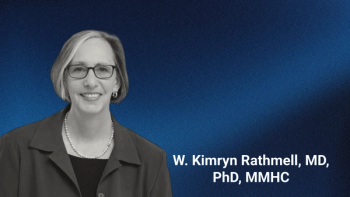
Nearly 60% of under-50 cancers are screen-detectable; Ohio State’s BRIDGE program coordinates care, research, and support for younger adults.
On-body injector isatuximab enables at-home myeloma treatment, cutting infusion visits, easing time and financial strain, and expanding access for rural patients.
On-body isatuximab injection matches IV results in relapsed multiple myeloma, with similar safety, drug levels, and better convenience.
Discover ways to detect early-onset cancers sooner, avoid age bias, and coordinate multidisciplinary care, fertility, genetics, and support.
MSK researchers found that BRCA2 mutations lower the barrier for RB1 loss, causing CDK4/6 inhibitor resistance.
New targeted therapies reshape biliary tract cancer care, highlighting FGFR2/IDH1, HER2 and KRAS options plus smarter second-line sequencing.
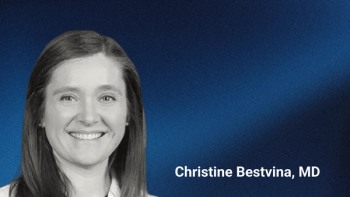
Dr Christine Bestvina discusses EGFR treatment shifts, KRAS trial data, and expanding clinical trial access for community oncologists.

Naomi Haas, MD, shares her insights on the rapidly shifting landscape of adjuvant and neoadjuvant therapies in renal cell carcinoma.
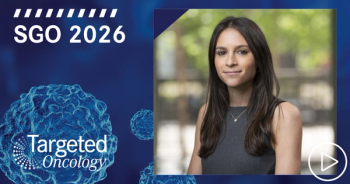
At SGO 2026, Alison Schram, MD, highlighted first-in-class tumor suppressor reactivation and emphasized early NGS testing in ovarian cancer.
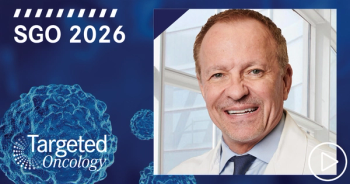
Bradley Monk, MD, discusses the KEYNOTE-B96 trial in which pembrolizumab plus paclitaxel +/- bevacizumab improved OS in platinum-resistant ovarian cancer.
MSK experts discuss FLAURA2 updates, emerging targets in mesothelioma, and next-gen immunotherapies from the 2026 European Lung Cancer Congress.
HER2-targeted ADCs show ~50% response rates in pretreated endometrial cancer, with durable responses and manageable safety profiles per 2026 SGO data.
Pancreatic cancer research tackles treatment resistance with targeted drug delivery, immune-boosting combinations, and smarter therapy pairings to extend responses in trials.

Community oncology practices can deliver chimeric antigen receptor (CAR) T-cell therapy safely, effectively, and in a sustained manner.