
C. Ola Landgren, MD, PhD, discussed the ASCENT trial and his predictions for future developments in the myeloma space.

C. Ola Landgren, MD, PhD, discussed the ASCENT trial and his predictions for future developments in the myeloma space.
Samer A. Srour, MB, ChB, MS, discusses the design of ALLO-316, an agent investigated in the phase 2 TRAVERSE trial for patients with renal cell carcinoma.
Yi Lin MD, PhD, discusses the impact of the phase 1b/2 CARTITUDE-1 study of ciltacabtagene autoleucel for the treatment of relapsed or refractory multiple myeloma.

In an interview with Targeted Oncology, Aaron T. Gerds, MD, MS, delves further into the background of momelotinib, how to manage toxicities with the agent, and its role in clinical practice moving forward.
Warren C. Swegal, MD, discusses the role of cabozantinib (Cabometyx) for patients with radioactive iodine (RAI)–refractory differentiated thyroid cancer (DTC).
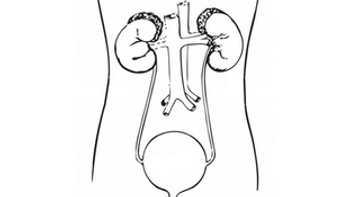
In an interview with Targeted Oncology, Arlene O. Siefker-Radtke, MD, discusses the findings from 3 trials of erdafitinib and explains the next steps for evaluating the agent.

In an interview with Targeted Oncology, Sara A. Hurvitz, MD, discusses the impact of trastuzumab deruxtecan, new developments, and unmet needs in the HER2-positive breast cancer space.

Adding immunotherapy to chemotherapy is the new standard-of-care treatment for advanced or recurrent endometrial cancer, according to Eirwen Miller, MD.

The push for more screening of patients with a history of smoking is providing oncologists the ability to catch small cell lung cancers earlier and potentially change the prognosis of the disease.
In an interview with Targeted Oncology, Jeffrey R. Schriber, MD, highlighted some of the most recent updates in the field of multiple myeloma, and discussed emerging therapies that show promise.
In an interview with Targeted Oncology, Frederick Locke, MD, discussed the mechanism of action of 2 allogeneic CD19-directed CAR T-cell products and next steps for their evaluation for the treatment of patients with LBCL.

In an interview, Mohamad Adham Salkeni, MD, FRCPC, discussed the ongoing study of maintenance ivaltinostat plus capecitabine or capecitabine monotherapy in patients with metastatic pancreatic adenocarcinoma whose disease has not progressed on first-line FOLFIRINOX.
Yi Lin MD, PhD, discusses long-term follow-up results from the CARTITUDE-1 study, which investigated ciltacabtagene autoleucel for the treatment of relapsed or refractory multiple myeloma.

Prerna Mewawalla, MD, discusses how the treatment landscape for multiple myeloma is growing.
Manmeet Ahluwalia, MD, discusses brain metastases in patient with biomarker-driven lung cancer and outcomes of these patients.

In an interview with Targeted Oncology, Amer Zeidan, MBBS, discussed the IMerge study and next steps for imetelstat for patients with lower-risk MDS.
A phase 3 study of ciltacabtagene autoleucel in patients with lenalidomide-refractory multiple myeloma is discussed by Binod Dhakal, MD, MS.
Prerna Mewawalla, MD, discusses how she approaches the choice of therapy for relapsed/refractory multiple myeloma now that many different options are available for patients.
In an interview with Targeted Oncology, Binod Dhakal, MD, discussed results from the phase 3 CARTITUDE-4 study of cilta-cel in patients with lenalidomide-refractory multiple myeloma.

In an interview with Targeted Oncology, Nirav Shah, MD, discussed long-term follow-up results from the phase 1/2 BRUIN study and how the approval of pirtobrutinib has changed the MCL treatment landscape.
Marcia S. Brose, MD, PhD, FASCO, discusses trials LIBRETTO program leading up to LIBRETTO-531.
Eric A. Singer, MD, MS, discusses future developments that could improve the utilization of adjuvant therapy for high-risk renal cell carcinoma.
Antonio Ucar, MD, explains the rationale behind the phase 3 Peak study of bezuclastinib plus sunitinib in patients with gastrointestinal stromal tumors being treated in the second-line setting.

Ann LaCasce, MD, MMSc, discusses the effects that chemotherapy drug shortages may have on clinical trials and patient accrual.

In an interview with Targeted Oncology, Ruchi Garg, MD, discussed the evolution of the treatment landscape for patients with endometrial cancer and what trials to watch out for in the future.
In an interview Targeted Oncology, Christina Fotopoulou, MD, PhD, discussed the background and results of 3 studies for patients with ovarian cancer.
Jonathan C. Trent, MD, PhD, discusses why it is necessary for patients with gastrointestinal stromal tumors to have comprehensive testing to find actionable genomic alterations.
The results of a phase 1b trial looking at the use of acalabrutinib for patients with treatment-naive or relapsed/refractory mantle cell lymphoma has provided the support needed for the phase 3 ECHO study of this treatment.
Cyrus M. Khan, MD, discusses the issues with PI3K inhibitor trials in patients with chronic lymphocytic leukemia and the potential role of these drugs.
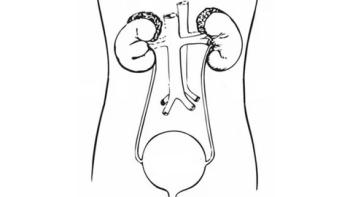
In an interview with Targeted Oncology, Daniel P. Petrylak, MD, discussed findings from the TROPHY-U-01 study for patients with mUC, and what the next steps for research are.