
Saad Z. Usmani, MD, Department of Hematologic Oncology and Blood Disorders, Levine Cancer Institute/Carolinas HealthCare System, highlights some of the ongoing studies presented at the 2017 ASH Annual Meeting.


Your AI-Trained Oncology Knowledge Connection!
Saad Z. Usmani, MD, Department of Hematologic Oncology and Blood Disorders, Levine Cancer Institute/Carolinas HealthCare System, highlights some of the ongoing studies presented at the 2017 ASH Annual Meeting.

Peter Martin, MD, reflects on the MCL data presented at the 2017 ASH Annual Meeting, and shared his insight on the future of clinical trials in the disease.

In results of a phase II study, cabozantinib (Cabometyx) showed signs of activity in patients with progressive glioblastoma who were naïve to antiangiogenic therapy, despite the predefined statistical target for success not being met.
Kenneth Aldape, MD, has joined the National Cancer Institute’s Center for Cancer Research as chief of the Laboratory of Pathology, an integral component of the research and clinical community at the National Institutes of Health.<br />

The Rutgers Cancer Institute of New Jersey has announced 2 new additions to its team of oncology leaders. Wadih Arap, MD, PhD, will serve as the new director of the Rutgers Cancer Institute of New Jersey at University Hospital, and Renata Pasqualini, PhD, will serve as the chief of the Division of Cancer Biology in the Department of Radiation Oncology at Rutgers New Jersey Medical School.
Brian T. Hill, MD, PhD, shares more insight on acalabrutinib and ibrutinib’s efficacy in patients with MCL and highlights emerging novel strategies in the treatment landscape.

Jean-Charles Soria, MD, PhD, will be honored with the Targeted Anticancer Therapies 2018 Honorary Award for cancer drug development. Soria has played a large part in cancer drug development across molecular targeted agents, precision medicine, and immunotherapy for the last 15 years.
Jeffrey S. Weber, MD, PhD, discusses the phase III COMBI-AD study and the phase III CheckMate-238 trial, as well as the most exciting ongoing research at his institution.
In findings from the phase III COLUMBUS trial, the combination of the BRAF inhibitor encorafenib and the MEK inhibitor binimetinib improved survival versus single-agent vemurafenib (Zelboraf) in patients with <em>BRAF</em>-mutant advanced, unresectable or metastatic melanoma.
C. Ola Landgren, MD, PhD, recently shared the treatment considerations and decisions he makes when treating patients with newly diagnosed multiple myeloma

Based on results from the phase III PACIFIC trial, durvalumab has been granted approval by the FDA for the treatment of patients with locally advanced, unresectable stage III non–small cell lung cancer who have not progressed following chemoradiotherapy.
Although the European Organization for Research and Treatment of Cancer 90101 CREATE study fell short of its primary endpoint, it demonstrated the activity of crizotinib (Xalkori) in patients with advanced or metastatic alveolar soft part sarcoma in key secondary endpoints.
Enrollment in a phase I/II clinical trial began recently for a study of PT-112 monotherapy in patients with relapsed or refractory multiple myeloma, according a news release from Phosplatin Therapeutics LLC, the company developing the small molecule conjugate.
Combining consolidative radioimmunotherapy and sequential maintenance rituximab following chemoimmunotherapy improved progression-free survival at 3 years in patients with previously untreated follicular lymphoma, according to findings from the phase II SWOG S0801 study recently published in <em>The Lancet Hematology</em>.
According to results of a phase I study recently published in <em>Journal of Clinical Oncology</em>, treatment with the investigational agent DNX-2401 resulted in 20% of patients with recurrent malignant glioma surviving more than 3 years from the time of treatment.
Based on findings from a phase I trial presented at the 2017 ASH Annual Meeting, ivosidenib (AG-120) has been granted a priority review designation by the FDA for the treatment of patients with relapsed/refractory <em>IDH1</em>-mutant acute myeloid leukemia.
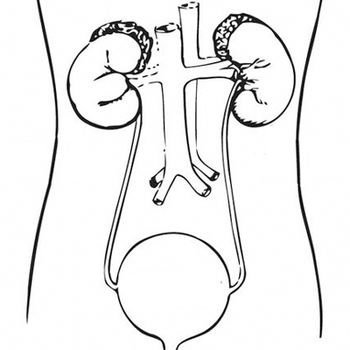
The first-in-class glutaminase inhibitor CB-839 showed encouraging activity and tolerability when combined with everolimus and cabozantinib in heavily pretreated patients with metastatic renal cell carcinoma, according to results from a phase I study presented in a poster session at the 2018 Genitourinary Cancers Symposium in San Francisco, California.
Based on results of the phase III SPARTAN trial, apalutamide has been approved by the FDA for the treatment of patients with nonmetastatic castration-resistant prostate cancer, making it the first treatment to be approved in this setting.<br />
According to recently published results of the international, double-blind randomized phase III 482 Study in <em>The Lancet Oncology, </em><sup> </sup>denosumab was noninferior to zoledronic acid (Zometa) in preventing skeletal-related event in patients with newly diagnosed multiple myeloma.
Rebecca C. Arend, MD, discusses novel combinations being investigated for the treatment of patients with ovarian cancer.
According to results of the randomized phase II CABOSUN trial,<span style="font-size:10.8333px"> </span>PFS was improved with sunitinib as initial systemic therapy across subgroups of patients with intermediate- and poor-risk advanced renal cell carcinoma. The advantage to cabozantinib on PFS was particularly strong in patients who were MET-positive.
A novel therapeutic vaccine, TPIV200, is being investigated in a new randomized, multicenter, double-blinded, placebo-controlled phase II clinical trial in patients with triple-negative breast cancer TNBC.
Priyanka Sharma, MD, has been named vice chair of SWOG’s Breast Committee. Formerly known as the Southwest Oncology Group, SWOG is a global cancer research community and 1 of 5 National Cancer Institute (NCI) National Clinical Trials Network-funded groups.
A new drug application for lorlatinib for use in patients with <em>ALK</em>-positive metastatic non–small cell lung cancer who have progressed on 1 or more ALK tyrosine kinases inhibitors has been granted a priority review by the FDA.
Kathleen Moore, MD, discusses combination strategies with immunotherapy for patients with ovarian cancer during the 2018 Society of Gynecologic Oncology Annual Winter Meeting.<br />
During the 2018 Society of Gynecologic Oncology Annual Winter Meeting, Camille Gunderson, MD, detailed some of the active trials currently exploring PARP inhibitors in combination with either anti-VEGF therapy or immunotherapy in ovarian cancer.

Updated findings of the CheckMate-142 study presented by Michael J. Overman, MD, at the 2018 Gastrointestinal Cancers Symposium continued to support the use of nivolumab alone or in combination with ipilimumab for previously treated patients with DNA mismatch repair-deficient/microsatellite instability-high metastatic colorectal cancer.
Updated findings from the phase III KEYNOTE-045 trial confirmed the benefit of pembrolizumab (Keytruda) compared with chemotherapy in pretreated patients with locally advanced or recurrent urothelial cancer. Two-year follow-up of the trial presented at the 2018 Genitourinary Cancers Symposium demonstrated that overall survival was improved with pembrolizumab.
Results from a phase II study presented at the 2018 Genitourinary Cancers Symposium, demonstrated that durvalumab, a PD-L1 inhibitor, had synergy in combination with the PARP inhibitor olaparib in unselected men with metastatic castration-resistant prostate cancer.
Findings from a phase Ia, multicenter, open-label, study published in the <em>Journal of Clinical Oncology</em> showed a disease control rate of 58.2% with alpelisib (BYL719) in patients with advanced solid tumors.