

Eric Cheung, DO, Targeted Oncology’s second 2024 Oncology Icon, discussed his journey in oncology, advances in treatment, and his patient-centered approach to care.

Eric Cheung, DO, Targeted Oncology’s second 2024 Oncology Icon, discussed his journey in oncology, advances in treatment, and his patient-centered approach to care.

The FDA has approved the WATER IV PCa trial, which will compare the safety and efficacy of Aquablation therapy to radical prostatectomy in patients with localized prostate cancer.

The first patient with advanced gastric and gastroesophageal cancer has been dosed in a trial combining PT886 with pembrolizumab.

Yufei Liu, MD, PhD, discussed the importance of careful data interpretation to accurately assess the efficacy of new treatment options in oncology.

The sponsor is preparing a phase 2 study to evaluate namodenoson in this patient population.

Jacob E. Berchuck, MD, discussed research behind using a blood-based liquid biopsy in prostate cancer and findings presented at the 2024 ESMO Congress.
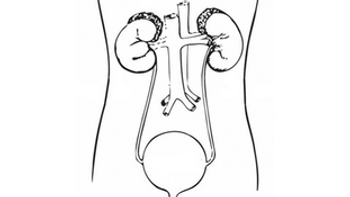
The SunRISe-2 trial evaluating TAR-200 combined with cetrelimab vs chemoradiation in muscle-invasive bladder cancer has been discontinued.

The first patient in a phase 1/2 trial investigating a novel agent for the treatment of non–small cell lung cancer has been dosed.
The FDA has granted VLS-1488 fast track designation in patients with platinum-resistant high-grade serous ovarian cancer.

The KEYNOTE-689 study evaluating pembrolizumab in this patient population met its primary end point of event-free survival.
Ana Baramidze, MD, PhD, discussed 5-year follow-up results from the EMPOWER-Lung study evaluating cemiplimab vs chemotherapy in advanced first-line non–small cell lung cancer.
Jaime Merchan, MD, discusses what the potential clinical implications or takeaways for colleagues are based on findings from the phase 3 CLEAR study in advanced renal cell carcinoma (RCC).
A new study suggests that patients with multiple myeloma who achieve sustained MRD-negativity for at least three years may be able to discontinue maintenance therapy without compromising their long-term outcomes.

Durcabtagene autoleucel shows high response rates in R/R multiple myeloma; olomorasib plus pembrolizumab demonstrates efficacy in KRAS G12C-mutated NSCLC; and the combination of talquetamab, daratumumab, and pomalidomide achieves durable responses. We also cover the FDA’s ODAC vote against checkpoint inhibitors for esophageal cancer.

The final analysis of the phase 3 PANTHER study confirmed survival benefits for patients receiving dose-dense vs standard chemotherapy.

Anil Parwani, MD, PhD, explains his visions and plans for further development and integration of artificial intelligence technology in cancer diagnosis and prognosis.
HBI0101, an academically sourced CAR T-cell therapy, demonstrated a high objective response rate and manageable safety in patients with relapsed/refractory multiple myeloma.
The noninvasive test provides a beneficial screening tool for patients 45 and older at average risk for colorectal cancer.
M. Michele Blackwood, MD, FACS, provided an overview of the significant advancements with personalized medicine with genomic testing in the breast cancer space.
The 2024 International Myeloma Society Annual Meeting was a groundbreaking event that showcased the latest advancements in multiple myeloma research and treatment.

Jeffrey Wong, MD, discusses findings on the use of Cu 64 anti-CEA M5A as a PET imaging agent for advanced rectal cancer presented at the 2024 American Society for Radiation Oncology Annual Meeting.
The FDA has approved nivolumab plus chemotherapy as a neoadjuvant treatment for operable stage IIA to IIIB non–small cell lung cancer, based on data from the phase 3 CheckMate 77T trial.
Acalabrutinib, a BTK inhibitor, has shown promising results in treating mantle cell lymphoma, with the FDA granting it priority review.
Belantamab mafodotin plus pomalidomide and dexamethasone showed significant progression-free survival benefits and maintained quality of life in patients with relapsed/refractory multiple myeloma, as demonstrated in the DREAMM-8 trial.
In an interview with Targeted Oncology, Jeffrey Wong, MD, discussed the potential and future directions of Cu 64 anti-CEA M5A as a PET imaging agent for advanced rectal cancer.
Here is a look back on all the FDA happenings from the month of September 2024.
A single infusion of the autologous GPRC5D-targeted CAR T-cell therapy BMS-986393 led to high response rates in patients with relapsed/refractory multiple myeloma who received between 1 and 3 prior lines of therapy.
Evidence suggests that extranodal extension on radiological imaging is a negative prognostic factor in head and neck cancer, but diagnostic criteria and terminology have been unclear.
A real-world analysis of cilta-cel in patients with relapsed/refractory multiple myeloma showed deep and durable responses, with a safety profile consistent with clinical trial data.