

Findings from a recent analysis of the DESTINY-Breast04 trial demonstrate improvement in efficacy when trastuzumab deruxtecan monotherapy is used for patients with HER2-low metastatic breast cancer.

Findings from a recent analysis of the DESTINY-Breast04 trial demonstrate improvement in efficacy when trastuzumab deruxtecan monotherapy is used for patients with HER2-low metastatic breast cancer.
Progression-free survival in the central nervous system appears to be longer with trastuzumab deruxtecan than with comparator treatment in patients with HER2-positive metastatic breast cancer and brain metastases.

Tina Cascone, MD, PhD, discusses the main findings from the phase 3 CheckMate-77T trial of a nivolumab-based regimen for the treatment of patients with stage IIA to IIIB non–small cell lung cancer.
“Belzutifan plus cabozantinib continue to show durable anti-tumor activity in patients with clear cell RCC who are treatment naïve or previously treated,” said Toni K. Choueiri, MD.
Treatment with sacituzumab govitecan-hziy in the second line demonstrated responses in patients with extensive-stage small cell lung cancer, according to results from the phase 2 TROPiCS-03 trial.
The addition of atezolizumab to chemotherapy improved progression-free survival in frontline advanced or recurrent endometrial carcinoma, in particular, among patients with deficient mismatch repair status.
Modest but durable antitumor activity was observed with sacituzumab govitecan-hziy in the treatment of patients with metastatic or locally recurrent head and neck squamous cell carcinoma who received between 1 and 3 prior lines of therapy.
Manmeet Ahluwalia, MD, discusses what early results from the CRUX trial of ruxolitinib for the treatment of patients with newly-diagnosed high-grade gliomas may mean for future research.

In an interview with Targeted Oncology, Dan T. Vogl, MD, MSCE, discussed a phase 1 study which evaluated modakafusp alfa for the treatment of patients with relapsed or refractory multiple myeloma.
Data from the KEYNOTE-A18 trial support the addition of pembrolizumab to chemoradiotherapy, which has been in place as standard of care for patients with newly diagnosed, previously untreated, high-risk locally advanced cervical breast cancer since 1999.
The addition of pembrolizumab to trastuzumab plus chemotherapy improved progression-free survival in the first-line for patients with metastatic HER2-positive gastric or gastroesophageal junction cancer.
Adding 177Lu-PSMA-617 to enzalutamide improved prostate-specific antigen progression-free survival in patients with metastatic castration-resistant prostate cancer.

Dan T. Vogl, MD, MSCE, discusses the mechanism of action of modakafusp alfa for the treatment of patients with relapsed or refractory multiple myeloma.
Adding pembrolizumab to chemotherapy reduced the risk for disease recurrence, progression, complications, or death compared with chemotherapy alone in the treatment of triple-negative breast cancer.
The addition of durvalumab to standard-of-care chemotherapy shows potential to improve downstaging in patients with resectable gastroesophageal junction and gastric cancer, according to findings from the phase 3 MATTERHORN study.

A phase 1a/1b trial of IMGS-001 in patients with locally advanced or metastatic solid tumors is ongoing at The University of Texas MD Anderson Cancer Center in Houston, Texas.
Longer follow-up data from the KRYSTAL-7 trial support the initiation of a phase 3 trial evaluating concurrent adagrasib with pembrolizumab in treatment-naïve patients with KRASG12C-mutated non–small cell lung cancer and PD-L1 ≥50%.
The phase 3 FLAMES trial results demonstrated an improvement in progression-free survival with senaparib monotherapy vs placebo, regardless of patient subgroup, in patients with newly diagnosed, advanced ovarian cancer.

Results from the phase 1 EQUILIBRIUM study signal better outcomes for patients with newly diagnosed, MGMT methylated glioblastoma.
Extending abemaciclib with endocrine therapy for 2 years continues to lower the risk of invasive disease and distant relapse in hormone receptor-positive, HER2-negative breast cancer, as demonstrated in the 5-year efficacy findings from the monarchE trial.

CLN-619 has emerged for the treatment of advanced solid tumors in the clinical trial setting. Early results are promising, says lead investigator Judy Wang, MD
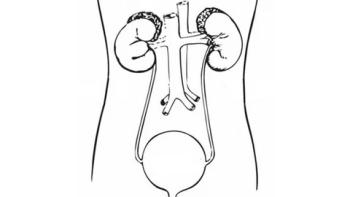
A post hoc analysis of overall survival and progression-free survival support the use of avelumab with best supportive care as a standard of care for patients with urothelial carcinoma.

The phase 3 ALINA study of alectinib is the first to show an improvement in its primary end point of disease-free survival among patients with early-stage resected ALK-positive non–small cell lung cancer.

The phase 3 CheckMate -67T trial found that a subcutaneous formulation of nivolumab met its co-primary pharmacokinetic end points compared with the intravenous formulation in clear cell renal cell carcinoma.

Aaron T. Gerds, MD, MS, discusses available treatment options for patients with myelofibrosis and some of the agents that are currently under development, inching toward regulatory approval in the field of myelofibrosis.

Neoadjuvant nivolumab and chemotherapy followed by surgery and adjuvant nivolumab demonstrated improvements in event-free survival, pathologic complete response, and major pathologic response in non–small cell lung cancer.
Major pathological response and pathological complete response data from the phase 3 RATIONALE 315 study in NSCLC will be presented at the European Society for Medical Oncology Congress 2023.