

In an interview with Targeted Oncology, Rohan Garje, MD, discussed current treatment options for patients with prostate cancer and the role of PARP inhibitors.

In an interview with Targeted Oncology, Rohan Garje, MD, discussed current treatment options for patients with prostate cancer and the role of PARP inhibitors.

New data from the phase 3 RATIONALE 305 trial of tislelizumab with chemotherapy show potential of the combination for patients with advanced gastric cancer or gastroesophageal junction adenocarcinoma.
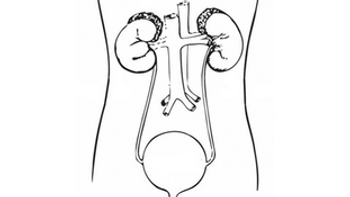
Findings from the CheckMate-901 trial demonstrated improvements for the treatment of patients with urothelial carcinoma who received a combination of nivolumab and chemotherapy followed by nivolumab monotherapy.

Salman Fazal, MD, discusses acute and chronic graft-versus-host-disease and younger match unrelated donor transplant for patients with cancer.
A fast track designation has been granted to DOC1021 by the FDA for the treatment of patients with glioblastoma multiforme.

Findings from a phase 2 study show that sequential minimal residual disease assessment is a powerful prognostic tool in patients with mantle cell lymphoma.
While a notable difference in the occurrence of adverse events was seen between patients treated with maximal tumor debulking and standard systemic therapy vs systemic therapy alone, health-related quality-of-life and fatigue scales showed no substantial differences over time.

The rapid progress in oncology, along with complex cases and rising costs, presents challenges in delivering high-quality cancer care.

A trial of intratumoral daromun and surgical resection for the treatment of patients with locally advanced, fully resectable melanoma, showed a clinically meaningful improvement compared with surgery alone.

In an interview with Targeted Oncology, Heather Wakelee, MD, discussed what community oncologists should know about the newly approved combination of pembrolizumab with platinum-containing chemotherapy as neoadjuvant treatment, and with continuation of pembrolizumab monotherapy as post-surgical adjuvant treatment.
The FDA has approved pembrolizumab in the perioperative setting for resectable stage II, IIIA, or IIIB non–small cell lung cancer.

Nanrilkefusp alfa did not show sufficient efficacy as a monotherapy or in combination with anti-PD-1 treatments to warrant further development.

Siamak Daneshmand, MD, discusses TAR-200 and what led investigators to evaluate the agent in the phase 2b SunRISE-1 study.
A phase 1 trial of TERN-701 for chronic myeloid leukemia plans to start patient screening in December 2023, with initial data expected to be released in the second half of 2024.

TBI-1301 demonstrated superior efficacy compared with standard-of-care treatment in patients with synovial sarcoma. Further research is warranted.

In an interview with Targeted Oncology, Rupesh Kotecha, MD, discusses the background of this phase 1 study and current options for patients with brain metastases.

Mitchell Smith, MD, PhD, discusses the ECOG-ACRIN E1411 trial among patients with previously untreated mantle cell lymphoma.

Jeremy Abramson, MD, discusses findings from the TRANSFORM study of lisocabtagene maraleucel vs standard of care treatment in patients with relapsed or refractory large B-cell lymphoma.

Cyrus M. Khan, MD, discusses the eligibility criteria of a phase 1/2 study evaluating glofitamab for the treatment of patients with large B-cell lymphoma, and provides data from the expansion cohorts of the trial.
Positive findings from CheckMate-76K have led the FDA to approve adjuvant nivolumab monotherapy for the treatment of patients with completely resected stage IIB or IIC melanoma.

Eirwen M. Miller, MD, discusses novel biomarkers that she believes will be important for endometrial cancer in the future.
This regulatory decision follows the recent FDA approval of encorafenib plus binimetinib for adult patients with metastatic non-small cell lung cancer harboring a BRAF V600E mutation.

In a phase 1b trial, AVID200 demonstrated limited toxicity and improved symptom benefit when administered at 3 doses levels.
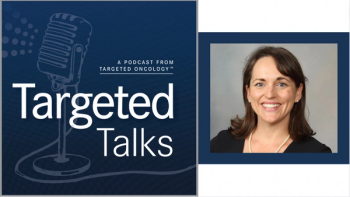
In season 4, episode 16 of Targeted Talks, Susanne G. Warner, MD,discusses the importance of tailoring treatments for patients with liver cancer, taking into account the staging of the cancer.

Chirag Shah, MD, discusses the challenges in predicting the risk of local recurrence in patients with ductal carcinoma in situ, and what led to the DCISionRT test.

Tislelizumab met its primary end point of overall survival and exceeded that of sorafenib in patients with unresectable hepatocellular carcinoma.
Interim results from a phase 2 trial shows LSAM-PTX may provide therapeutic benefits for patients with locally advanced pancreatic cancer.

In the first comprehensive study of patients with pancreatic cancer treated with either MRI-guided radiotherapy or CT-guided radiotherapy, experts state MRI-guided treatment may be safer.
A prospective, multicenter trial continues to recruit patients with brain metastases to evaluate the real-world and patient-reported outcomes of surgically targeted radiation therapy.
Encorafenib combined with binimetinib is now an FDA-approved option for patients with BRAF V600E-mutated non-small cell lung cancer.