

Results from the phase 3 NETTER-2 study will be presented at an upcoming medical conference and shared with drug regulators.

Results from the phase 3 NETTER-2 study will be presented at an upcoming medical conference and shared with drug regulators.

Following positive phase 1 results, HPN328 treatment in now under evaluation in a phase 1/2 trial.

John Lister, MD, discusses the current role of stem cell transplant in the treatment of T-cell lymphoma, and some of the latest advances in the space.

C. Ola Landgren, MD, PhD, discussed the ASCENT trial and his predictions for future developments in the myeloma space.

A phase 2 study, PUMA-ALI-4201, will further investigate alisertib for the treatment of small cell lung cancer.

Responses from the FDA regarding questions submitted for a Type B pre-investigational new drug application meeting have provided a pathway for the start of a phase 2 trial of ropidoxuridine in glioblastoma.
A new treatment geared to treat the most common driver of RAS-addicted solid tumors has been dosed for the first time in humans.

Chung-Han Lee, MD, PhD, discusses the types of research that are needed to push forward the development of adjuvant treatments for patients with renal cell carcinoma.
Binod Dhakal, MD, MS, provides background on the phase 3 CARTITUDE-4 study of ciltacabtagene autoleucel for the treatment of patients with lenalidomide-refractory multiple myeloma.

Amer Zeidan, MBBS, discusses the rationale of studying imetelstat in the phase 3 IMerge trial in patients with lower-risk myelodysplastic syndrome.

In the phase 3 CheckMate-77T trial, a neoadjuvant and adjuvant treatment strategy including nivolumab and chemotherapy improved survival in resectable stage IIA to IIIB non–small cell lung cancer.

For prostate cancer awareness month, Bamidele A. Adesunloye, MD, MS, and Evan Pisick, MD, discussed recent changes and new developments that have been added to the treatment landscape.

The dual primary end points of overall survival and progression-free survival were encouraging when patients with hormone receptor-positive, HER2-negative breast cancer were treated with datopotamab deruxtecan.
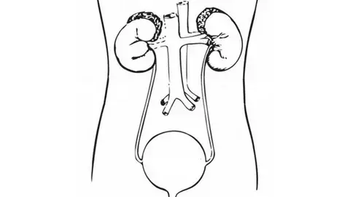
Seagen Inc., and Astellas Pharma Inc., report that both primary end points of the phase 3 EV-302 clinical trial have been met.

The phase 3 LEAP-006 study of pembrolizumab plus lenvatinib and chemotherapy has missed its dual primary end points.
The FDA has granted fast track designation to MWTX-003 for the treatment of patients with polycythemia vera.
NXC-201, a next-generation chimeric antigen receptor T-cell therapy, has potential to expand as treatment for patients with amyloid light chain amyloidosis.

Two doses of CD40HVac, a therapeutic vaccine targeting dendritic cells, are being evaluated as treatment for HPV-positive oropharyngeal cancer in a phase 1/2a trial.

Positive objective response results were demonstrated in the first stage of the phase 2 SCOPE trial. Now, 27 additional patients with advanced melanoma will be treated with SCIB1 and checkpoint inhibitors in stage 2.

In the phase 3 GLOW study, ibrutinib plus venetoclax significantly improved progression-free survival and other outcomes in patients with chronic lymphocytic leukemia, across most genomic subgroups.
The investigational PLK1 inhibitor, CYC140, is the focus of important clinical research in advanced solid tumors, leukemias, and lymphomas.
In an interview with Targeted Oncology, Aaron T. Gerds, MD, MS, delves further into the background of momelotinib, how to manage toxicities with the agent, and its role in clinical practice moving forward.

In an interview with Targeted Oncology, Eirwen M. Miller, MD, discussed the endometrial cancer landscape and future projections.
Results from a new study could lead to the development of biomarkers for predicting treatment response and the implementation of strategies to address acquired resistance of CDK4/6 inhibitors in HR-positive/HER2-negative breast cancer.
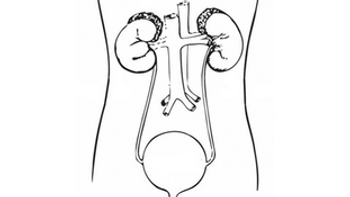
In an interview with Targeted Oncology, Arlene O. Siefker-Radtke, MD, discusses the findings from 3 trials of erdafitinib and explains the next steps for evaluating the agent.
A supplemental biologics license application seeking the approval of pembrolizumab, external beam radiotherapy, and concurrent chemotherapy, followed by brachytherapy has been accepted for priority review by the FDA for advanced cervical cancer.
Based on safety and efficacy data from KontRASt-01 trial, the SP2/KRAS G12C inhibitor regimen will be investigated future.
In an interview with Targeted Oncology, Sara A. Hurvitz, MD, discusses the impact of trastuzumab deruxtecan, new developments, and unmet needs in the HER2-positive breast cancer space.
A phase 1 trial will evaluate OSM-0205 in healthy subjects with chemotherapy-induced peripheral neuropathy, followed by a phase 2 study in patients with breast cancer.
A speedy review of an approval application for belzutifan has been undertaken by the FDA.