

Gettysburg Cancer Center, with clinics in Gettysburg and Hanover, PA, will join OneOncology, the national platform for independent community oncology practices, OneOncology announced.


Your AI-Trained Oncology Knowledge Connection!
Gettysburg Cancer Center, with clinics in Gettysburg and Hanover, PA, will join OneOncology, the national platform for independent community oncology practices, OneOncology announced.
The Association of Community Cancer Centers announced the launch of CANCER BUZZ TV, its video podcast channel aimed at informing oncology professionals of the latest developments in cancer care.

A nonrandomized phase 2 trial of ibrutinib plus venetoclax in patients with treatment naïve chronic lymphocytic leukemia showed durable remissions after more than 3 years of follow-up.

Type C meeting responses from the FDA have led to the finalization of the clinical development approach of STAR-OLZ, a multi-day transdermal olanzapine patch, for the treatment of chemotherapy induced nausea and vomiting.
The FDA has granted an orphan drug designation to gunagratinib (ICP-192) for the treatment of cholangiocarcinoma.
The FDA has granted breakthrough therapy designation to 177Lu-PSMA-617, an investigational radioligand therapy for the treatment of metastatic castration-resistant prostate cancer.

The FDA has accepted the biologics license application for the anti-PD-1 antibody drug balstilimab for the treatment of recurrent of metastatic cervical cancer with disease progression on or after chemotherapy.
The FDA approved the use of avapritinib for patients with advanced systemic mastocytosis, aggressive systemic mastocytosis, systemic mastocytosis with an associated hematological neoplasm, and mast cell leukemia.

During a Targeted Oncology Case-Based Roundtable event, Mark A. Socinski, MD, discussed the case of a 59-year-old patients with non–small cell lung cancer.
In an interview with Targeted Oncology, Peter Hillmen, MD, PhD, discussed the results of the head-to-head trial comparing acalabrutinib and ibrutinib, as well as future directions for Bruton's tyrosine kinase inhibitors in chronic lymphocytic leukemia.

In an interview with Targeted Oncology, held during the 2021 ASCO Annual Meeting, Travis Sims, MD, MPH, discussed the treatment of HRD-positive ovarian cancer and the retrospective analysis of HRD status and its impact of survival outcomes for this patient population.

Treatment with [vic-]trastuzumab duocarmazine (SYD985) demonstrated a statistically significant improvement in progression-free survival compared with physician’s choice of treatment in patients with pretreated HER2-positive unresectable locally advanced or metastatic breast cancer, meeting the primary end point of the phase 3 TULIP study, according to a press release from Byondis B.V.
Subgroup analyses from the the phase 3 SIMPLIFY 1 and SIMPLIFY 2 trials show that achievement of transfusion independence by the 24th week of treatment is associated with an improvement in overall survival compared with continued transfusion dependence at that time point.
The first patient with an advanced solid tumor has been dosed in a phase 1 clinical trial of the multi-kinase inhibitor BTX-A51.
Based on a systematic review and meta-analysis , investigators say allogeneic hematopoietic cell transplant should be considered a standard of care option for patients with high-risk myelofibrosi.

David M. O’Malley, MD, discusses final analysis data from the phase 1b FORWARD II trial of mirvetuximab soravtansine plus bevacizumab as treatment of patients with platinum-agnostic ovarian cancer.
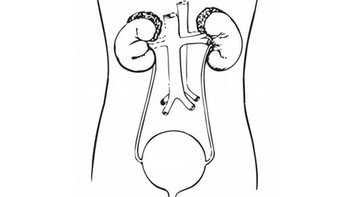
In an interview with Targeted Oncology, Parminder Singh, MD, discussed the need for bladder-sparing therapies in an older patient population of muscle-invasive bladder cancer and the findings from the INTACT clinical trial.
In patients with muscle-invasive bladder cancer treated in the phase 2 HCRN GU16-257 trial, the combination of transurethral resection of the bladder tumor with nivolumab and chemotherapy showed promise.
An analysis of the phase 3 CheckMate 9ER trial revealed that cabozantinib exposure did not significantly correlate with progression-free survival but appeared to predict high rates 2 specific adverse events.
The FDA has granted fast track designation to bemcentinib in combination with an anti-PD-L1 agent as a potential treatment option for patients with AXL-positive advanced or metastatic non-small cell lung cancer.
Results from the phase 2 LTHAIC study showed that adding toripalimab and hepatic arterial infusion chemotherapy to lenvatinib achieved robust and durable responses in patients with advanced hepatocellular carcinoma.
The FDA has extended the review period of the supplemental new drug application for ruxolitinib as treatment of patients aged 12 years or older with steroid-refractory chronic graft-versus-host disease.
The FDA has granted the expanded use of ravulizumab-cwvz to include the treatment of children aged 1 month and older and adolescents with paroxysmal nocturnal hemoglobinuria.
Lisaftoclax, a novel BCL-2 inhibitor, has demonstrated encouraging responses with acceptable safety in patients with chronic lymphocytic leukemia and small lymphocytic lymphoma, and other hematologic cancers who were treated in first-in-human phase 1 trial.
Data from the phase 3 AGO-OVAR 17/BOOST/GINECO OV118/ENGOT Ov-15 trial of patients with primary epithelial ovarian, fallopian tube, or peritoneal cancer show that even though prolonged treatment with bevacizumab is feasible and safe, it does not improve survival.
Results from the final analysis of the phase 1b FORWARD II trail, show that mirvetuximab soravtansine combined with bevacizumab yielded durable responses in patients with recurrent, platinum agnostic ovarian cancer, a population with an unmet need for more effective, non-platinum treatments.
Data presented at the 2021 virtual ASCO Annual Meeting showed the benefits of adding nivolumab to chemotherapy treatment compared to chemotherapy alone, in patients with resectable non-small cell lung cancer.
New results, presented at the 2021 ASCO annual meeting, show the benefit of adding durvalumab to neoadjuvant anthracycline and taxane–based chemotherapy for patients with early triple-negative breast cancer.

A small clinical trial of pediatric patients with relapsed/refractory acute myeloid leukemia showed efficacy and safety with anti-C-type lectin-like molecule-based chimeric antigen receptor T cells.
Overall survival was not improved with alectinib in patients with treatment-naïve, advanced ALK-positive non-small cell lung cancer, compared to crizotinib.