

The United States Preventive Services Task Force is recommending that individuals at average risk of colorectal cancer begin screening exams at age 45 rather than 50 years of age due to the risk of early on-set colorectal cancer.

The United States Preventive Services Task Force is recommending that individuals at average risk of colorectal cancer begin screening exams at age 45 rather than 50 years of age due to the risk of early on-set colorectal cancer.
Regeneron is resuming enrollment of patients with follicular lymphoma and diffuse large B-cell lymphoma in monotherapy trial of odronextamab after the FDA lifted the partial clinical hold placed on the agent in December 2020.

Brandon Mahal, MD, discusses challenges facing prostate cancer equity.

The LOTIS-2 phase 2 study of loncastuximab tesirine continued to show durable responses and tolerability in relapsed or refractory patients with DLBCL, according to the most recent published results.
Melissa Hardesty, MD, discusses the modern disease management of patients with ovarian cancer in the community setting.

Leonard G. Gomella, MD, discusses deciding between active surveillance and precision medicine in mutated prostate cancer.
In season 2, episode 4 of “Targeted Talks,” Benjamin O. Anderson, MD, FACS, discussed the lessons learned from the COVID-19 pandemic, and preparation for a post-COVID America.
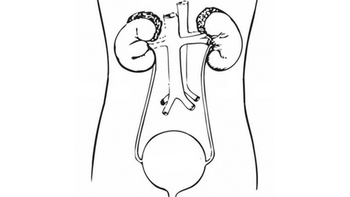
With the emergence of therapies that target PSMA, a cell surface transmembrane protein that is overexpressed in most prostate cancer cells, particularly in castration-resistant disease, the ability to detect and treat the disease has been transformed.

Thomas Marron, PhD, MD, discusses the safety and tolerability of neoadjuvant sunitinib in hepatocellular carcinoma.

Overall survival was prolonged in patients with radioactive iodine-refractory differentiated thyroid cancer and lung metastases larger than 1 cm who were treated with lenvatinib in the SELECT study.

American Oncology Network, LLC announces two key leadership appointments.

In an interview with Targeted Oncology following a webinar, Benjamin O. Anderson, MD, FACS, discussed lessons from COVID-19 in further detail.

Findings suggest that combination regimens may extend overall and progression-free survival.

In an interview with Targeted Oncology, Haris Ali, MD, a hematology oncologist at the City of Hope Cancer Center, discussed the efficacy of ruxolitinib in patients with myelofibrosis, the impact of mutations on ruxolitinib treatment, and the use of the agent in the peri-transplant setting.
The FDA’s Oncologic Drugs Advisory Committee met to discuss the need, validity, and reliability of using patient-reported outcomes measurements linked to the Common Terminology Criteria for Adverse Events in pediatric oncology.
Melissa, K. Frey, MD, the study of adequate collection of family cancer history in ovarian and other gynecological cancers in order to determine cancer risk and early interventions.

Sumanta Kumar Pal, MD, a medical oncologist at the City of Hope Cancer Center, discussed the SWOG 1500 trial, the potential of cabozantinib for the treatment of papillary RCC, and the future of RCC care in an interview with Targeted Oncology,
Two newly-approved CAR T-cell agents are now being used to treat patients with relapsed/refractory non-Hodgkin lymphoma and multiple myeloma at University Hospitals in Ohio.
The FDA has granted orphan drug designation to the first-in-class ruthenium-based small molecule, BOLD-100, for the treatment of patients with gastric cancer.
In an interview with Targeted Oncology, Komal Jhaveri, MD, FACP, a medical oncologist at Memorial Sloan Kettering Cancer Center, discusses HER2-positive metastatic breast cancer innovations, treatments, and upcoming studies.
Distinct gene signatures and BRCAness may correlate with pathologic complete response and invasive disease-free survival in patients with HER2-positive breast cancer treated with trastuzumab and pertuzumab with or without paclitaxel.
Treatment with neratinib demonstrated a modest overall survival benefit in patients with HER2-positive breast cancer compared with placebo, according to the long-term OS and central nervous system results from the phase 3 ExteNET trial.
According to findings from a subgroup analysis of the TALAPRO-1 trial, men with heavily pretreated metastatic castration-resistant prostate cancer, with germline and/or homozygous tumor DNA damage response alterations are most likely to respond to talazoparib.
In an interview with Targeted Oncology, William H. Bradley, MD, discussed the results of the SOLO-1 trial of olaparib as a maintenance therapy for patients with ovarian cancer with a BRCA1/2 mutation, and other developments in the ovarian cancer field.

The combination of durvalumab, tremelimumab, and chemotherapy showed statistically significant and clinically meaningful overall survival benefit compared to chemotherapy alone for the first-line treatment of patients with metastatic non-small cell lung cancer.
In an interview with Targeted Oncology, Bishop, discussed how CAR T cells have reshaped the treatment landscape, the future of their use, and their potential in solid tumors.

Vivek Subbiah, MD, discusses the updated results of the LIBRETTO-001 trial, specifically the effect of selpercatinib on RET fusion-positive thyroid tumors.

In a study of 300 phase 3 clinical trials, researchers have found that the gap of enrollment age and the median age of patients diagnosed with cancer is increasing.
In an interview with Targeted Oncology, Vivek Subbiah, MD, reviewed the data supporting selpercatinib as treatment of RET fusion-positive thyroid cancers, as well as the exploration of this agent in other RET-altered cancers.
The FDA has granted priority review to 2 supplemental new drug applications for the combination use of pembrolizumab and lenvatinib.