

David O'Malley, MD, discusses the excitement surrounding PARP inhibitors for patients with ovarian cancer.

David O'Malley, MD, discusses the excitement surrounding PARP inhibitors for patients with ovarian cancer.

David M. Ashley, MBBS, FRACP, PhD, has been named director of the Preston Robert Tisch Brain Tumor Center at Duke University. His position began March 1, 2018, and he succeeded Darell Bigner, MD, PhD.
Abemaciclib, the only CDK4/6 inhibitor approved as a single-agent, has amassed several clinical indications for patients with metastatic breast cancer. The findings from the phase III MONARCH2 and 3 trials, as well as the phase II MONARCH1 study led to these approvals. Each trial showed improvements in progression-free survival, especially in patients with visceral disease and endocrine therapy resistance.
Presented at the 2018 Miami Breast Cancer Conference, results from the phase III OlympiAD trial demonstrated improvements in progression-free survival with olaparib over treatment of physician's choice. These results were consistent regardless of the baseline tumor burden for patients with HER2-negative breast cancer with a germline <em>BRCA</em>1/2 mutation.
The results of the phase III PALOMA-2 study were presented at the 2018 Miami Breast Cancer Conference. According to the deep analysis, the CDK 4/6 inhibitor palbociclib showed significant efficacy in combination with the aromatase inhibitor letrozole in the frontline setting of estrogen receptor-positive, HER2-negative, postmenopausal metastatic breast cancer.

After reviewing data from a decade of clinical research, a joint panel from ASCO and the College of American Pathologists concluded that circulating tumor DNA testing should be used only to screen for participation in, or during, a clinical trial.
Lilly Oncology has hired Maura Dickler, MD, to serve as vice president of late phase development, beginning May 7, 2018. She will report to Levi Garraway, MD, PhD, senior vice president of global development and medical affairs of Lilly Oncology.
According to results from the phase III MONALEESA-7 trial presented at the 2018 Miami Breast Cancer Conference, the progression-free survival benefit for ribociclib in pre- or perimenopausal women with hormone receptor–positive, HER2-negative advanced or metastatic breast cancer had been sustained across patient subgroups.
23andMe, Inc. has received authorization from the FDA for the first-ever direct-to-consumer genetic test for cancer risk.
Lenvatinib mesylate, an oral tyrosine kinase inhibitor, will continue to be developed and commercialized worldwide by its creator, Japan’s Eisai Co. Ltd, in a strategic collaboration with Merck, which is better known as MSD outside of the United States and Canada. The partnership between the 2 companies was announced on March 7.
Stand Up to Cancer has awarded E. John Wherry, PhD, cancer and immunology researcher at the Perelman School of Medicine at the University of Pennsylvania, with the “Convergence 2.0” research grant. Wherry will co-lead an 11-member team to investigate the immune system’s response to cancers.

In an interview with<em> Targeted Oncology</em> ahead of the 5th Annual Miami Lung Cancer Conference, Sarah B. Goldberg, MD, discusses the key points of her lecture on testing for and treating resistance to EGFR TKI therapy in NSCLC.

In an 8 to 4 vote, the FDA's Oncologic Drugs Advisory Committee recommended approval of blinatumomab for the treatment of minimal residual disease-positive B-cell precursor acute lymphoblastic leukemia.
A supplemental new drug application for Blue Light Cytoscopy with Cysview, a procedure for detecting bladder cancer, was recently approved by the FDA.
According to findings published in<em> Nature Communications, </em>a blood test detecting early changes in circulating tumor DNA (ctDNA) may provide earlier indication of whether patients with hormone receptor–positive, HER2-negative breast cancer are responding to the CDK4/6 inhibitor palbociclib (Ibrance).
Frederick M. Schnell, MD, has been appointed to the newly created position of medical director at the Community Oncology Alliance. With over 30 years of experience as a physician and CEO of a community oncology practice, Schnell plans to reform the future of oncology payment.
One of the most exciting advancements in the lymphoma community has been the FDA approval of axicabtagene ciloleucel (axi-cel; Yescarta) for patients with non-Hodgkin lymphoma in October 2017.
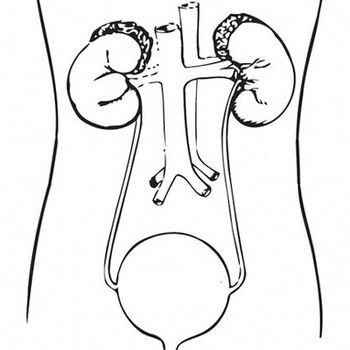
Based on data from the phase III S-TRAC trial,<span style="font-size:10.8333px"> </span>the European Medicines Agency’s Committee for Medicinal Products for Human Use recently recommended against approving sunitinib for use as an adjuvant therapy in patients with renal cell carcinoma who have received nephrectomy and are high risk for recurrence.

According to results from the CALGB 8903 study published in the <em>Journal of Clinical Oncology, </em>there is an association between total nut intake and improved outcomes in patients with stage III colon cancer. Results of the study showed patients who ate at least 2 servings of nuts per week had superior disease-free survival and overall survival.
The FDA has approved a 4-week dosing schedule for the PD-1 inhibitor nivolumab (Opdivo) across several indications.
Robert A. Figlin, MD, Steven Spielberg Family Chair in Hematology-Oncology, professor of medicine, and director, Division of Hematology/Oncology, Cedars-Sinai Medical Center, recently discussed the cases of 2 patients with metastatic renal cell carcinoma.
Alan Klitzke, MD has been named the 2018 president of the American College of Nuclear Medicine.
A wave of novel treatments and FDA approvals have flooded the HER2-positive breast cancer space.
New indications were approved by the FDA within the last month, including abemaciclib for HER2-negative breast cancer, durvalumab for non–small cell lung cancer, and abiraterone acetate for castration-sensitive prostate cancer.
The FDA has granted a fast track designation to pamrevlumab for the treatment of patients with locally advanced, unresectable pancreatic cancer, according to FibroGen, the manufacturer of the first-in-class anti-CTGF antibody.
A novel regimen of immunotherapy, angiogenesis inhibition, and chemotherapy brings promising outcomes for patients with non-small cell lung cancer (NSCLC). The synergic combination, notes Benjamin P. Levy, MD, would be exciting to have in the landscape.
Harry P. Erba, MD, PhD, recently shared the treatment considerations and decisions he makes when treating patients with polycythemia vera.
Several combinations are being investigated for patients with chronic lymphocytic leukemia, said Ian W. Flinn, MD, citing numerous ongoing trials presented at the 2017 ASH Annual Meeting.
Patients with relapsed/refractory multiple myeloma with renal impairment who were treated with pomalidomide and low-dose dexamethasone had an overall response rate of up to 39%, according to findings of a phase II study published in the <em>Journal of Clinical Oncology.</em>
According to results from a retrospective study published in the <em>Journal of Clinical Oncology, </em>low-coverage genome-wide sequencing of cell-free DNA from plasma is capable of profiling cancer genomes from blood and predicting survival outcomes for patients with metastatic triple-negative breast cancer.