

A research team led by investigators at the University of Texas Southwestern Medical Center in Dallas has published a study in Nature Communications identifying several new genetic mutations in pancreatic ductal adenocarcinoma.

A research team led by investigators at the University of Texas Southwestern Medical Center in Dallas has published a study in Nature Communications identifying several new genetic mutations in pancreatic ductal adenocarcinoma.

Updated data from a phase II trial of ibrutinib (Imbruvica) in Waldenström’s Macroglobulinemia (WM) showed a 2-year overall survival (OS) rate of 95% with the BTK inhibitor.

Novel combinations and immunotherapies have significantly expanded treatment options for myeloma. Numerous studies, including the ASPIRE and ELOQUENT-2 trials, have shown positive results for triple drug combinations.

According to the Skin Cancer Foundation, more than 3.5 million cases of nonmelanoma skin cancers (NMSCs) are treated in the United States annually, making it the most commonly encountered malignancy.

In a wide-ranging interview, Thomas Lynch, MD, provides expert insight across the spectrum of care, from screening to the challenges associated with resistance mutations.

A biomarker panel containing circulating tumor cell (CTC) number and LDH level was shown to be a surrogate for overall survival (OS) in patients with metastatic castration-resistant prostate cancer (mCRPC).

The FDA has granted a breakthrough therapy designation to the PARP1/2 inhibitor rucaparib for the treatment of women with BRCA-mutated advanced ovarian cancer.

Treatment with enzalutamide reduced the risk of progression by 76% compared with bicalutamide in men with castration-resistant prostate cancer (CRPC), according to results from the STRIVE study.

Shabbir M.H. Alibhai, MD, et al from the University Health Network in Toronto, Canada, found that impact from ADT on physical function persisted over 36 months, indicating ADT has lasting effects, which need to be addressed.

Intraperitoneal (IP) chemotherapy offers a median 10-month survival advantage over IV chemotherapy for women with advanced ovarian cancer. Result from a retrospective analysis were recently published in the Journal of Clinical Oncology.

The FDA has granted an accelerated approval to an oral suspension formulation of deferasirox (Jadenu) for the treatment of patients aged 2 and older with chronic iron overload due to multiple blood transfusions.

The FDA has updated the label for abiraterone acetate (Zytiga) plus prednisone to include data from the final analysis of the phase III COU-AA-302 study.
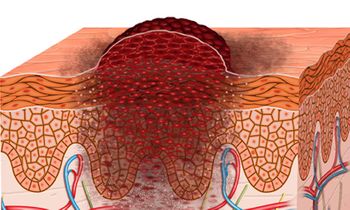
A trial comparing frontline pembrolizumab with ipilimumab for the treatment of advanced melanoma has met its progression-free survival (PFS) and overall survival (OS) endpoints and will be stopped early.

The focus in non-Hodgkin lymphoma (NHL) now needs to shift to predictive biomarkers, according to Randy Gascoyne, MD.

Prior cancer history should not exclude patients with advanced lung cancer from participating in clinical trials because it does not impact outcomes, according to a study.

Immunotherapy vaccine approaches that involve harvesting a patient’s dendritic cells and priming them to recognize a tumor-specific antigen before injecting them back into the patient to activate a T-cell response against the tumor have achieved encouraging but limited success.
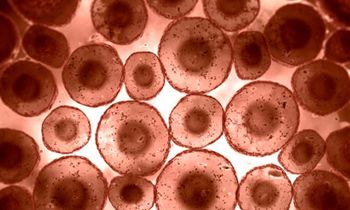
Progression on treatment with ibrutinib in patients with chronic lymphocytic leukemia (CLL) was associated with pretreatment BCL6 abnormalities, acquired mutations in BTK and PLCG2, and complex karyotypes.

First-line treatment with lapatinib (Tykerb) and a taxane failed to improve progression-free survival (PFS) versus trastuzumab (Herceptin) plus a taxane in patients with HER2-positive metastatic breast cancer, according to final results from the phase III MA.31 trial.

To gain new insight on bortezomib’s use in the frontline MCL setting, Targeted Oncology interviewed Andrew Evens, DO, MSc, director of the Tufts Cancer Center.
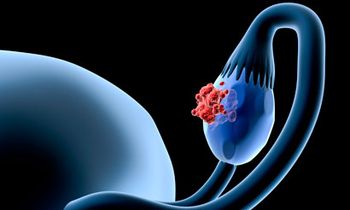
Recent advancements in the treatment of ovarian cancer have led the National Comprehensive Cancer Network to make changes to their clinical practice guidelines in its 20th annual edition.

Solid tumors often have an abnormal web of blood vessels, creating areas of hypoxia that protect the tumor from the toxic effects of chemotherapy drugs and radiation, which are designed to seek out well-oxygenated tissue.
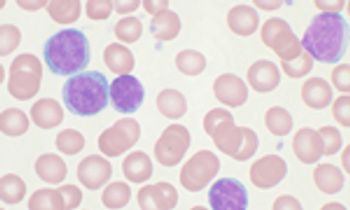
Combination therapy with ibrutinib plus bendamustine and rituximab significantly extended progression-free survival compared with BR alone in patients with chronic lymphocytic leukemia or small lymphocytic lymphoma enrolled in the phase III HELIOS trial.

What if the answer to earlier tumor detection is right in front of our faces—or, more accurately, right in front of our dog’s faces?

Growth in healthcare spending in the United States continues to outpace growth in European countries that enjoy a similar standard of living.

Dinutuximab (Unituxin) has been approved by the FDA in combination with interleukin-2, granulocyte-macrophage colony-stimulating factor (GM-CSF), and isotretinoin as a frontline therapy for pediatric patients with high-risk neuroblastoma.

Treatment with 2 angiogenesis-targeting drugs led to objective responses in a fourth of patients with advanced renal cell carcinoma (RCC), results of a dose-finding study showed.

Harold Varmus, MD, may be stepping down as director of the National Cancer Institute (NCI) at the end of March, but in an interview with Targeted Oncology, he made it clear that he is not retiring.

Through a $21 billion acquisition of Pharmacyclics, AbbVie has announced plans to acquire the blockbuster BTK inhibitor ibrutinib (Imbruvica).
The FDA has approved nivolumab (Opdivo) for the treatment of patients with advanced non-small cell lung cancer (NSCLC). The approval comes 3 months ahead of the FDA’s scheduled decision date.

Two recently published studies have reported discoveries that could eventually lead to improved outcomes in patients with pancreatic cancer.